Free alternatives to Umami
Umami is our overall pick for simple, private analytics, so if you are shopping for a replacement it is usually for a specific reason. The Cloud event allowance is not published anywhere you can read it (as of July 2026), the session replay and heatmaps added in versions 3.1 and 3.2 are still thin, and there is no real ecommerce revenue reporting. Which of those pushed you decides the right next tool. Here is how they line up.
Facts checked as of July 2026Read our Umami review
Jump to an alternative




Plausible Analytics
Best Free Alternative ToUmamiThe same cookieless dashboard, more polished and with published pricing instead of hidden Cloud limits
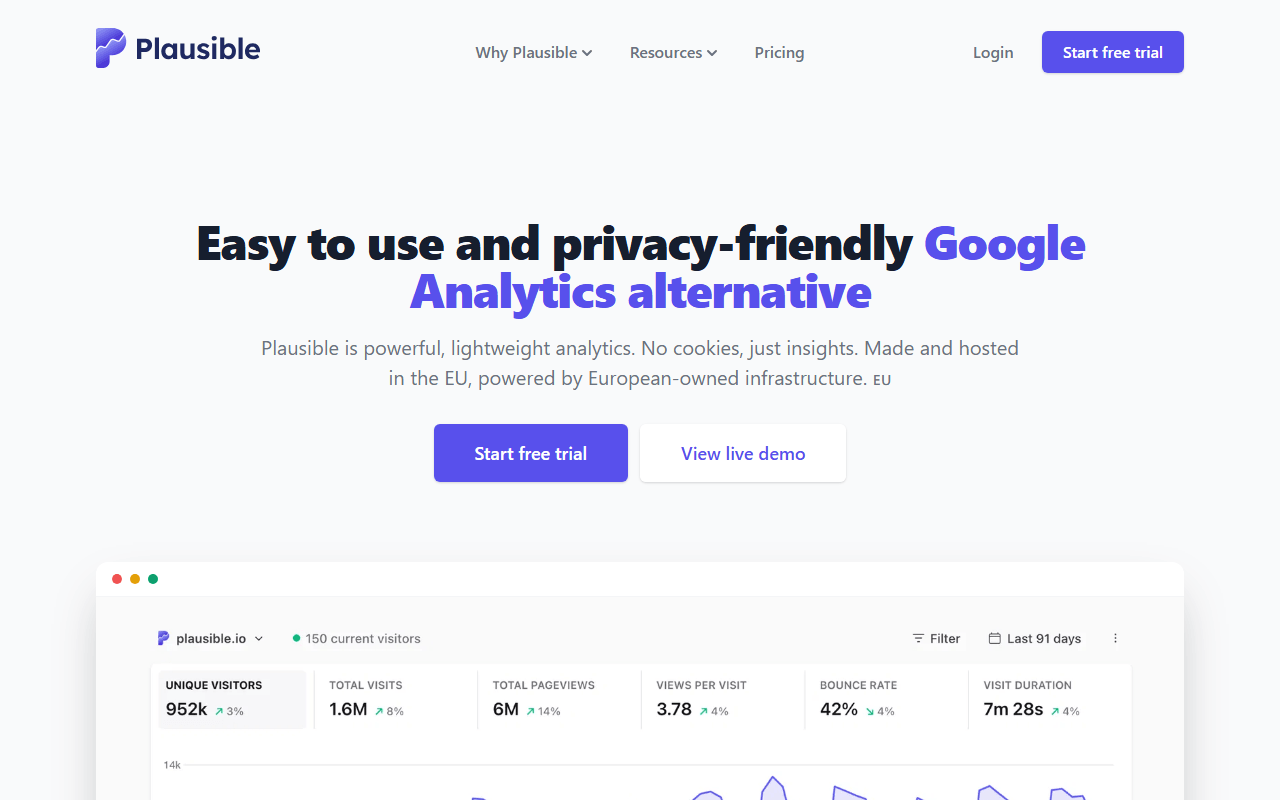
Plausible is Umami's closest peer and the more mature one, running since 2018 against Umami's 2022. Same cookieless, single-page approach, but with a sub-1 KB script and a dashboard that is a little more refined. The one thing to be clear about: Plausible Cloud has no free plan, only a 30-day trial and then $9 per month, so free means self-hosting the AGPL Community Edition. If Umami's unpublished Cloud limits bothered you, Plausible at least tells you exactly what you are paying for.
- From $9/month (as of July 2026)
- Estonia
- Open source (AGPL-3.0)
 Estonia
- Best for:
- Umami users who want a more established, more polished privacy dashboard
- The catch:
- Plausible Cloud has no free tier, self-hosting needs both PostgreSQL and ClickHouse, and there is no session replay or heatmaps.
Compared to Umami
- Advantage: More polished dashboard and a smaller sub-1 KB script
- Advantage: Established since 2018, where Umami launched in 2022
- Advantage: Published, transparent pricing versus Umami's hidden Cloud limits
- Tradeoff: No free hosted plan, where Umami has one
- Tradeoff: No session replay or heatmaps, which Umami now includes
- Tradeoff: Self-host needs two databases against Umami's one
A published, generous free tier and real session replay, the two things Umami is vaguest and thinnest on
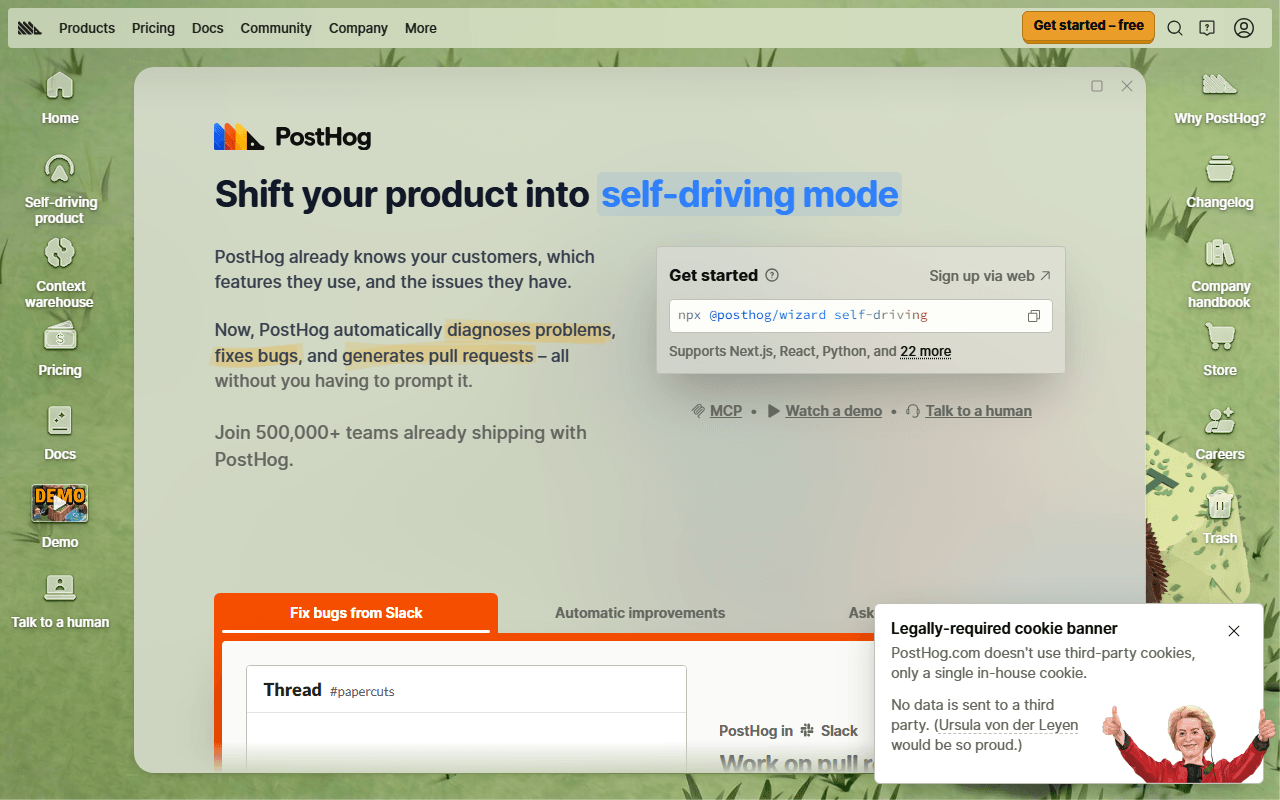
PostHog answers Umami's two weak spots head on. Its free tier is published in full, 1 million events, 5,000 web session replays, and 1 million feature flag requests a month (as of July 2026), so there is no guessing about limits. And its session replay is a mature product, not the light feature Umami shipped recently. The cost is weight. PostHog is a product-analytics suite with a real learning curve, so you are trading Umami's simplicity for depth.
- Free plan (as of July 2026)
- United States
- Open source (MIT (with a proprietary ee/ directory))
 United States
- Best for:
- Teams who wanted clearer limits and proper replay, and will accept a heavier tool
- The catch:
- It is much heavier and harder to learn than Umami, it uses cookies, and one noisy autocapture setting can spend a million events in a week.
Compared to Umami
- Advantage: Free tier limits are published in full, unlike Umami's Cloud
- Advantage: Mature session replay, where Umami's is thin
- Advantage: Adds feature flags, surveys, and error tracking
- Tradeoff: Far heavier and steeper to learn than Umami's one page
- Tradeoff: Uses cookies, so it does not stay banner-free like Umami
- Tradeoff: Events can overspend into a bill
Ecommerce revenue, visitor logs, and mature replay, the depth Umami simply does not have
If you outgrew Umami, Matomo is where the ceiling lifts. Ecommerce revenue reporting, visitor-level logs, mature session recordings and heatmaps, goals, and funnels, all in the self-hosted On-Premise edition that is GPL-3.0 and free with unlimited hits. It is the answer when Umami's missing ecommerce reporting or thin replay was the specific thing that sent you looking. The price is that you now run and maintain a PHP and MySQL server.

- From €29/month (as of July 2026)
- New Zealand
- Open source (GPL-3.0)
 New Zealand
- Best for:
- Ecommerce and data-heavy teams who hit Umami's feature ceiling
- The catch:
- Free means administering a server with archiving set up, Matomo Cloud starts at €29 per month, and some behaviour features are paid plugins.
Compared to Umami
- Advantage: Ecommerce revenue reporting Umami does not have
- Advantage: Visitor-level logs and mature replay and heatmaps
- Advantage: Unlimited hits and users when self-hosted, no hidden limits
- Tradeoff: Far heavier interface and more to maintain than Umami
- Tradeoff: Meters hits, not pageviews, on the Cloud tiers
- Tradeoff: Behaviour features can be paid plugins on self-hosted
Free both ways with no unpublished Cloud limit to worry about, and even simpler than Umami
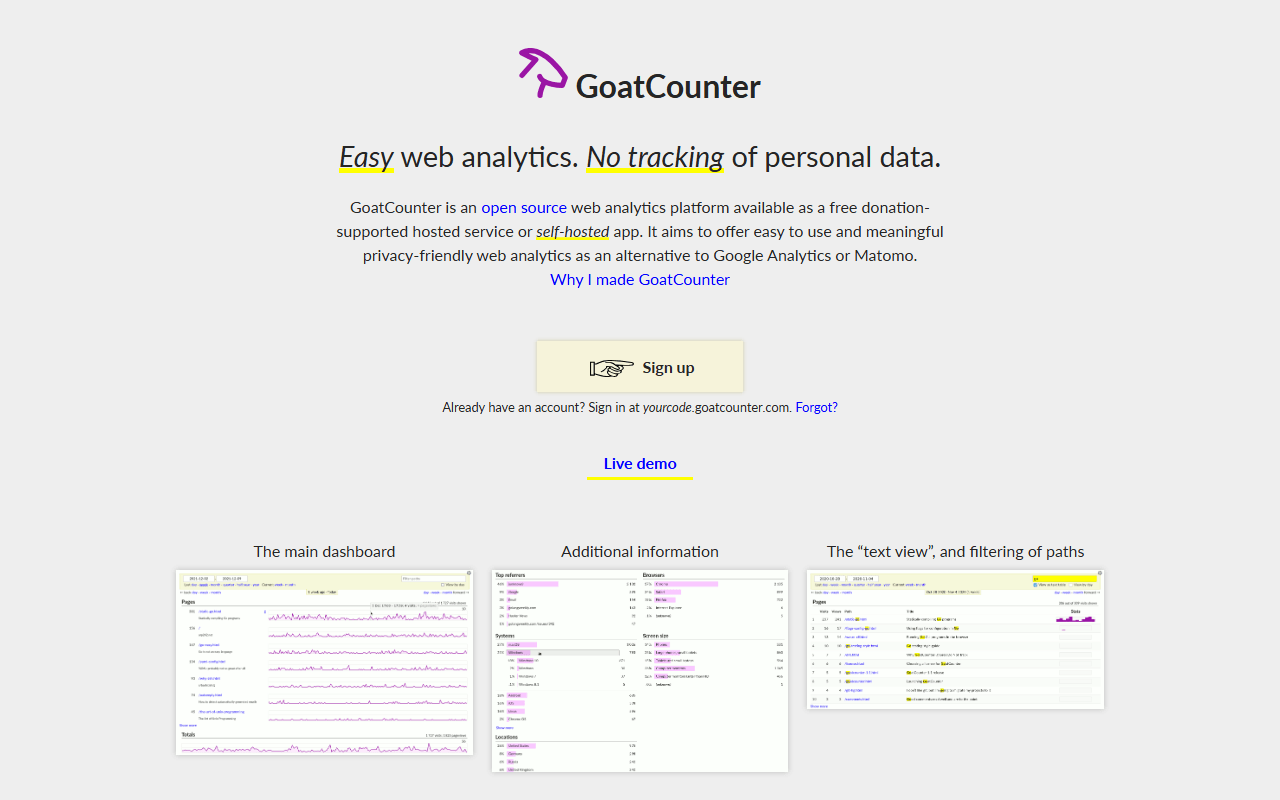
GoatCounter goes the other direction from Umami: less tool, not more. If you liked Umami's simplicity but wanted something even smaller, or you were uneasy about the unpublished Cloud limits, GoatCounter is free for reasonable public usage and self-hosts from a single Go binary on SQLite. It drops the events, funnels, and replay Umami has, keeping just the visitor count. Honest and tiny.
- Free plan (as of July 2026)
- Netherlands
- Open source (EUPL-1.2 (modified))
 Netherlands
- Best for:
- Blogs and personal sites that found even Umami slightly more than they needed
- The catch:
- No events, funnels, or replay, and the free hosted terms are only "reasonable public usage" with no published number and a dead pricing page.
Compared to Umami
- Advantage: Also cookieless and free, with a self-host on SQLite alone
- Advantage: Even simpler to run and read than Umami
- Advantage: Single-binary self-host, no Node or Postgres to manage
- Tradeoff: No events, funnels, or replay, which Umami offers
- Tradeoff: A solo project rather than a small company
- Tradeoff: Free hosted limits are unpublished, same uncertainty as Umami's
Proper free session replay and heatmaps, doing well the exact feature Umami only does lightly
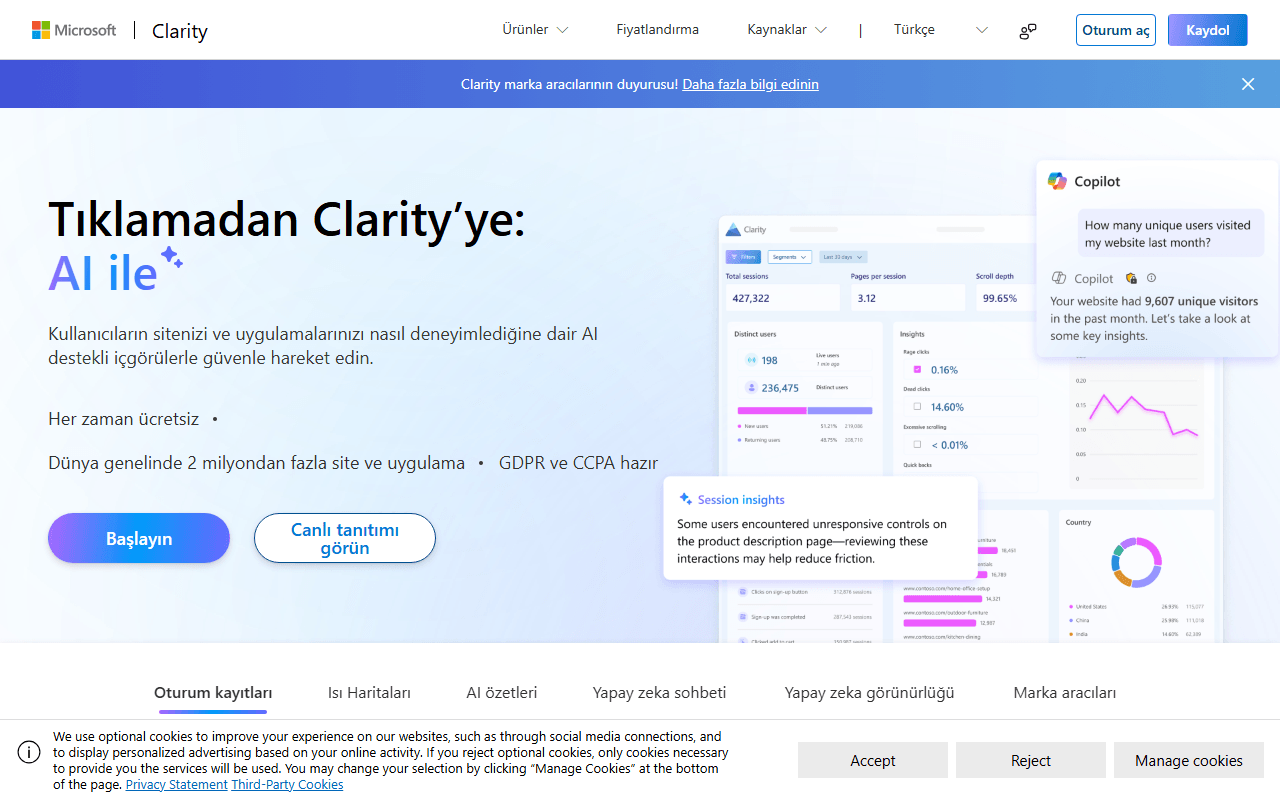
Umami added replay and heatmaps, but they are thin. Clarity is the tool that does that job properly, free, with no traffic limit. Recordings, click and scroll heatmaps, and automated rage-click flags. It is not a full analytics tool, so most people run it next to Umami rather than instead of it, letting Umami count the traffic while Clarity shows the behaviour. Together they cost nothing.
- Completely free (as of July 2026)
- United States
- Best for:
- Umami users who wanted serious replay and heatmaps, run alongside Umami
- The catch:
- It uses cookies so the consent banner returns, recordings last only 30 days, and Microsoft receives your visitors' behavioral data.
Compared to Umami
- Advantage: Mature session replay and heatmaps, where Umami's are thin
- Advantage: Free forever with no traffic limit
- Worth knowing: Pairs with Umami rather than replacing it
- Tradeoff: No traffic, acquisition, or funnel reporting like Umami's
- Tradeoff: Uses cookies, undoing Umami's banner-free setup
- Tradeoff: Behavioral data goes to Microsoft, against Umami's privacy model
An even stricter privacy stance than Umami, with pay-what-you-want and no IP logging at all
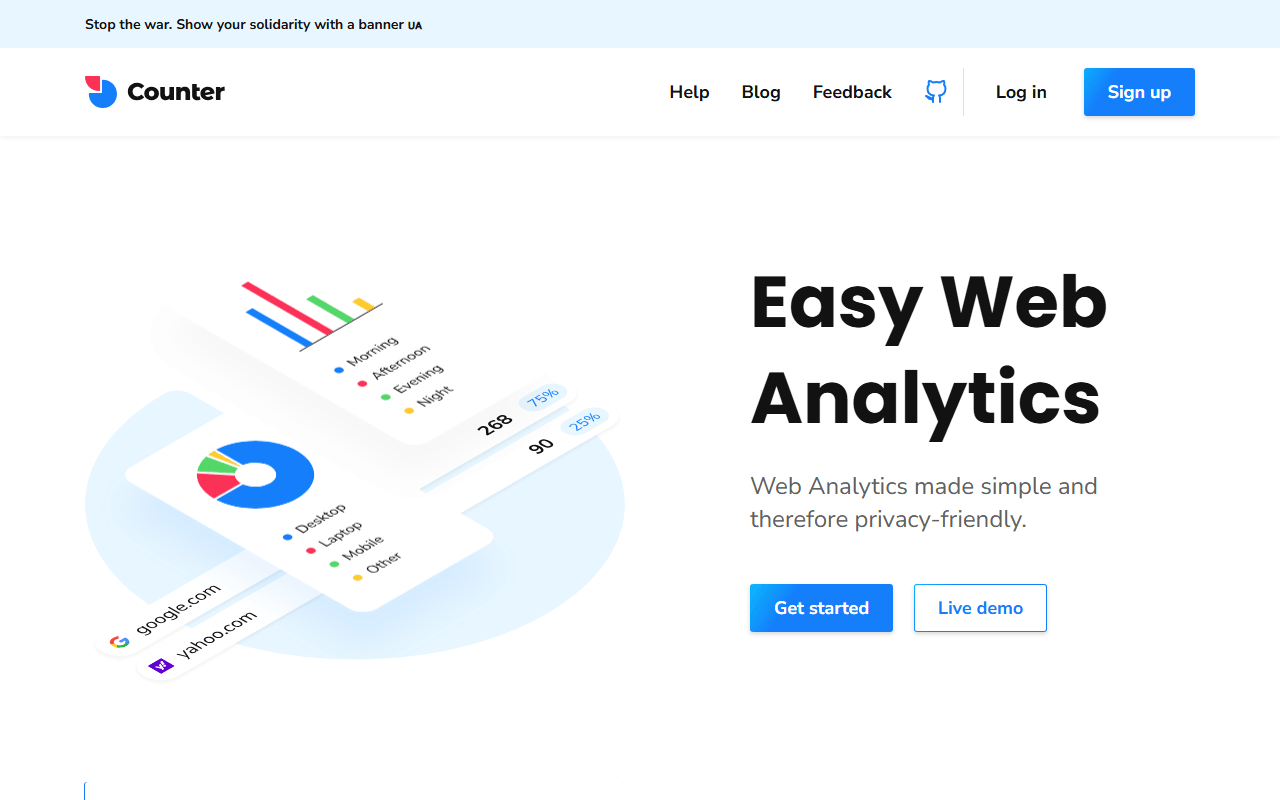
Counter.dev is for Umami users who want to push the privacy angle further. It logs no IP addresses at all, resolving country at the Cloudflare edge, and it sets no cookies, same as Umami. The model is pay-what-you-want, including nothing, so it is free in the same practical sense Umami's Hobby plan is. It does much less, and it is a thinly funded solo project, so it fits side projects rather than businesses.
- Free plan (as of July 2026)
- Germany
- Open source (AGPL-3.0)
 Germany
- Best for:
- Privacy absolutists on small sites who liked Umami's ethos and wanted more of it
- The catch:
- It is hobby-scale by the author's own figures, has no events, funnels, or replay, and publishes no data retention policy.
Compared to Umami
- Advantage: No IP logging at all, going further than Umami on privacy
- Advantage: Also cookieless, and free under a pay-what-you-want model
- Advantage: AGPL-3.0 with a self-host option like Umami
- Tradeoff: No events, funnels, or replay that Umami has
- Tradeoff: Thinly funded solo project, riskier than Umami's small company
- Tradeoff: No published data retention policy
Free hosted at any volume with Google Ads integration, if you can accept the cookies Umami removed
Listing GA4 as an Umami alternative is a step back toward what most Umami users left, so read it that way. It earns a place only for one case: you need Google Ads or Search Console integration, or free BigQuery export, which no privacy tool here provides. GA4 is free hosted at any traffic level. The price is the consent banner and the GDPR work Umami was chosen to avoid.

- Free plan (as of July 2026)
- United States
- Best for:
- Umami users who turn out to need Google Ads attribution or app analytics
- The catch:
- It uses cookies and needs a consent banner and GDPR handling, its interface is complex, and explorations sample above 10 million events per query.
Compared to Umami
- Advantage: Google Ads and Search Console integration Umami lacks
- Advantage: Free hosted at any volume, with no unpublished limit
- Advantage: Free BigQuery export for raw data
- Tradeoff: Uses cookies and needs the consent banner Umami removes
- Tradeoff: Much more complex interface than Umami's single page
- Tradeoff: Explorations sample above 10M events per query and retention caps at 14 months
How to choose
If you want the same cookieless dashboard with more polish and clearer pricing, Plausible is the closest peer, as long as you self-host or pay, since its cloud is not free. If the unclear limits were the problem, PostHog publishes a generous free tier and adds the replay Umami's is missing. If you outgrew Umami's feature set, self-host Matomo for full depth. And if you want to go simpler and stay free both ways, GoatCounter is the smallest honest option.