
Discover honest, community-driven software alternatives. Learn about our mission

Which web analytics tools are actually free, and which need a server

You want to know who visited your site, where they came from, and whether they did the thing you built the page for. That is the whole job. Most tools that do it now bury it under exploration builders, event schemas, and a consent banner you have to design around.

People leave Google Analytics for its complexity, not its price, because GA4 is free. They leave Mixpanel and Amplitude when the event bill outgrows what they get back. They leave Hotjar when a small traffic bump pushes them up two pricing bands. And a lot of them just want the cookie banner gone.

Our pick for most people is Umami. It is the only tool here with both a free hosted plan and an MIT license, so you can start free today and move the whole thing to your own server later without an export project.

11 free tools, ranked and reviewed as of July 2026.

Our default, plus the tools that beat it on one job

Best overall

Umami logo

Umami

Best FreeAnalytics Tool

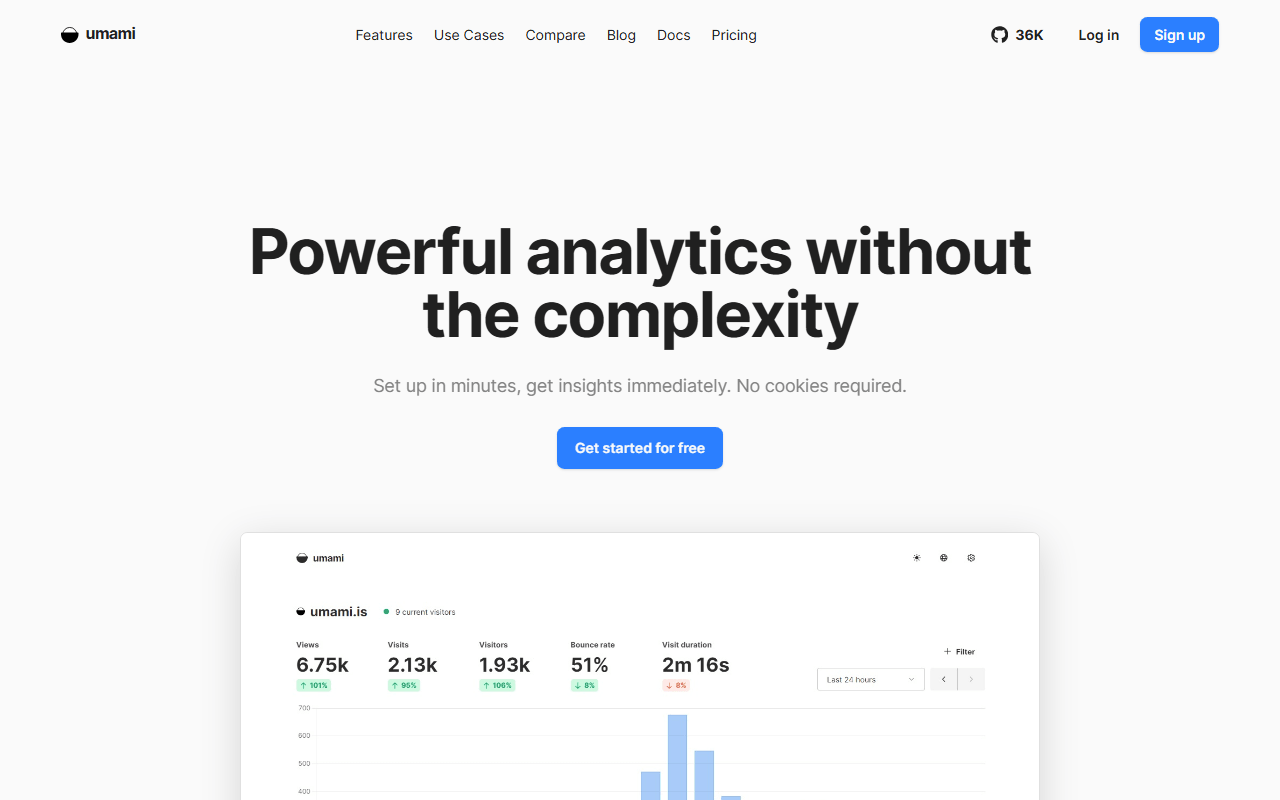
Umami is the closest thing to a drop-in for how most people use Google Analytics: one page of visitors, referrers, pages, countries, and devices, plus custom events and funnels. It sets no cookies, so the consent banner goes away, and both routes are genuinely free. The Cloud Hobby plan is free permanently, and the MIT license means you can move the same app to your own Postgres server whenever you want.

Umami wins because it removes the two things people actually dislike about Google Analytics, the complexity and the consent banner, without asking you to pay or to lock yourself in. The dashboard is a single page of visitors, referrers, pages, and countries, with custom events and funnels when you need them, and since version 3.2 it also does light session replay and heatmaps. The real catch is transparency: Umami does not publish its Cloud event allowance anywhere a machine can read, so if you are pointing a busy site at the free Hobby plan, confirm the current limit first, or self-host the MIT-licensed version where there is no limit to worry about.

Read our Umami review

Best for seeing why a page loses people

Session recordings and click and scroll heatmaps, free with no traffic limit and no paid tier to be pushed towards (as of July 2026), if you accept 30-day retention and Microsoft holding your visitors' behavioural data.

Best for a team shipping features weekly

Every month brings 1 million events, 5,000 web session replays, and 1 million feature flag requests before a card is needed (as of July 2026), though autocapture left wide open will spend that allowance fast.

Best if you already run your own server

The GPL-3.0 On-Premise edition is free with unlimited hits and unlimited users (as of July 2026), while Matomo Cloud has no free tier at all and starts at €29 per month for 50,000 hits.

Inside: why a self-hosted tool can outrank a free hosted one

We rank for the person who wants to understand their traffic without GA4's overhead or its privacy baggage, so cookieless tracking and a real free option count for a lot. We separate tools with a genuine free cloud tier (Umami, PostHog, Microsoft Clarity) from ones that are free only if you self-host, since Plausible and Matomo have no free cloud plan. And we read the meter carefully, because Matomo counts hits rather than pageviews, so a download or an outbound click eats into the same limit as a page view.

Cookies, self-hosting, and free tiers, side by side

#ToolFree planStarting priceCountry
1
Umami logo
Umami
Yes-United States
2
PostHog logo
PostHog
Yes-United States
3
Microsoft Clarity logo
Microsoft Clarity
Free / open source-United States
4
Plausible Analytics logo
Plausible Analytics
No$9/monthEstonia
5
Matomo logo
Matomo
No€29/monthNew Zealand
6
GoatCounter logo
GoatCounter
Yes-Netherlands
7
Counter.dev logo
Counter.dev
Yes-Germany
8
Google Analytics (GA4) logo
Google Analytics (GA4)
Yes-United States
9
Hotjar logo
Hotjar
Yes$49/monthMalta
10
Amplitude logo
Amplitude
Yes-United States
11
Mixpanel logo
Mixpanel
Yes-United States

Ranked in full, with the meter each one counts you on

1.

Umami

Best FreeAnalytics Tool

Umami is the closest thing to a drop-in for how most people use Google Analytics: one page of visitors, referrers, pages, countries, and devices, plus custom events and funnels. It sets no cookies, so the consent banner goes away, and both routes are genuinely free. The Cloud Hobby plan is free permanently, and the MIT license means you can move the same app to your own Postgres server whenever you want.

Umami screenshot
  • Free plan (as of July 2026)
  • United States
  • Open source (MIT)
Best for:
Anyone replacing GA4 on a blog, personal site, or small SaaS who wants a free start and a self-hosted exit.
The catch:
Umami does not publish its Cloud event allowance anywhere machine-readable, so confirm the current Hobby limit before you point a busy site at it.
2.

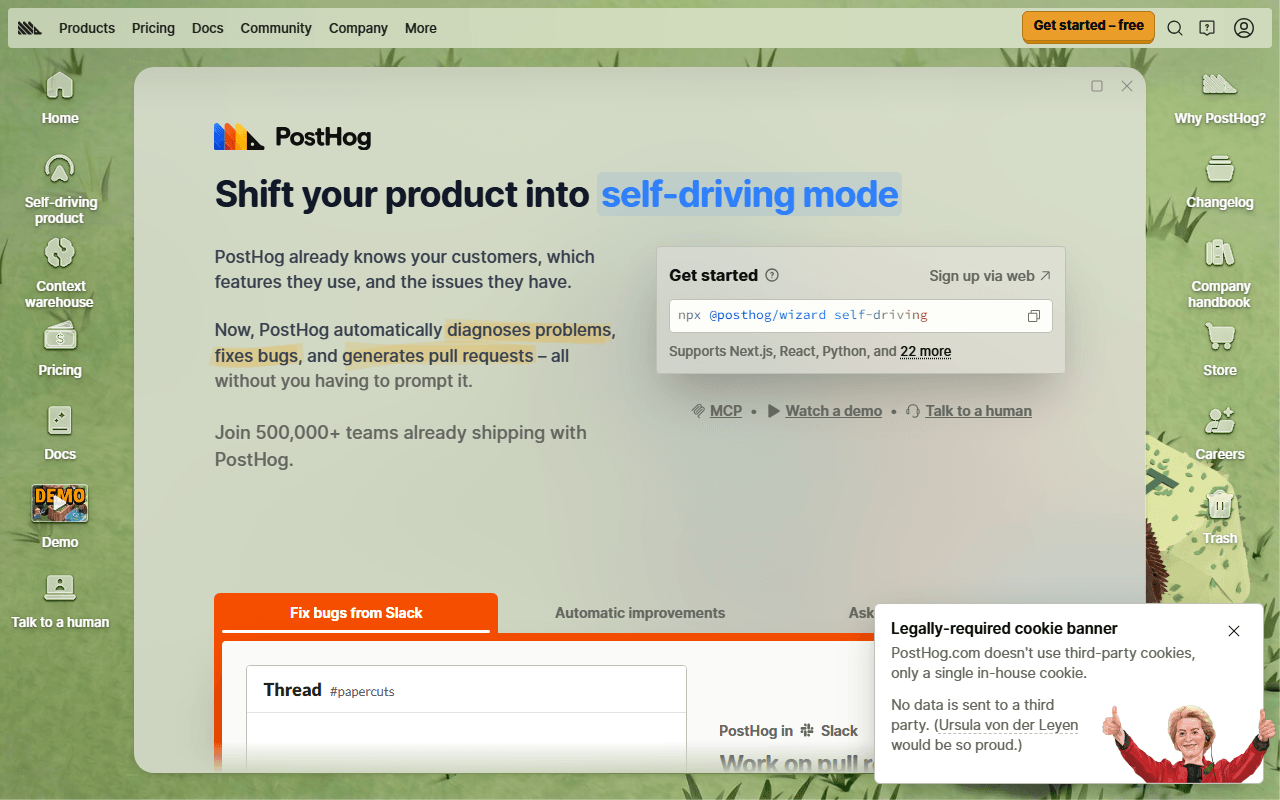
PostHog is the upgrade, not the simplification: event analytics, session replay, feature flags, surveys, and error tracking under one login. The free tier is the most generous in the category, with 1 million events, 5,000 web session replays, and 1 million feature flag requests every month, no card required. If GA4 felt shallow rather than complicated, this is where you go.

PostHog screenshot
  • Free plan (as of July 2026)
  • United States
  • Open source (MIT (with a proprietary ee/ directory))
Best for:
Product and growth teams who want analytics, replay, and feature flags without three separate subscriptions.
The catch:
It is heavier than GA4, not lighter, and one noisy autocapture setting can burn through a million events in a week.
3.

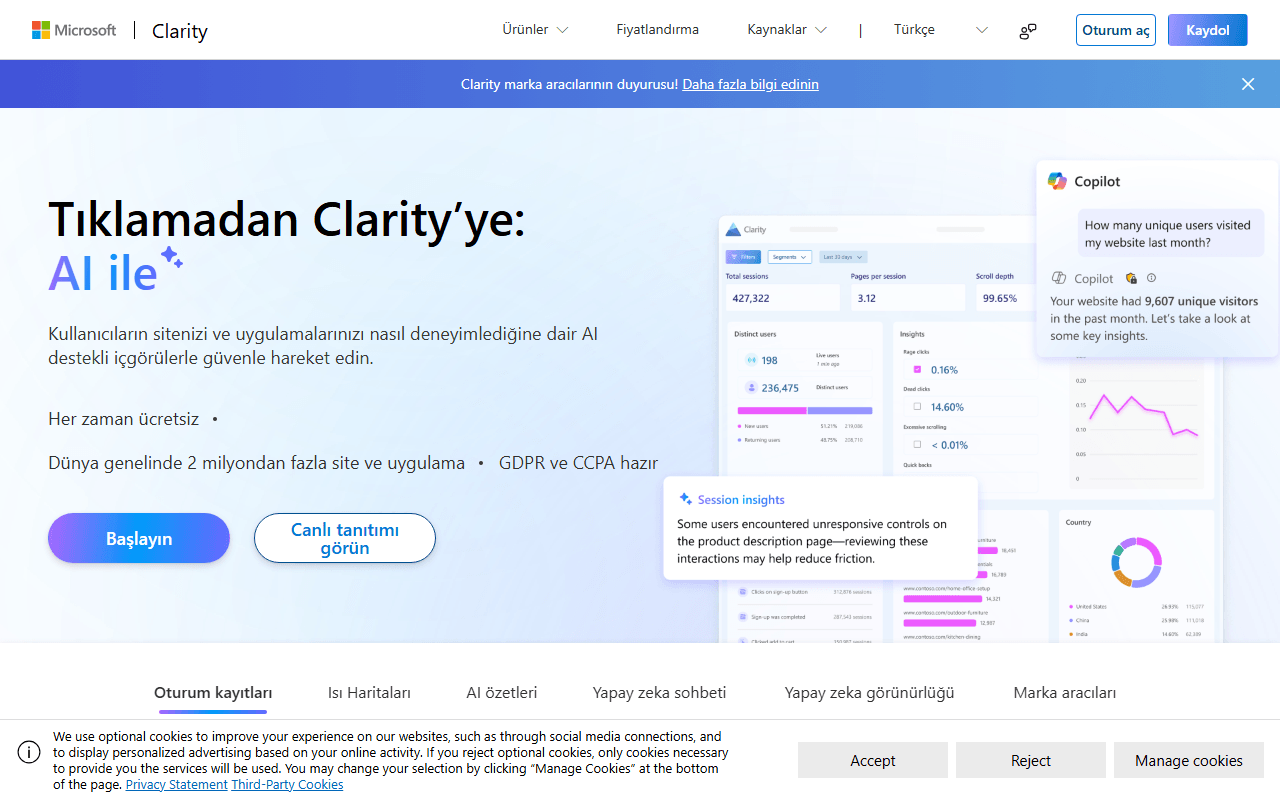
Microsoft Clarity does one job well: it shows you what people actually did on your pages. Session recordings, click and scroll heatmaps, and automated flags for rage clicks and dead clicks, all free with no traffic limit and no paid tier to upgrade to. It is the direct free answer to Hotjar.

Microsoft Clarity screenshot
  • Completely free (as of July 2026)
  • United States
Best for:
Anyone who wants to see why a page converts badly, running alongside a tool that handles traffic numbers.
The catch:
Recordings are kept only 30 days, it uses cookies, and Microsoft receives your visitors' behavioral data. That is the real price.
4.

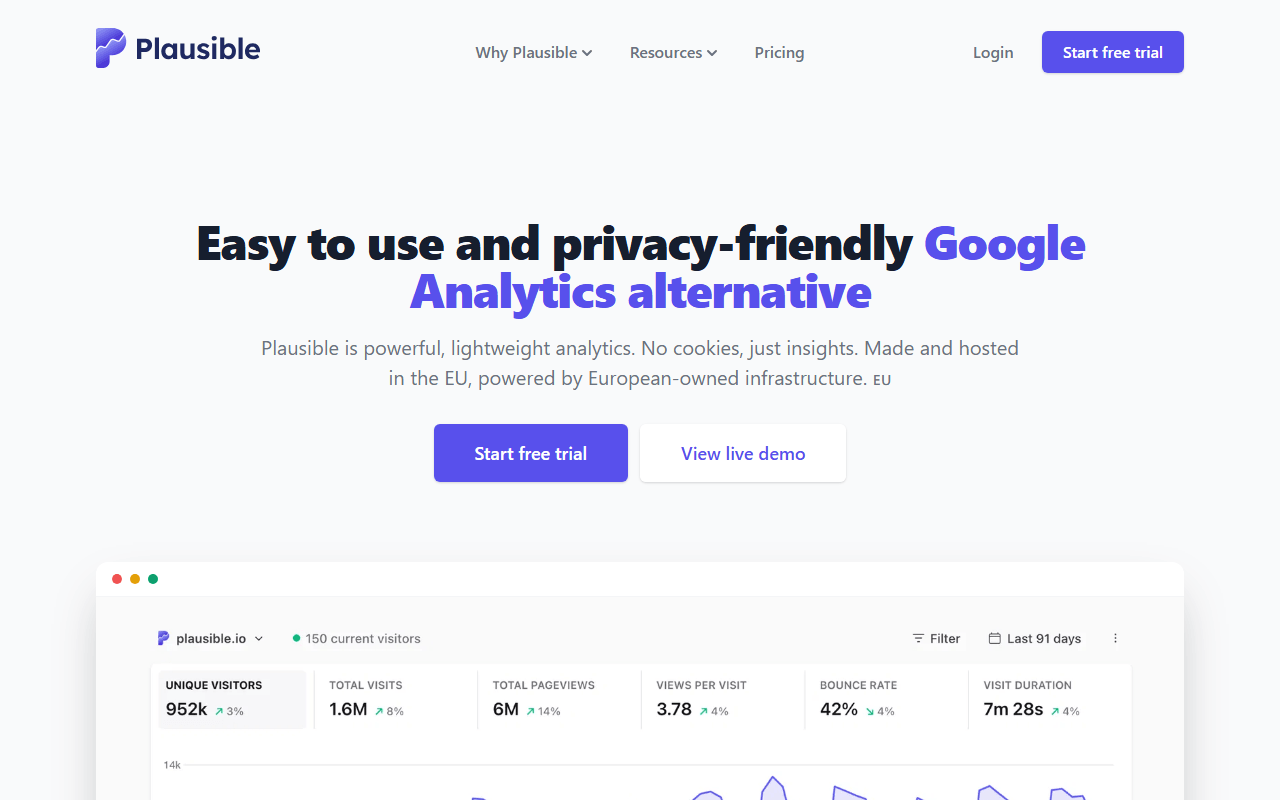
Plausible is the best-looking privacy dashboard in the category: a single page, a sub-1 KB script, no cookies, and numbers that mean what they say. Here is the part people miss. Plausible Cloud has no free plan, only a 30-day trial and then $9 per month billed annually. It is free only if you self-host the AGPL Community Edition yourself.

Plausible Analytics screenshot
  • From $9/month (as of July 2026)
  • Estonia
  • Open source (AGPL-3.0)
Best for:
Teams who will self-host, or who will happily pay $9 to $19 a month for a calmer dashboard.
The catch:
Free applies only to the self-hosted edition, and that one needs both PostgreSQL and ClickHouse to run.
5.

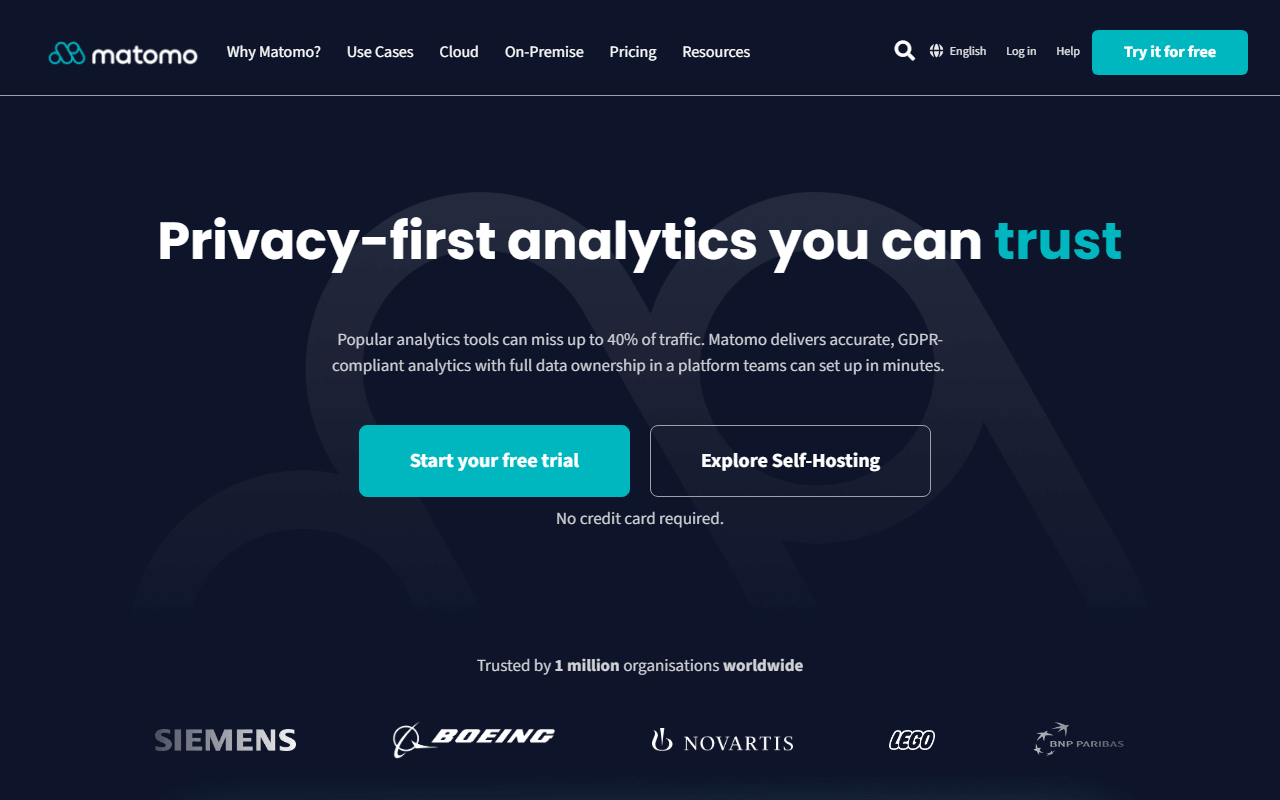
Matomo is the nearest thing to Google Analytics you can own outright: goals, funnels, ecommerce revenue, session recordings, heatmaps, and the visitor-level logs GA4 removed. The self-hosted On-Premise edition is GPL-3.0 with unlimited hits and unlimited users, and it installs on ordinary PHP and MySQL hosting. Matomo Cloud has no free tier and starts at 29 euros per month.

Matomo screenshot
  • From €29/month (as of July 2026)
  • New Zealand
  • Open source (GPL-3.0)
Best for:
Ecommerce and enterprise teams that need GA4-level depth without sending data to Google.
The catch:
Free means self-hosting, and Matomo meters hits, not pageviews, so events, downloads, and outbound clicks all count against the limit.
6.

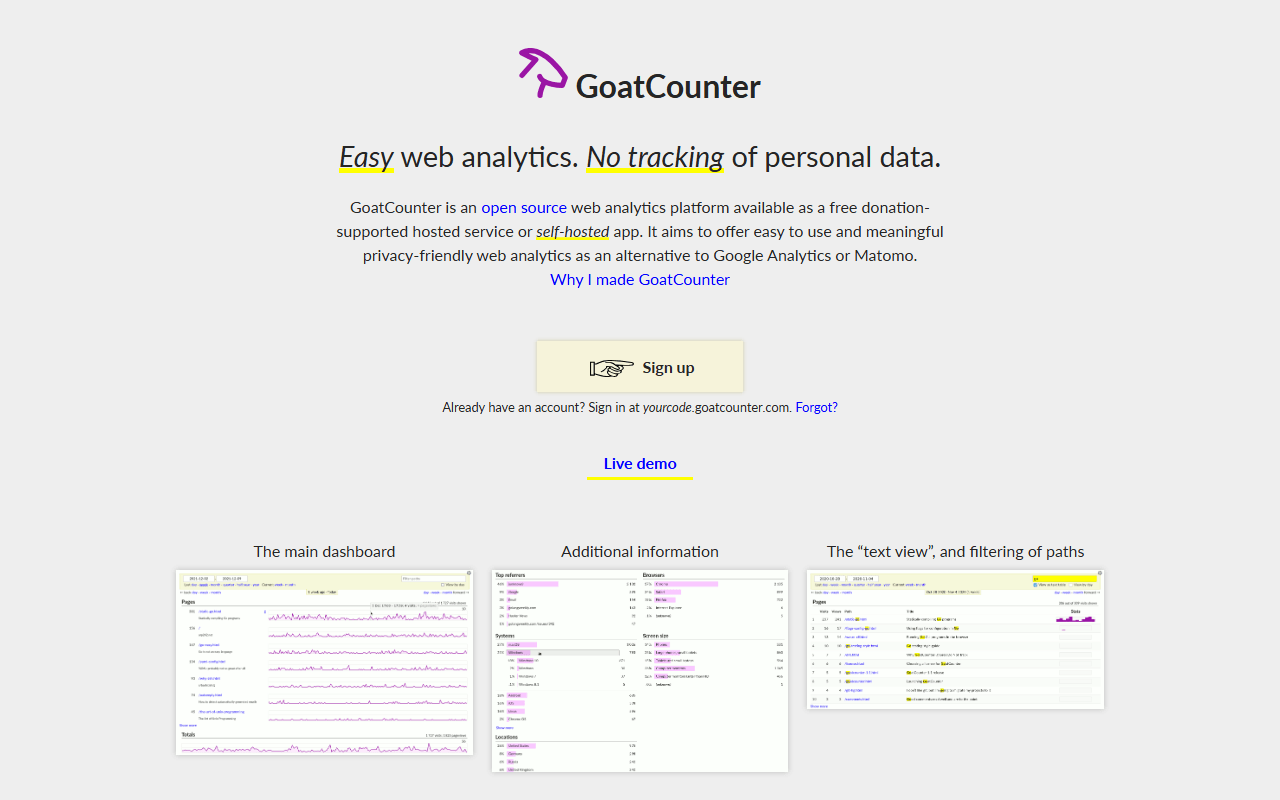
GoatCounter is the smallest useful analytics tool there is: pageviews over time, top pages, referrers, countries, and screen sizes, and nothing else on purpose. The hosted service is free for what the author calls reasonable public usage, funded by donations, and the self-hosted version is a single Go binary that runs on SQLite. It is a one-person project, and honest about doing less than everyone else.

GoatCounter screenshot
  • Free plan (as of July 2026)
  • Netherlands
  • Open source (EUPL-1.2 (modified))
Best for:
Blogs, docs sites, and personal projects where you just want a visitor count.
The catch:
The free hosted terms are defined only as "reasonable public usage" with no published number, and the pricing help page is currently a dead link.
7.

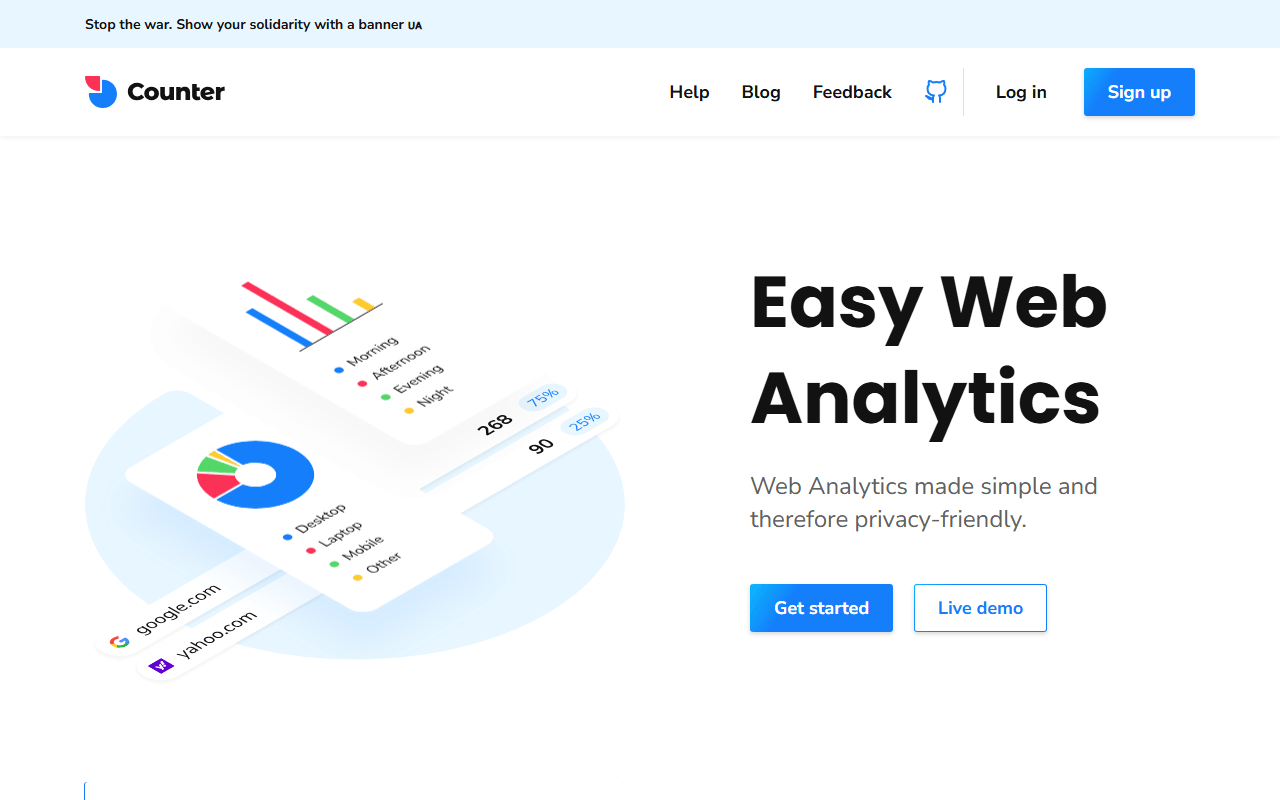
Counter.dev goes further on privacy than anything else here. It sets no cookies, logs no IP addresses, and does no fingerprinting, resolving visitor country at the Cloudflare edge so the address never reaches storage. The model is pay-what-you-want, including nothing, with no published quotas, and the code is AGPL-3.0 with a separate self-hosting repository.

Counter.dev screenshot
  • Free plan (as of July 2026)
  • Germany
  • Open source (AGPL-3.0)
Best for:
Personal sites and side projects where any billing relationship feels like overkill.
The catch:
It is a hobby-scale project by the author's own figures (350 euros in donations across 26 payments in 2022), so do not make it load-bearing for a business.
8.

Google Analytics 4 is free and still the most capable analytics platform most people can get, with Google Ads linking, attribution, audiences, and free BigQuery export. It is on this list for its complexity, not its price. People leave GA4 because the event-based interface turned two-click questions into exploration builds, retention caps at 14 months, and explorations sample above 10 million events per query.

Google Analytics (GA4) screenshot
  • Free plan (as of July 2026)
  • United States
Best for:
Anyone running Google Ads or needing web and app analytics in one property, where nothing free here replaces it.
The catch:
It is free, but you pay in interface complexity, a consent banner, and GDPR paperwork, which is exactly why this category exists.
9.

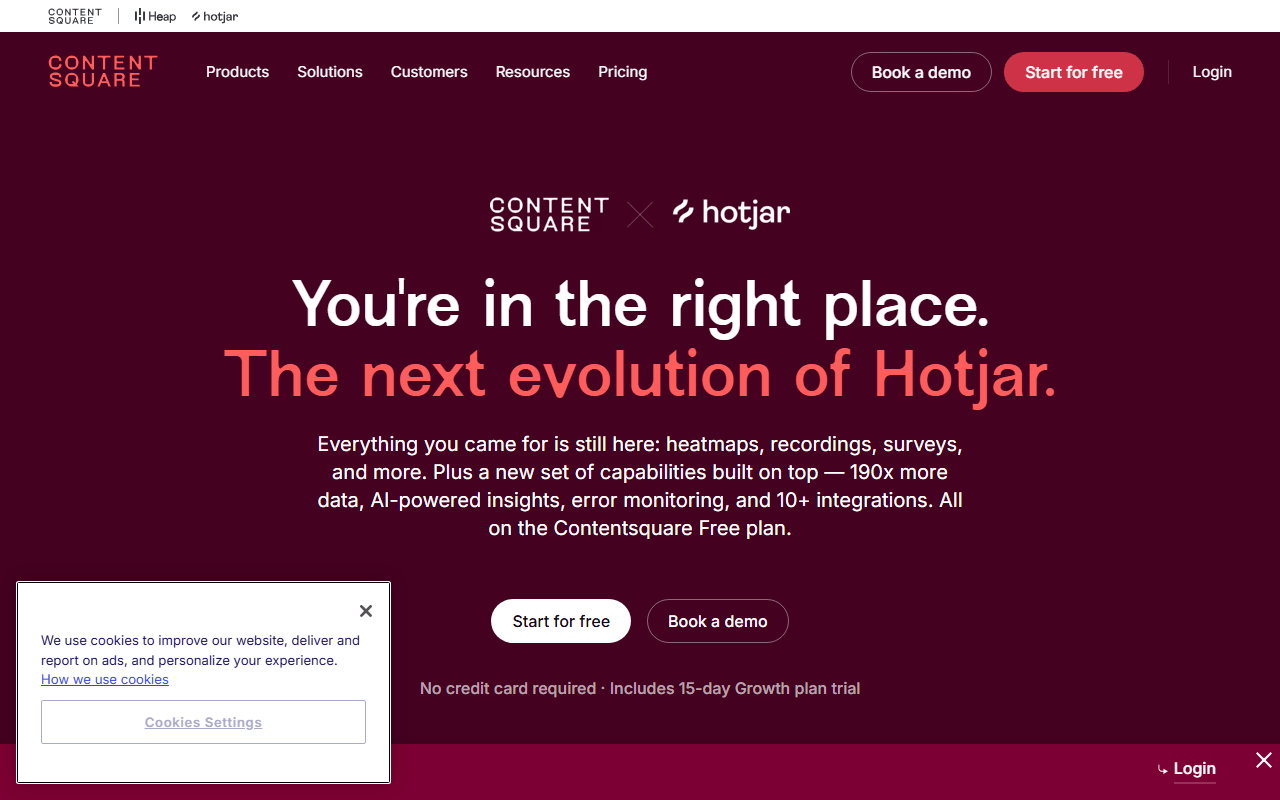
Hotjar popularised session recordings and heatmaps for marketing teams, and the product is still good. What changed is who sells it: Hotjar is now part of Contentsquare, and hotjar.com/pricing redirects there, so the old Basic and Plus plans are gone. A free tier remains, capped at 10,000 session replays a month on one project, with a Growth ladder that climbs from $49 to $739.

Hotjar screenshot
  • Free plan, paid from $49/month (as of July 2026)
  • Malta
Best for:
CRO teams with budget who need replay, heatmaps, and surveys in one product with 13-month data access.
The catch:
The Growth ladder jumps in steep steps, the Contentsquare migration left pricing and naming confusing, and Microsoft Clarity does the two headline jobs for free.
10.

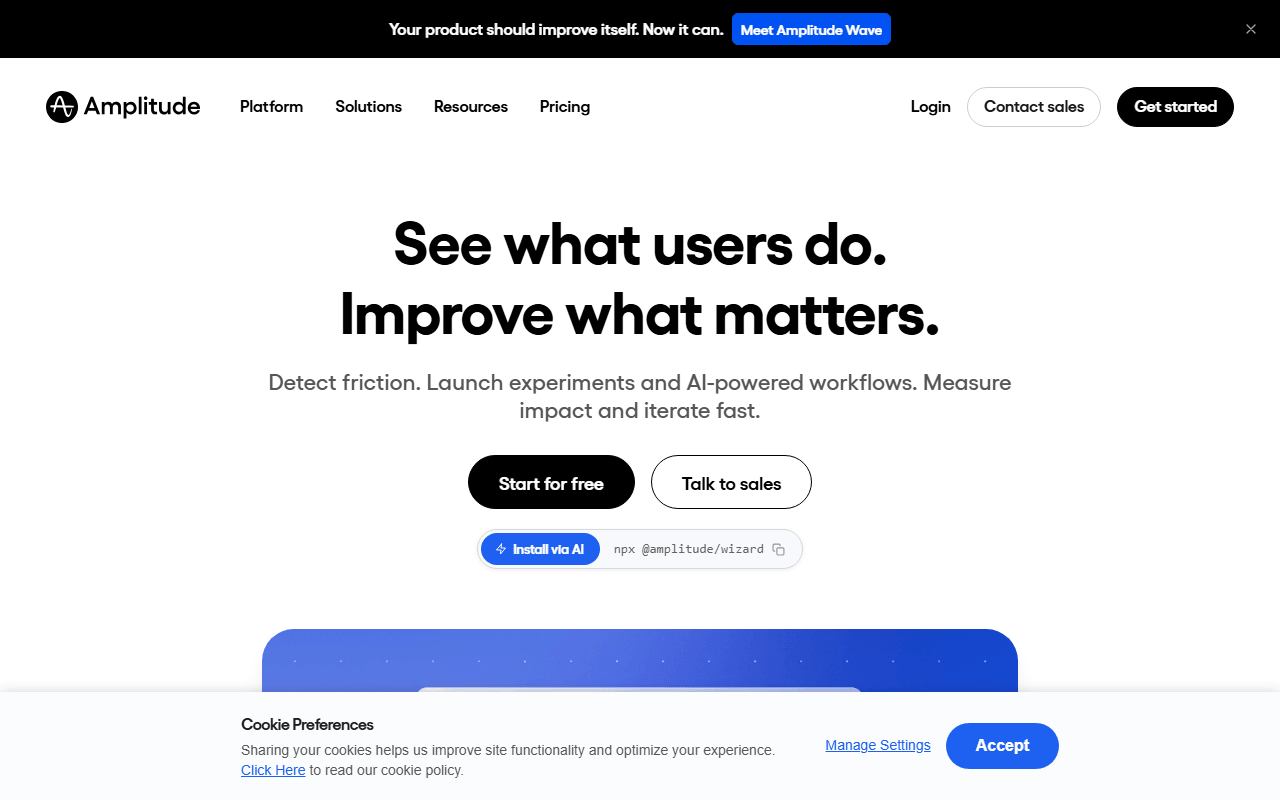
Product analytics grown into a platform, with 2 million events a month free and an account-deletion policy worth reading.

Amplitude screenshot
  • Free plan (as of July 2026)
  • United States
11.

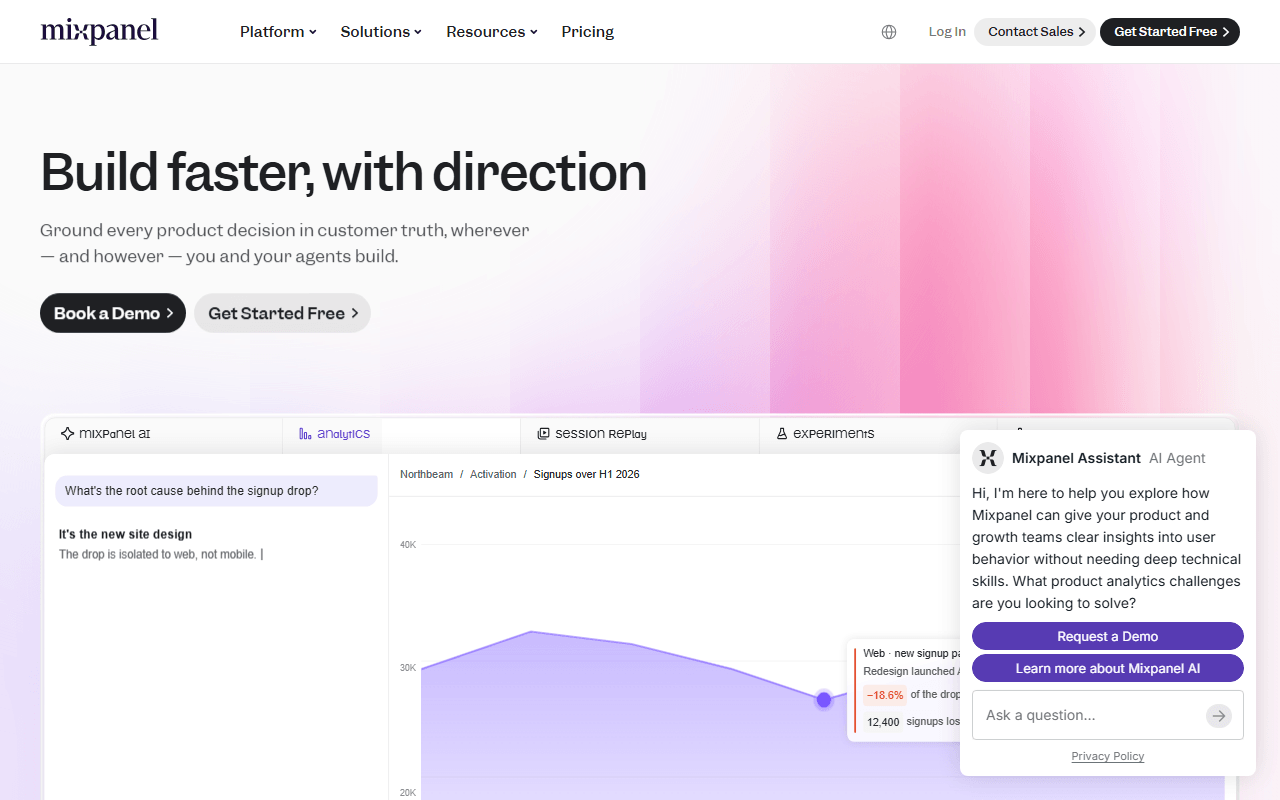
Event-based product analytics with unlimited seats on every tier, and a free plan capped at 1 million events a month.

Mixpanel screenshot
  • Free plan (as of July 2026)
  • United States

Start from your question, not from the feature list

If you just want simple, private analytics for free, start with Umami and only look further if it misses something. If you want the same philosophy but heavier lifting and you will run your own server, self-host Matomo for full GA4-style depth or PostHog for product analytics and feature flags. If your real question is why a page converts badly, add Microsoft Clarity for session replay and heatmaps at no cost, and run it next to whatever handles your traffic numbers. And if you specifically want the smallest possible footprint, GoatCounter and Counter.dev do less on purpose.

Consent banners, hit meters, and the free-forever question

Which free analytics tool actually stays free?

Three of them have a genuine free cloud plan you never have to leave: Umami's Hobby plan, PostHog's monthly free allowance, and Microsoft Clarity, which has no paid tier at all. Plausible and Matomo are different, because their cloud versions have no free plan, so they are free only if you self-host the open-source edition on your own server. As of July 2026, that is the line that catches most people out.

Do these tools remove the cookie consent banner?

The cookieless ones do. Umami, Plausible, GoatCounter, and Counter.dev set no cookies and collect no personal data, so most EU sites run them without a consent banner. You should still mention them in your privacy policy. Microsoft Clarity and Google Analytics use cookies, so they do not remove the banner.

Why leave Google Analytics if it is free?

Price is almost never the reason. People leave GA4 because the event-based interface turned simple questions into exploration builds, because explorations sample above 10 million events per query, because standard data retention caps at 14 months, and because sending visitor data to Google comes with consent and GDPR work. If you run Google Ads, GA4 is still worth keeping. If you only open it for the weekly traffic check, a simpler tool will answer faster.

What is the catch with Matomo's free version?

Two things. The free version is the self-hosted On-Premise edition, so you run a PHP and MySQL server and keep it healthy, and Matomo Cloud has no free tier. On top of that, Matomo meters hits, not pageviews, and a hit is any tracked action: a pageview, an event, a download, an outbound click, or a site search. So Cloud's 50,000-hit entry tier is a good deal less traffic than 50,000 pageviews would be.

Which tool should I use for heatmaps and session replay?

Microsoft Clarity, and for most people it is not close. It does session recordings and heatmaps free forever with no traffic limit, where Hotjar now caps its free tier at 10,000 replays a month and sells the rest through Contentsquare. If you want replay tied to product analytics, PostHog includes 5,000 web recordings a month on its free tier. Just note that Clarity keeps recordings for only 30 days.

Keep exploring

Browse every category, or read our full reviews of the tools above.