

An outliner where every bullet has an address
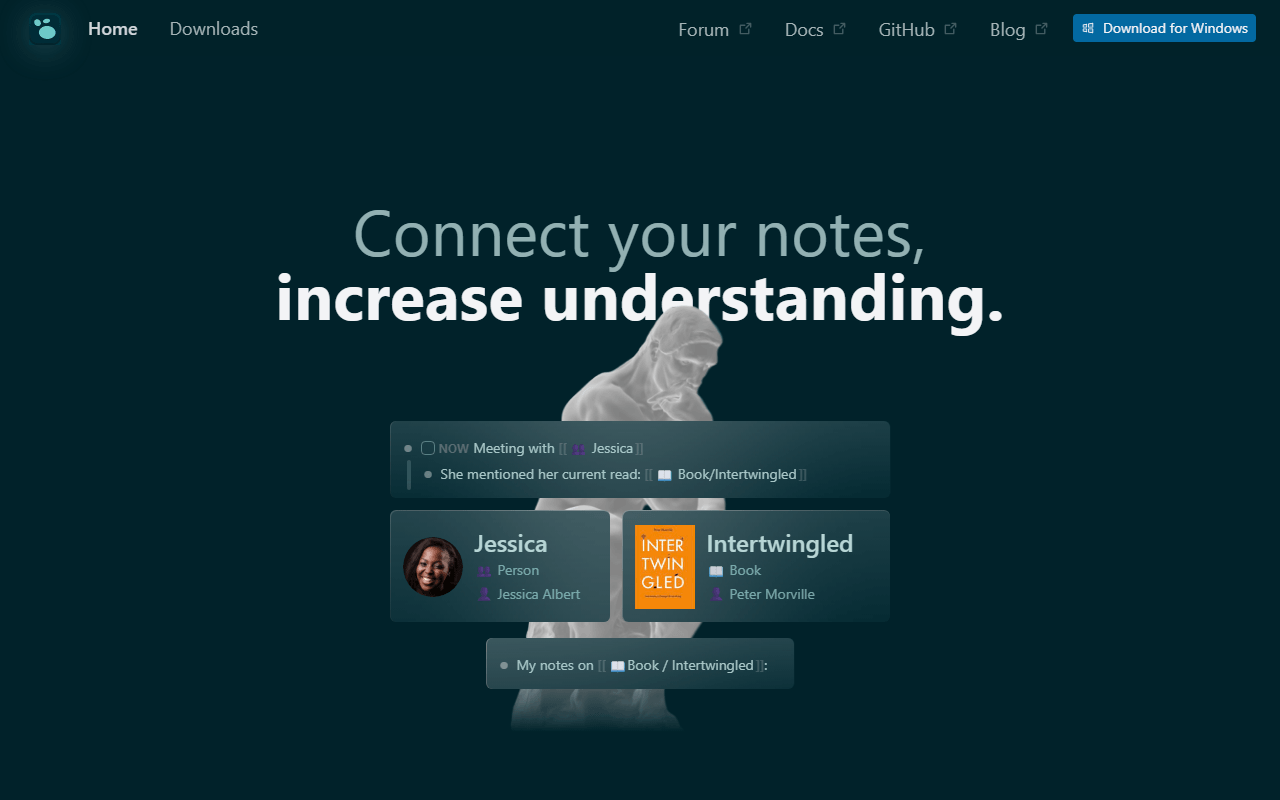
Logseq is an open source outliner for people who think in bullets rather than documents. You open it to today's journal page, start typing, and link concepts with double brackets as you go. Every bullet is a block with its own identity, so you can reference a single line from anywhere and pull related blocks together with queries.
Files stay on your disk as Markdown or Org-mode, in a folder you choose. There is no server involved unless you opt into sync, and no account to create.
Worth your time if you think in bullets
- Daily-journal note-takers who capture first and organize later
- Researchers and students who want block-level references and queries
- Anyone who needs the app itself to be open source, not just the file format
- People running a fully offline setup with no cloud account anywhere
No plans, no prices, funded by Open Collective
As of July 2026, Logseq is free and AGPL-3.0 licensed with every feature included, on Windows, macOS, Linux, iOS, Android, and in the browser. The project is funded by donations through Open Collective. Backers and sponsors get access to the beta Logseq Sync service, which is the only thing money touches, and even that has free workarounds through iCloud, Dropbox, Syncthing, or Git.
The database rewrite, and where Logseq's limits show
- The rewrite to a database backend has been in progress for a long time, and during it the file-based version has seen little visible feature work
- Mobile is noticeably slower and rougher than desktop, especially on large graphs
- Large graphs (tens of thousands of blocks) get sluggish on startup
- The outliner model is opinionated. If you write long-form prose, fighting the bullet structure gets old fast
- Official Sync is still beta and gated to backers, so most people end up on file-sync workarounds and their conflict quirks
Still second, even with the rewrite dragging
Logseq is the pick when open source is a requirement rather than a preference, and when the way you take notes is genuinely outline-shaped. The pace of development is the honest concern here: the database version has been the story for a while, and the file version has been quiet. Your notes are local Markdown, so the downside if the project stalls is limited, which is why we still rank it second.
Reader reviews
What people who actually use Logseq think of it.
No reviews of Logseq yet. If you have used it, yours would be the first.
The useful part is the specifics: what you used it for, and where it got in your way.
Loading...