Free alternatives to Klaviyo
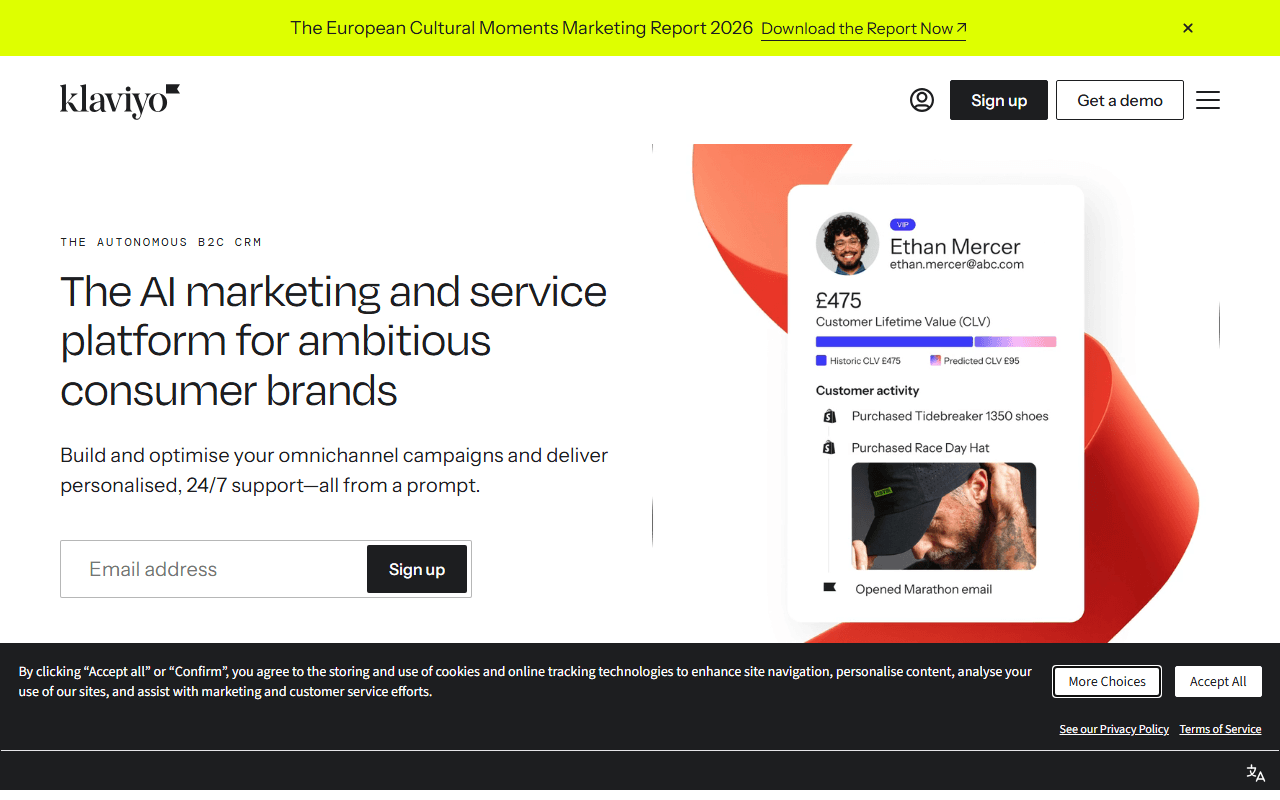
Klaviyo bills on the profiles you hold, not the profiles you email. Since 18 February 2025 a store sitting on 20,000 profiles that mails 8,000 of them pays for all 20,000, and someone who abandoned a cart and never opted in is mailable, so they are billable too. The free plan is 250 active profiles and 500 emails a month (as of July 2026), which a working store passes in a fortnight. Before you read on, one honest warning: most of this category cannot do Klaviyo's actual job. If you need order data, browse events and revenue reporting driving your sends, your options are narrow and mostly not free.
Facts checked as of July 2026Read our Klaviyo review
Jump to an alternative



Brevo
Best Free Alternative ToKlaviyoNever charges for stored contacts, which is the exact mechanism you are leaving
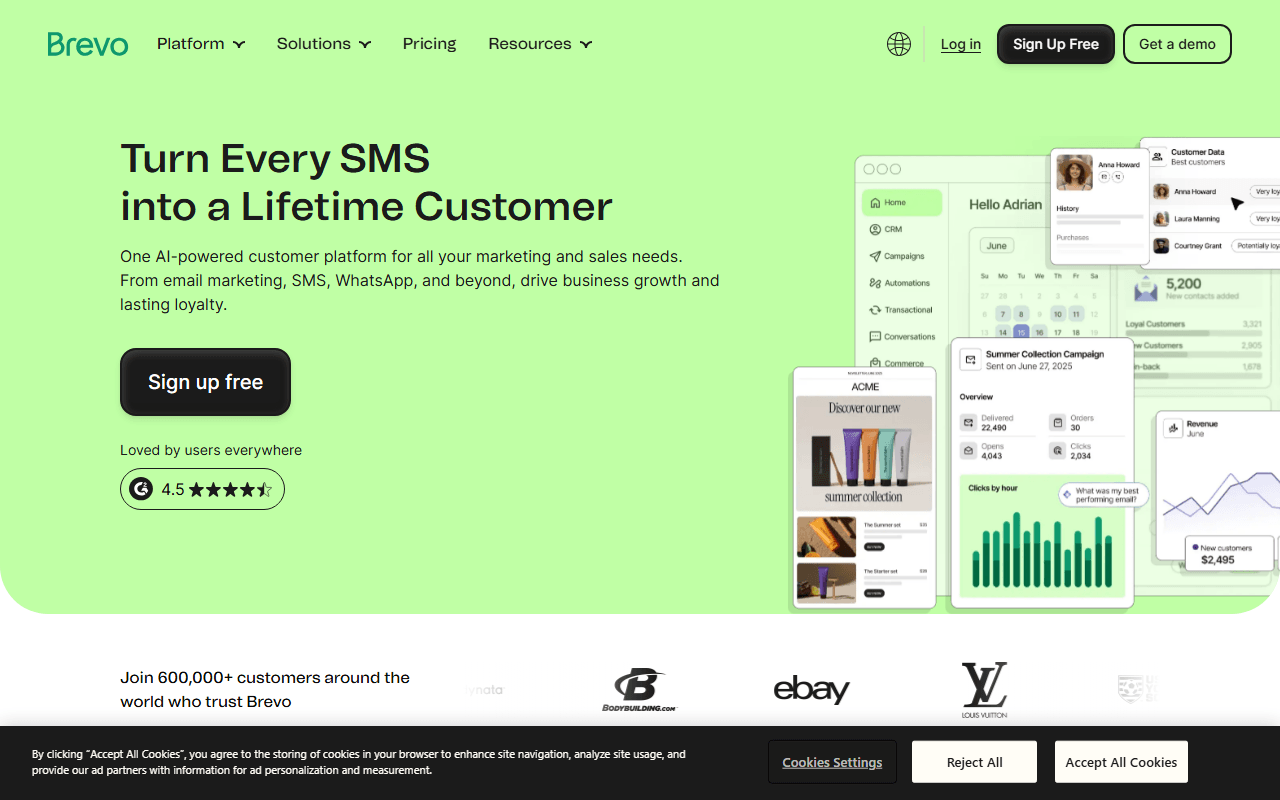
Brevo attacks the thing that makes Klaviyo bills climb. It stores up to 100,000 contacts for free and prices only on emails sent, so a profile you never mail costs you nothing rather than sitting on your invoice. The free plan covers 300 emails a day, roughly 9,000 a month, and includes the drag-and-drop builder, signup forms, basic automation, a CRM and transactional sending. Paid Starter begins at $9 a month for 5,000 emails (as of July 2026).
- Free plan, paid from $9/month (as of July 2026)
- France
 France
- Best for:
- Stores whose Klaviyo bill grew because the profile count grew, not the sending
- The catch:
- The 300 is a daily ceiling rather than a monthly pool, so a launch email to 3,000 people takes ten days on free. Brevo also has nothing like Klaviyo's revenue attribution or browse-abandonment data.
Compared to Klaviyo
- Advantage: 100,000 free contacts and about 9,000 free emails a month, against Klaviyo's 250 profiles and 500 emails
- Advantage: Billed on sends, so profiles you hold but never mail cost nothing
- Advantage: Marketing, transactional and a CRM in one free account
- Advantage: Published price ladder you can read before signing up, starting at $9 a month
- Tradeoff: No revenue attribution or browse-abandonment events
- Tradeoff: Daily 300-email cap makes one-off blasts impossible for free
- Tradeoff: Removing Brevo branding is a paid add-on even on Starter
2,500 free subscribers and 15,000 free emails a month, popups included
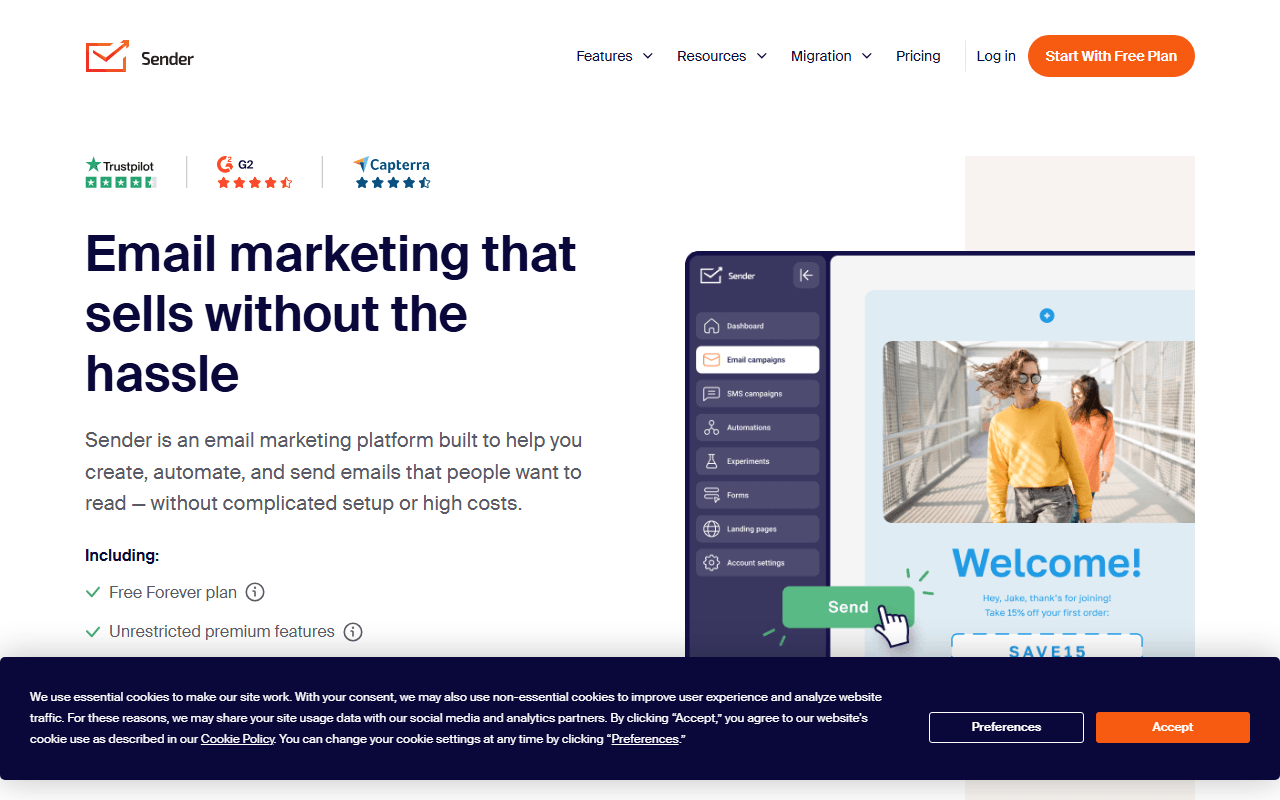
Sender is the biggest genuinely free plan in this category and it is aimed at exactly the kind of small shop that finds Klaviyo overbuilt. Free Forever covers 2,500 subscribers and 15,000 emails a month, spendable as a pool rather than a daily trickle, and automation workflows, landing pages, signup forms and popups are all on it rather than reserved for a paid tier (as of July 2026). Paid Standard starts around $7 a month.
- Free plan, paid from $7/month (as of July 2026)
- Lithuania
 Lithuania
- Best for:
- Small shops under 2,500 subscribers who want automated sequences running at no cost
- The catch:
- Free is one seat, so nobody else on your team can log in, and Sender has no ecommerce event model, so abandoned cart and post-purchase flows built on order data are not on the table.
Compared to Klaviyo
- Advantage: 2,500 free subscribers against Klaviyo's 250 profiles
- Advantage: 15,000 free emails a month against Klaviyo's 500
- Advantage: Automation, landing pages and popups included on free
- Advantage: Paid pricing starts around $7 a month, and Klaviyo publishes no readable rate card
- Tradeoff: No order data, browse events or revenue attribution
- Tradeoff: Single seat on the free plan
- Tradeoff: No SMS, push or WhatsApp against the same profile
The only other tool here that does ecommerce journeys properly
We are ranking Mailchimp third on honesty rather than savings. If what you want from Klaviyo is store integrations, customer journeys and predictive segmentation, Mailchimp is the one alternative on this list that genuinely competes for that work, with deep Shopify and WooCommerce integrations and a large ad-platform catalogue. Its free plan will not rescue you though: 250 contacts and 500 emails a month, capped at 250 a day, which is the same size as Klaviyo's (as of July 2026). Essentials starts at $13 a month and Standard at $20.
- Free plan, paid from $13/month (as of July 2026)
- United States
 United States
- Best for:
- Stores that want Klaviyo's kind of capability with a price list they can actually read
- The catch:
- Mailchimp prices on total contacts too, including unsubscribed and inactive addresses unless you archive them, so you are swapping one contact-based bill for another. Its free plan has also been cut from 2,000 to 500 to 250.
Compared to Klaviyo
- Advantage: Published price ladder, where Klaviyo quotes through a configurator
- Advantage: Customer journeys, predictive segmentation and a large integration catalogue
- Worth knowing: Free plan is 250 contacts and 500 emails, the same size as Klaviyo's
- Tradeoff: Still priced on contacts, so the billing model you are leaving comes with you
- Tradeoff: Free plan has been reduced twice, from 2,000 to 500 to 250
- Tradeoff: Essentials and Standard open as 14-day trials rather than starting paid
A far nicer editor, and it sells digital products natively
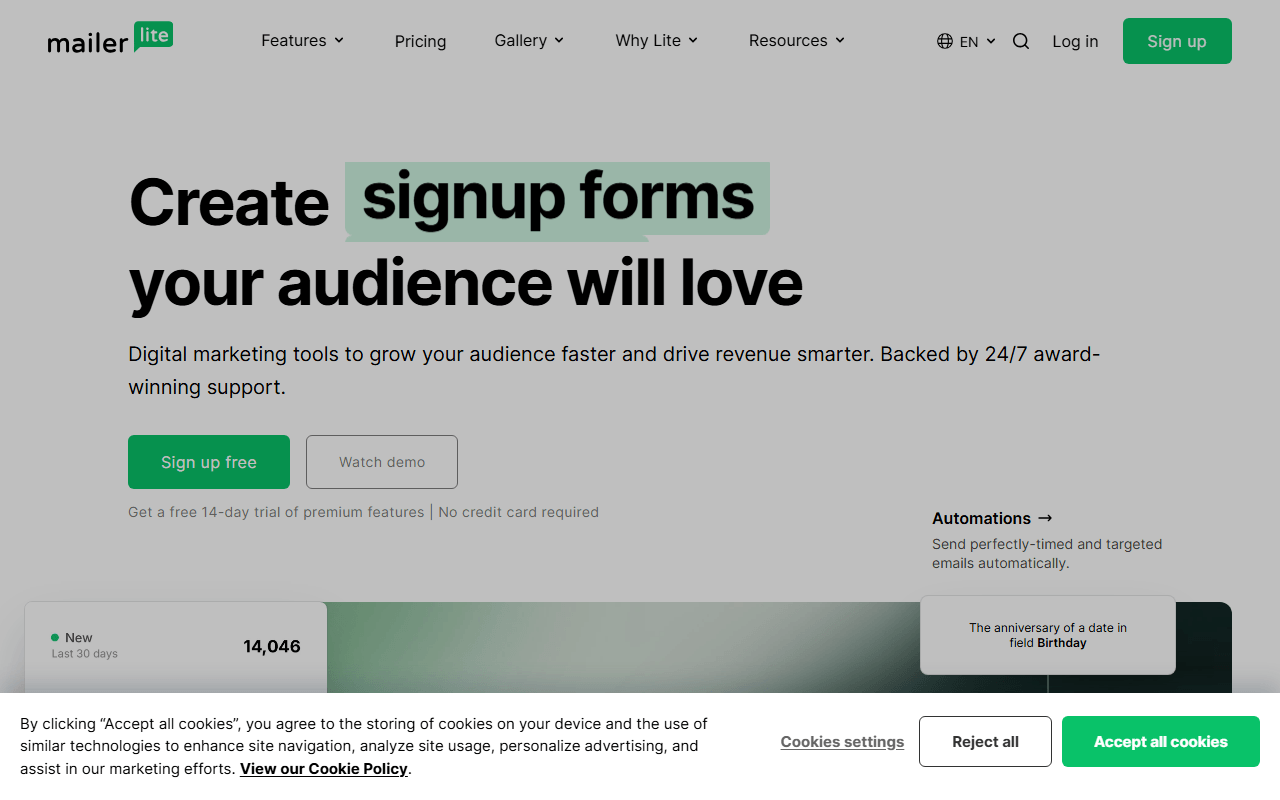
MailerLite is the pick if the reason you are leaving is that Klaviyo is more platform than you need. The editor is the best in the budget tier, templates look good untouched, and paid newsletter subscriptions and digital product sales are built in. The free plan is small: 250 subscribers and 2,500 emails a month, with 3 signup forms, 3 active automations and 1 landing page (as of July 2026). Comfort starts at $12 a month for 500 subscribers, Power at $25.
- Free plan, paid from $12/month (as of July 2026)
- Lithuania
- Best for:
- Small brands who care how the emails look and would rather pay $12 than read a configurator
- The catch:
- The 250-subscriber free ceiling matches Klaviyo's profile cap, so free is a trial here too, and there is no ecommerce event model behind it.
Compared to Klaviyo
- Advantage: 2,500 free emails a month against Klaviyo's 500
- Advantage: Flat, published prices starting at $12 a month
- Advantage: Paid newsletters and digital product sales built in
- Worth knowing: Free plan stops at 250 subscribers, the same order of size as Klaviyo's
- Tradeoff: Only 3 active automations on free, where Klaviyo caps volume rather than features
- Tradeoff: No order data, revenue reporting or SMS
The same event-driven shape, for a software product rather than a store
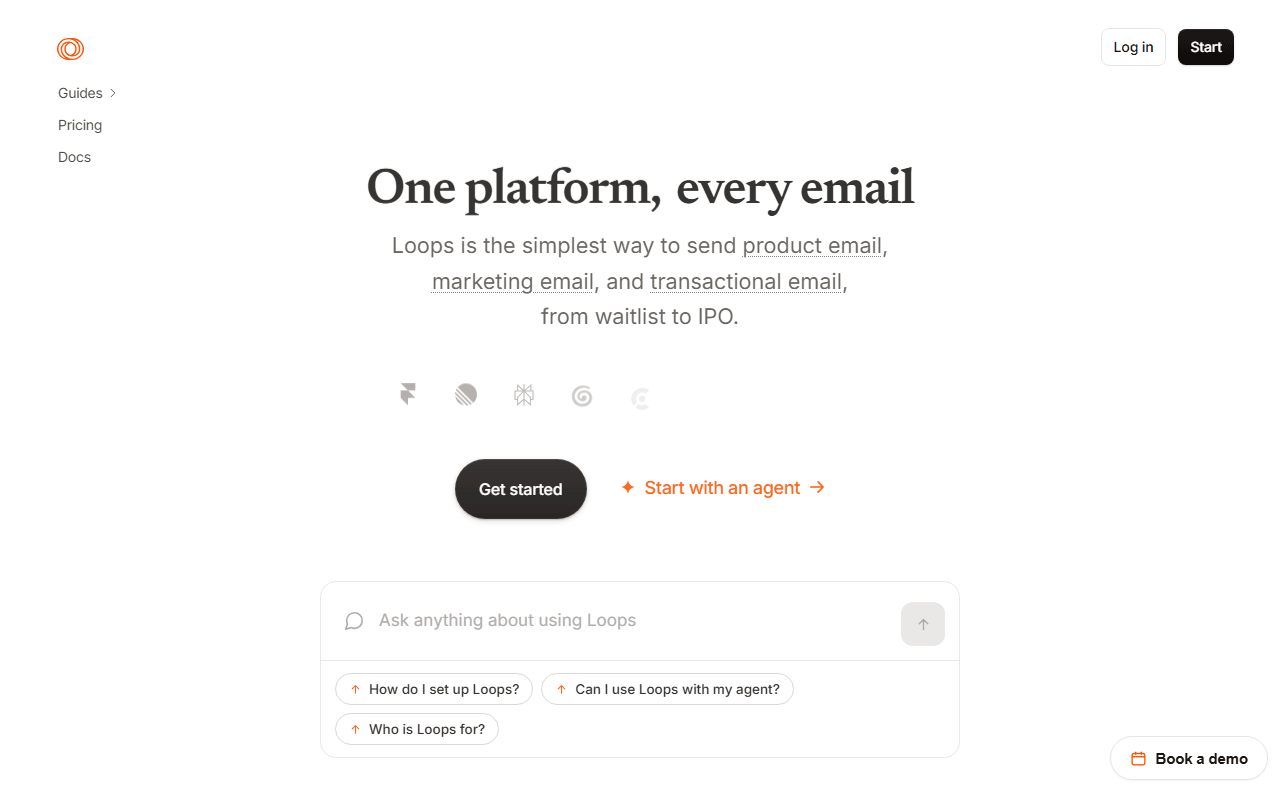
Loops is the closest thing here to Klaviyo's design if what you run is an app rather than a shop. Automations trigger off events your product sends, marketing and transactional email share one contact record, and every feature sits on one plan priced only by contact count. The free plan covers under 1,000 contacts and 4,000 sends per 30 days with nothing switched off, and the paid plan is $49 a month for 5,000 contacts with unlimited sends (as of July 2026).
- Free plan, paid from $49/month (as of July 2026)
- United States
- Best for:
- SaaS teams who were using Klaviyo for onboarding and receipts rather than carts
- The catch:
- Transactional email draws on the same 4,000-send allowance, so an app with real users burns it fast, and the step from free to $49 a month is the steepest in this category with nothing in between.
Compared to Klaviyo
- Advantage: 1,000 free contacts and 4,000 free sends against Klaviyo's 250 and 500
- Advantage: Every feature on the free plan, like Klaviyo, with no tier puzzles
- Advantage: One published price, $49 a month for 5,000 contacts
- Advantage: Transactional email included rather than metered separately
- Tradeoff: No ecommerce integrations, order data or revenue attribution
- Tradeoff: No SMS, WhatsApp or push against the same profile
- Tradeoff: Free plan has been revised more than once
A plain newsletter tool with 2,500 free subscribers and your own Amazon SES option
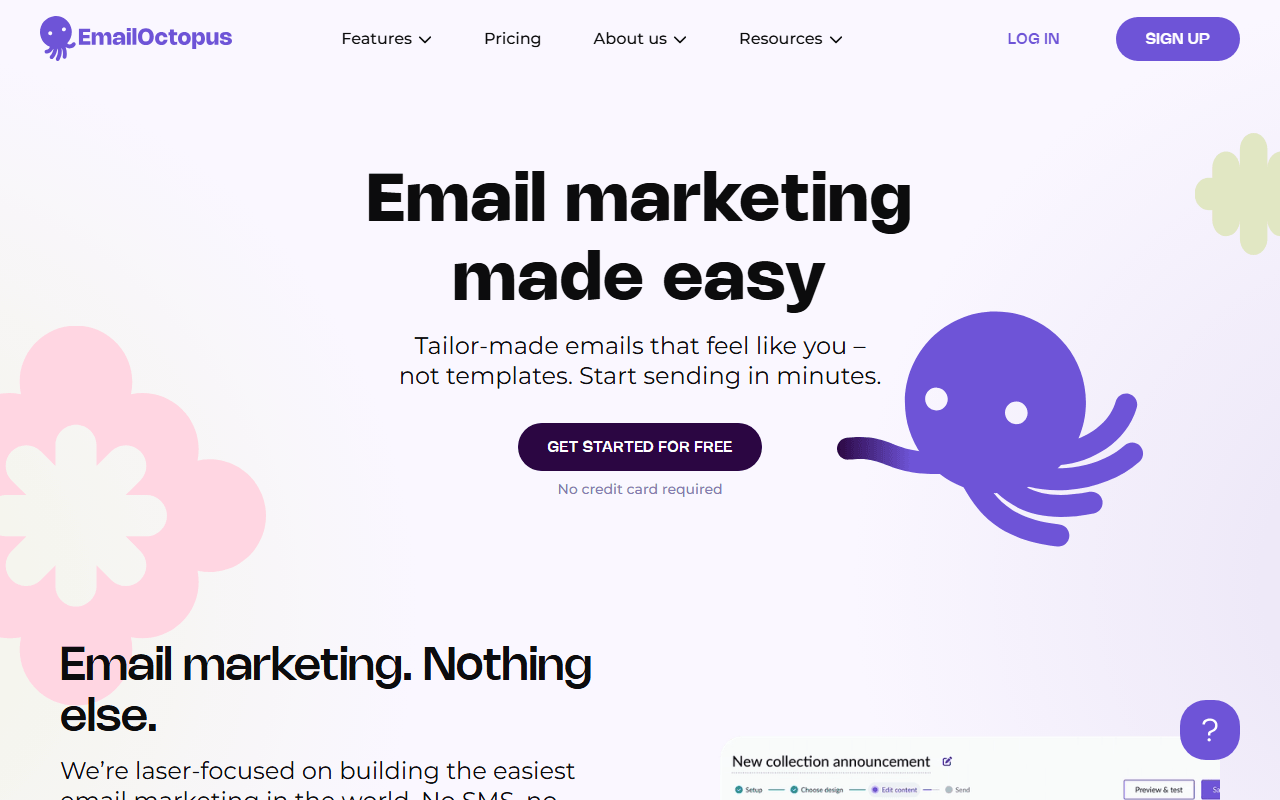
EmailOctopus is what you move to when you decide you did not need a customer data platform after all. There is no CRM, no SMS and no event model, just campaigns to a list. Free covers 2,500 subscribers and 10,000 emails a month, and Pro starts at $9 a month billed annually (as of July 2026). Its distinctive feature is EmailOctopus Connect, which routes sending through your own Amazon SES account at near-wholesale rates, which is the cheapest per-email position on this list once volume climbs.
- Free plan, paid from $9/month (as of July 2026)
- United Kingdom
 United Kingdom
- Best for:
- Brands whose Klaviyo account was really just being used to send a monthly newsletter
- The catch:
- Subscribers and monthly sends are two independent limits, so a small list on a daily email hits 10,000 sends while sitting well inside 2,500 subscribers. There is nothing here for abandoned carts.
Compared to Klaviyo
- Advantage: 2,500 free subscribers and 10,000 free emails against Klaviyo's 250 and 500
- Advantage: Amazon SES routing gets very cheap at high volume
- Advantage: Published prices from $9 a month billed annually
- Tradeoff: No ecommerce integrations, flows on order data, or revenue reporting
- Tradeoff: Basic editor and simpler segmentation
- Tradeoff: Free reporting history is capped
No profile count to bill, because there is no vendor
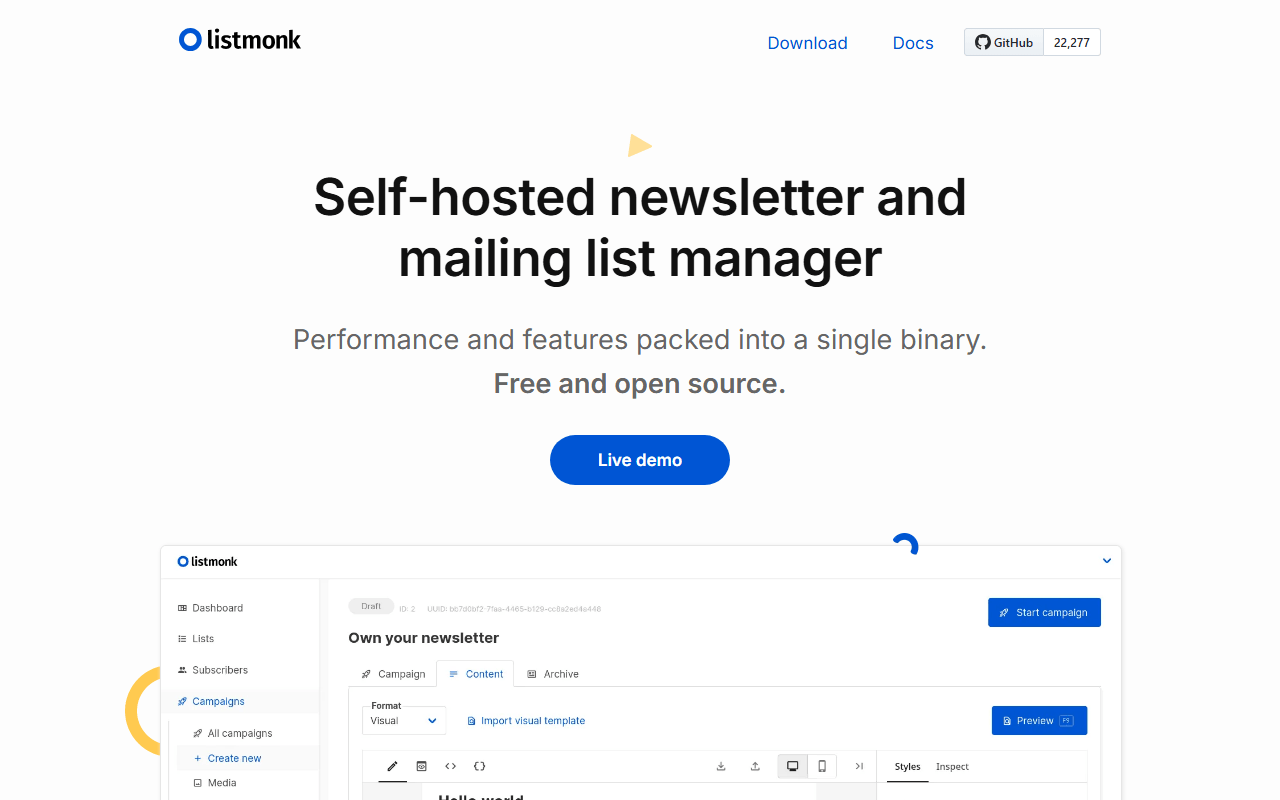
listmonk removes the billing model entirely. It is a self-hosted AGPL-3.0 mailing list manager in one Go binary against Postgres, with no subscriber cap and no send cap, and the project documents a seven million email campaign running on under one CPU core. Segmentation is raw SQL against your own subscriber table, which is either very good or very bad news depending on who you are.
- Completely free (as of July 2026)
- India
- Open source (AGPL-3.0)
 India
India- Best for:
- Technical teams with a large list who want the per-profile bill to disappear
- The catch:
- listmonk does not deliver mail. You supply and pay an SMTP provider such as Amazon SES, Postmark or Mailgun, plus a small server, and SPF, DKIM, DMARC, bounces and blocklists all become your job rather than a vendor's.
Compared to Klaviyo
- Advantage: No subscriber cap and no send cap, so neither of Klaviyo's ceilings exists
- Advantage: Your list is a Postgres table you own, with no vendor branding
- Advantage: At scale, a VPS plus Amazon SES costs a fraction of a per-profile bill
- Tradeoff: You own deliverability that Klaviyo handles for you, DMARC included
- Tradeoff: No ecommerce integrations, flows on order data, SMS or push
- Tradeoff: Segmentation assumes you can write SQL
- Tradeoff: Support is a GitHub issue tracker, not a helpdesk
How to choose
Split the question in two. If you want the ecommerce machinery and only the bill is the problem, Mailchimp is the only tool here with comparable journeys and store integrations, and its free plan is no bigger than Klaviyo's, so plan on paying either way. If your emails are really campaigns to a list, Brevo is the direct fix for profile-based billing because it never charges for stored contacts at all, and Sender gives you the most free sending in the category. If you are a software product rather than a shop, Loops is the closest match to Klaviyo's event-driven shape. Only self-host listmonk if you already own your deliverability and are happy to hand-roll the segmentation in SQL.