Free alternatives to Loops
Loops is a clean way to run marketing and transactional email from one product, but the free plan stops at under 1,000 contacts and 4,000 sends per 30 days (as of July 2026), and transactional email counts against that same allowance, so an active app burns through it fast. The bigger problem is the next step: paid is $49 a month for 5,000 contacts, the steepest jump in this category, with nothing in between. If that cliff is too much, or you want a bigger free tier while you grow, these tools give you more runway.
Facts checked as of July 2026Read our Loops review
Jump to an alternative





Brevo
Best Free Alternative ToLoopsMarketing and transactional email from one account too, but 100,000 free contacts and a $9 entry plan
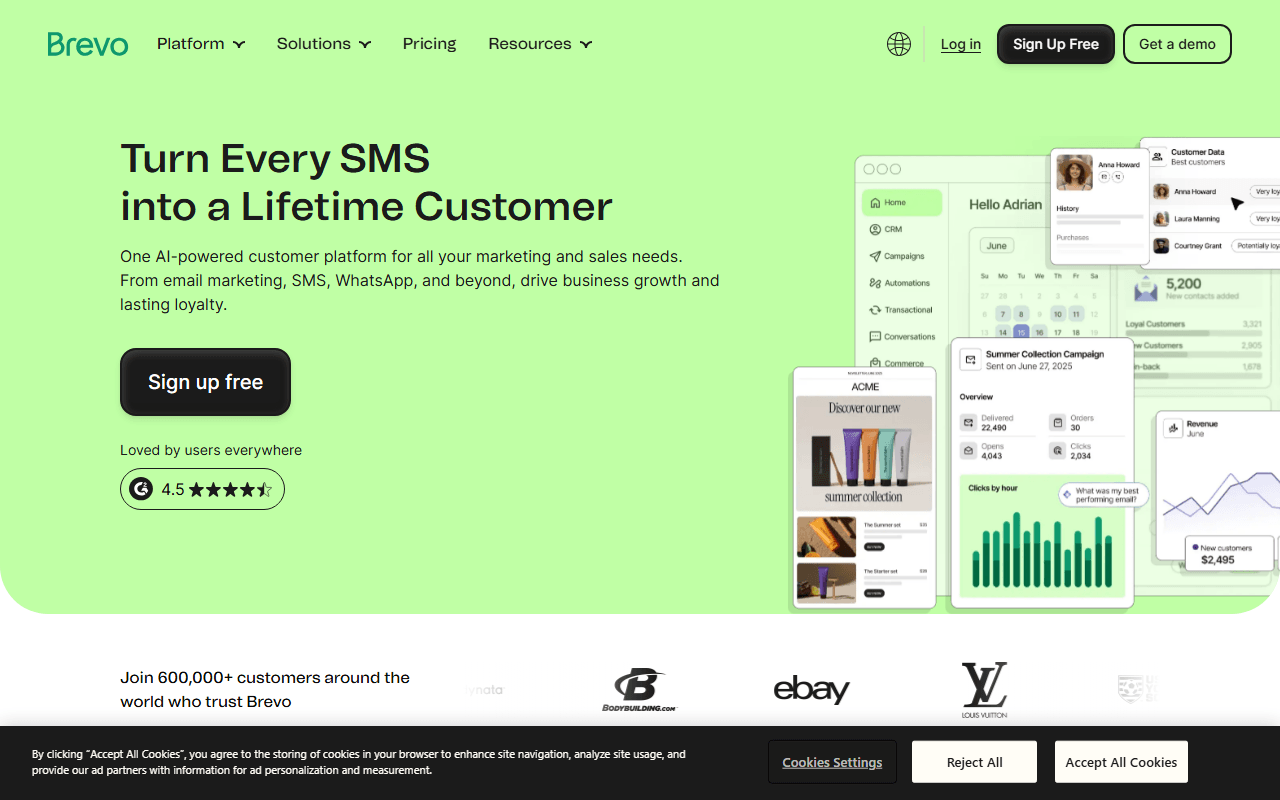
Brevo keeps the thing people like about Loops, marketing and transactional email in one place, but removes the two things that hurt: it stores up to 100,000 contacts for free instead of under 1,000, and paid Starter begins at $9 a month rather than a $49 cliff. The free plan covers 300 emails a day, roughly 9,000 a month, across the builder, forms, basic automation, a CRM, and transactional sending. It never charges for stored contacts, only for emails sent.
- Free plan, paid from $9/month (as of July 2026)
- France
 France
- Best for:
- SaaS teams who want one account for marketing and transactional without the $49 jump
- The catch:
- The free plan's 300 is a daily ceiling, not a monthly pool, so a one-off blast to a few thousand people is not free, and removing Brevo branding is a paid add-on even on Starter.
Compared to Loops
- Advantage: Up to 100,000 free contacts versus Loops' under 1,000
- Advantage: Roughly 9,000 free emails a month versus Loops' 4,000 sends per 30 days
- Advantage: Paid starts at $9 a month, not a $49 jump
- Advantage: Marketing and transactional email from one account, like Loops
- Tradeoff: Free sending is a 300-a-day cap, not a monthly pool
- Tradeoff: Removing Brevo branding is a paid add-on even on Starter
- Worth knowing: Busier interface spanning email, SMS, CRM, and chat
The largest free plan here, 2,500 subscribers and 15,000 emails a month
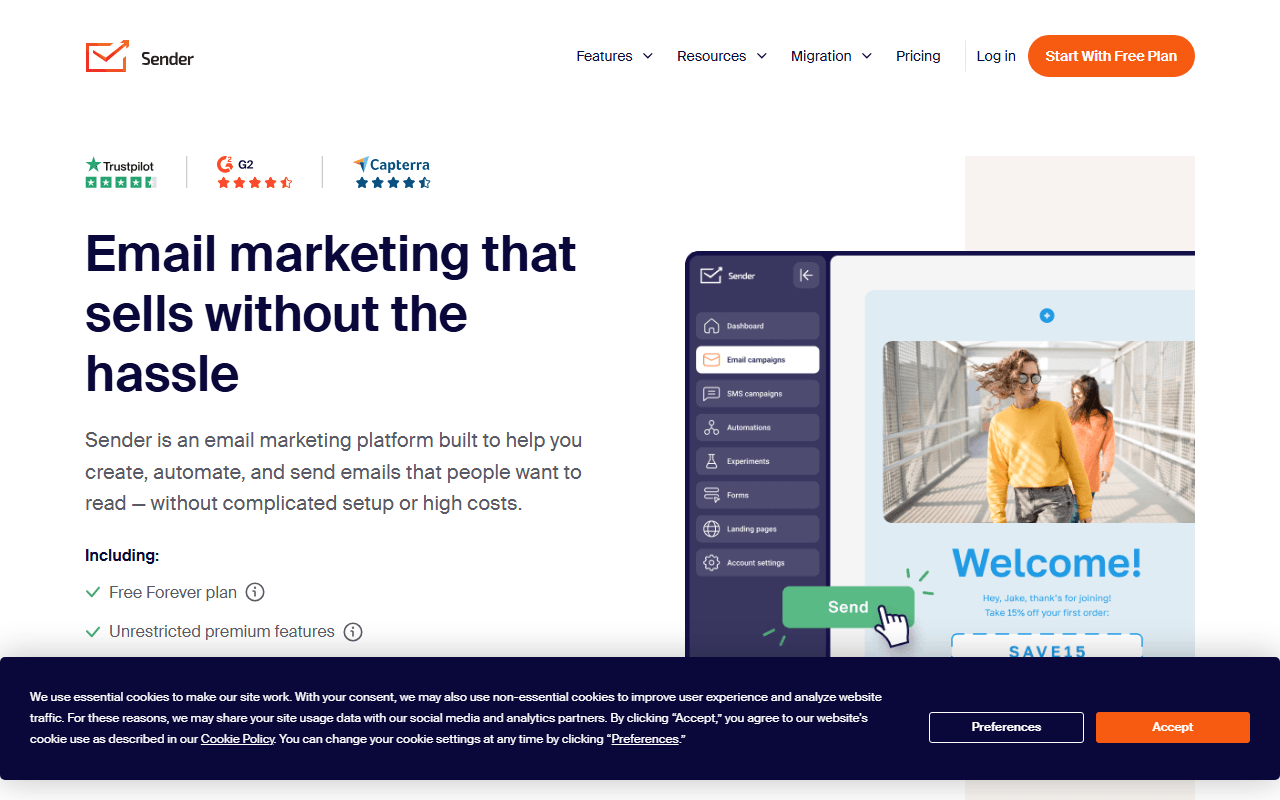
Sender gives you far more free runway than Loops while you grow: 2,500 subscribers and 15,000 emails a month, with automation, landing pages, forms, and popups included. It is a marketing tool rather than a product-email platform, so there is no transactional API to share a contact record with. Paid Standard starts around $7 a month and scales with subscriber count.
- Free plan, paid from $7/month (as of July 2026)
- Lithuania
 Lithuania
- Best for:
- Teams who only need marketing email and want the most free headroom
- The catch:
- Sender does not do transactional email, so if you left Loops precisely to keep receipts and campaigns together, this is not the replacement. The free plan is also single-seat.
Compared to Loops
- Advantage: 2,500 free subscribers versus Loops' under 1,000 contacts
- Advantage: 15,000 free emails a month versus Loops' 4,000 sends per 30 days
- Advantage: Automation, landing pages, and popups included free
- Advantage: Entry paid pricing around $7 a month versus Loops' $49
- Tradeoff: No transactional email, unlike Loops' unified product
- Tradeoff: Free plan is single-seat
- Tradeoff: Built for marketers, not product-driven event emails
A better editor and native paid newsletters, at $12 a month instead of $49
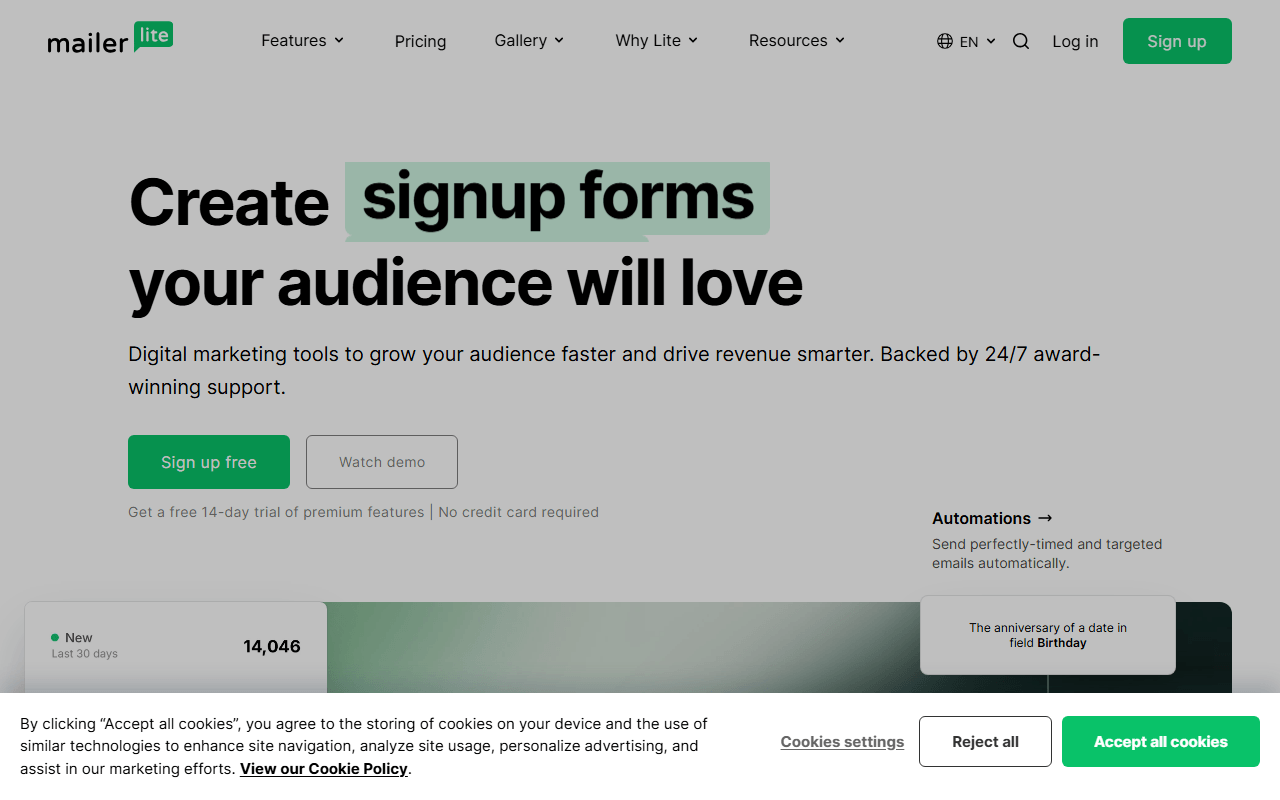
MailerLite is the pick if you are leaving Loops for a marketing tool with a nicer editor and a gentler paid step. Comfort starts at $12 a month for 500 subscribers, well under Loops' $49, and it supports paid newsletter subscriptions and digital product sales. The free plan is smaller, 250 subscribers and 2,500 emails a month, with 3 signup forms and 3 active automations.
- Free plan, paid from $12/month (as of July 2026)
- Lithuania
- Best for:
- Creators who want good-looking marketing email and a cheaper paid tier
- The catch:
- MailerLite does not do transactional email, and its free plan of 250 subscribers is smaller than Loops', so treat it as a trial before the $12 plan.
Compared to Loops
- Advantage: Paid starts at $12 a month, well below Loops' $49
- Advantage: Best-designed editor in the budget tier
- Advantage: Paid newsletters and digital product sales built in
- Tradeoff: 250 free subscribers versus Loops' under 1,000 contacts
- Tradeoff: 2,500 free emails a month versus Loops' 4,000 sends per 30 days
- Tradeoff: No transactional email to pair with campaigns
A simple newsletter tool with 2,500 free subscribers and an Amazon SES escape hatch
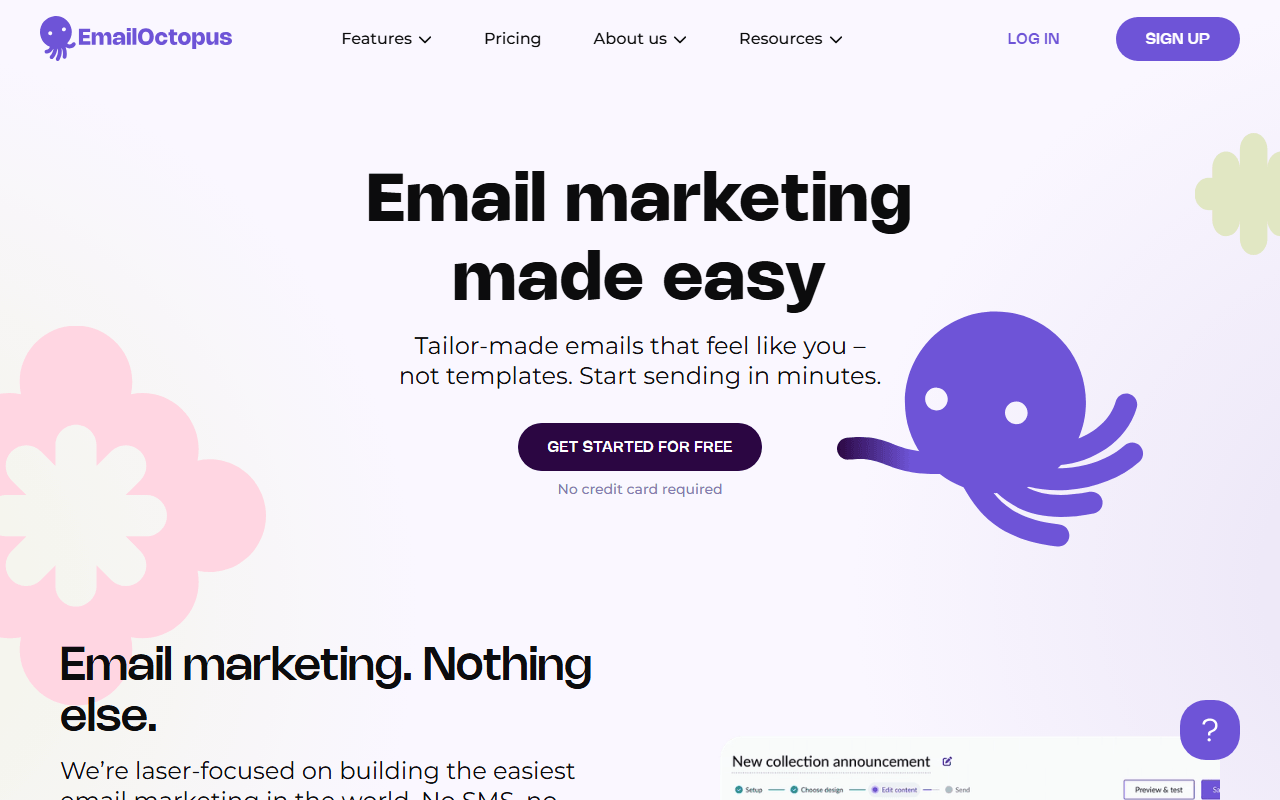
EmailOctopus is a deliberately simple newsletter tool with a larger free plan than Loops: 2,500 subscribers and 10,000 emails a month. Its distinctive feature is EmailOctopus Connect, which routes your sending through your own Amazon SES account for near-wholesale rates, beating per-contact pricing at volume. Pro starts at $9 a month billed annually. It is marketing-only, with no transactional API.
- Free plan, paid from $9/month (as of July 2026)
- United Kingdom
 United Kingdom
- Best for:
- Newsletter writers who want a simple tool, and senders who can wire up Amazon SES
- The catch:
- Subscribers and monthly sends are two separate limits, and there is no transactional email, so it does not replace Loops' unified product for a SaaS.
Compared to Loops
- Advantage: 2,500 free subscribers versus Loops' under 1,000 contacts
- Advantage: 10,000 free emails a month versus Loops' 4,000 sends per 30 days
- Advantage: Amazon SES routing gets very cheap at high volume
- Advantage: Pro from $9 a month, well under Loops' $49
- Tradeoff: No transactional email, unlike Loops
- Tradeoff: Basic editor, so design-led senders feel constrained
- Worth knowing: Pro pricing scales with subscriber count
Self-hosted, open source, transactional included, and no caps at all
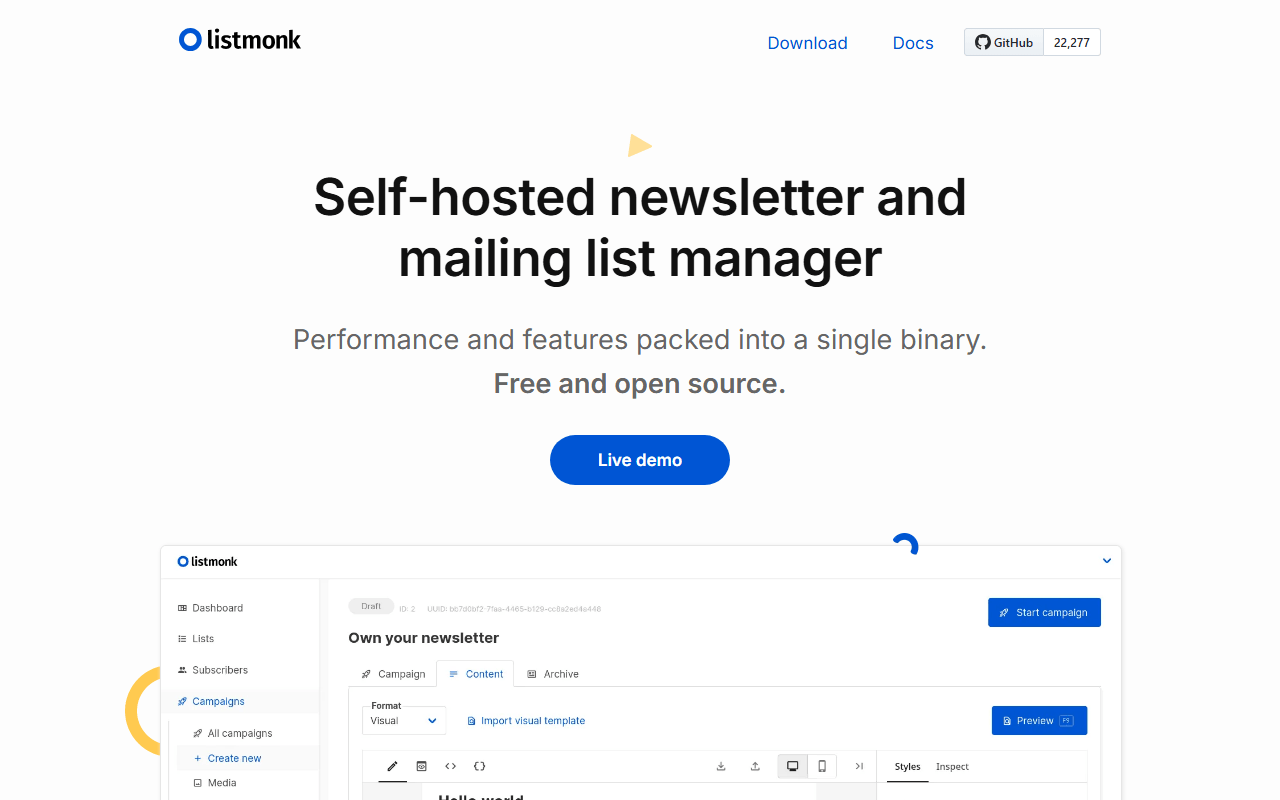
listmonk is the pick for a technical team that wants Loops' unified sending without the $49 cliff: a single Go binary and Postgres, AGPL-3.0, with no subscriber or send limits and transactional sending built in. It is fast, documented running a seven million email campaign on under one CPU core. The catch is that listmonk does not deliver email, so you supply and pay an SMTP provider such as Amazon SES and own deliverability.
- Completely free (as of July 2026)
- India
- Open source (AGPL-3.0)
 India
India- Best for:
- Engineering teams who want unified sending with no limits and full ownership
- The catch:
- Free means free software, not free sending. You run the server, pay an SMTP provider per email, and own SPF, DKIM, bounces, and blocklists.
Compared to Loops
- Advantage: No subscriber or send limits versus Loops' 1,000 contacts and 4,000 sends
- Advantage: Transactional and campaign sending in one self-hosted tool
- Advantage: Your subscriber list is a Postgres table you own
- Advantage: No $49 paid cliff; the software is free
- Tradeoff: You supply and pay an SMTP provider, and own deliverability
- Tradeoff: Requires a server, Postgres 12+, and DNS setup
- Tradeoff: No landing pages, popups, or visual polish
The most complete platform, if you want ecommerce depth Loops does not have
Mailchimp is the full-suite option, with a mature builder, deep reporting, a huge integration catalogue, and strong customer journeys. Its free plan is 250 contacts and 500 emails a month, capped at 250 a day, smaller than Loops', and paid plans price on total contacts starting at $13 a month on Essentials. It supports transactional email, though as a separate add-on rather than Loops' one bundled plan.
- Free plan, paid from $13/month (as of July 2026)
- United States
 United States
- Best for:
- Ecommerce teams who use Shopify integrations, journeys, and predictive segmentation
- The catch:
- You pay for every contact, inactive included, and the free plan of 250 contacts and 500 emails is smaller than Loops' on both counts.
Compared to Loops
- Advantage: Deepest reporting and integration catalogue in the category
- Advantage: Customer journeys and ecommerce features Loops lacks
- Tradeoff: 250 free contacts and 500 free emails versus Loops' 1,000 and 4,000
- Tradeoff: Prices on total contacts, inactive included
- Tradeoff: Transactional email is a separate add-on, not one bundled plan
A writer-first tool that bills only on active subscribers, with transactional too
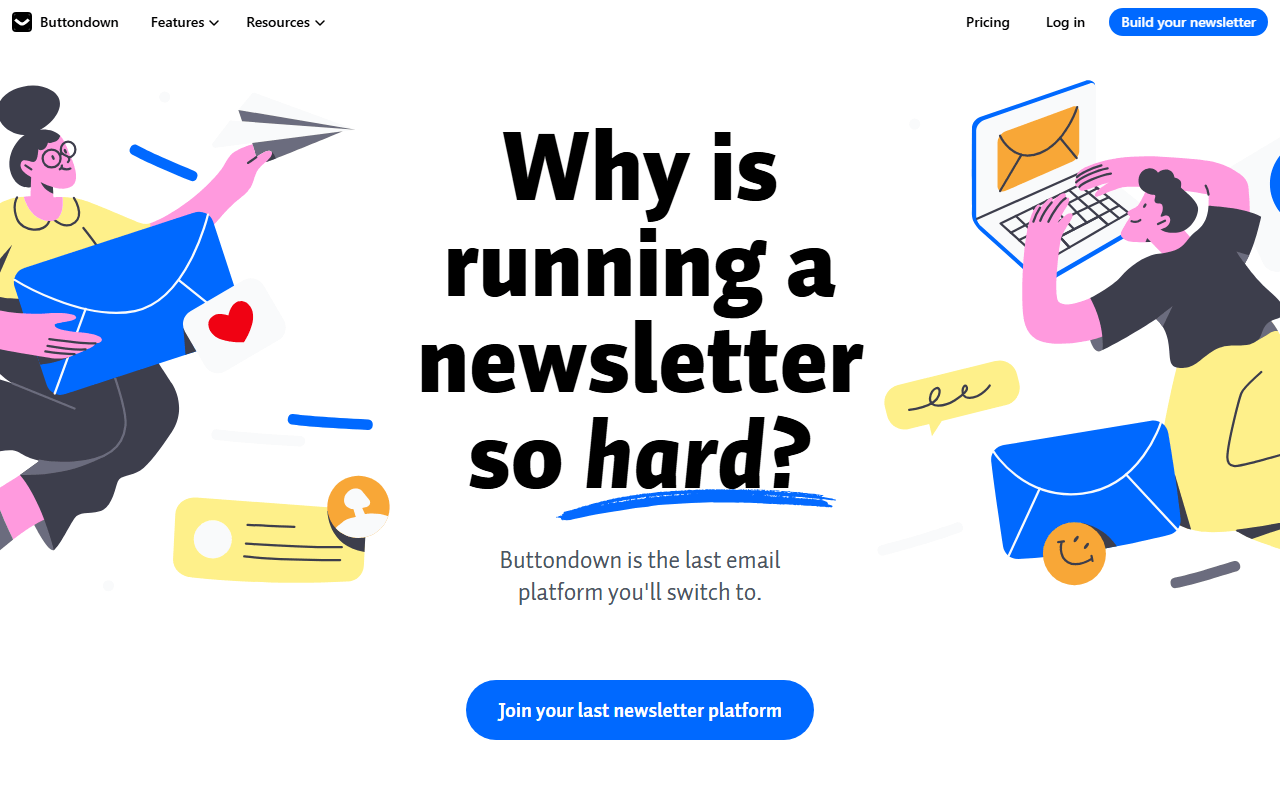
Buttondown suits the Loops user who has realised they want to write a newsletter more than run product-email automations. You draft in Markdown, send from your own domain, and get a hosted archive, and it bills on active subscribers rather than every contact stored. It is free for your first 100 subscribers and at most one email a day. Beyond that, features are sold a la carte, so analytics, segmentation, and paid subscriptions are $9 a month each.
- Free plan (as of July 2026)
- United States
- Best for:
- People who would rather write a newsletter than build product-email flows
- The catch:
- 100 free subscribers and about one email a day is smaller than Loops' free plan, and the a la carte add-ons stack quickly.
Compared to Loops
- Advantage: Bills on active subscribers, not every stored contact
- Advantage: Markdown editor and sending from your own domain
- Advantage: Transactional email available alongside newsletters
- Tradeoff: 100 free subscribers versus Loops' under 1,000 contacts
- Tradeoff: About one email a day free, versus Loops' 4,000 sends per 30 days
- Tradeoff: Analytics, segmentation, and automations are separate paid add-ons
- Tradeoff: Built for writers, not product-driven event emails
How to choose
Start with two numbers: how many contacts you store and how many emails you send a month, and remember Loops counts transactional against the same pool. If you want to keep marketing and transactional email in one account but store far more for free, Brevo holds up to 100,000 contacts and starts paid at $9 a month instead of $49. If you only need marketing email and want the largest free plan, Sender covers 2,500 subscribers and 15,000 emails a month. Self-host listmonk if you want transactional sending with no caps and are happy running your own SMTP provider, and pay MailerLite $12 a month if a better editor matters more than transactional email.