Free alternatives to Make
Make has a genuinely good free tier, 1,000 operations a month across two active scenarios, so most people leaving it are not angry, they are scaling (as of July 2026). The catch is the operation meter: Make counts an operation for every module call, so a scenario with several steps uses several operations each run, and busy multi-step automations drain the free 1,000 faster than the number suggests. When that happens, you either move up Make's paid ladder or you look for a tool that either bills per whole run or removes the meter entirely by letting you self-host.
Facts checked as of July 2026Read our Make review
Jump to an alternative


n8n
Best Free Alternative ToMakeOne execution per run instead of an operation per module
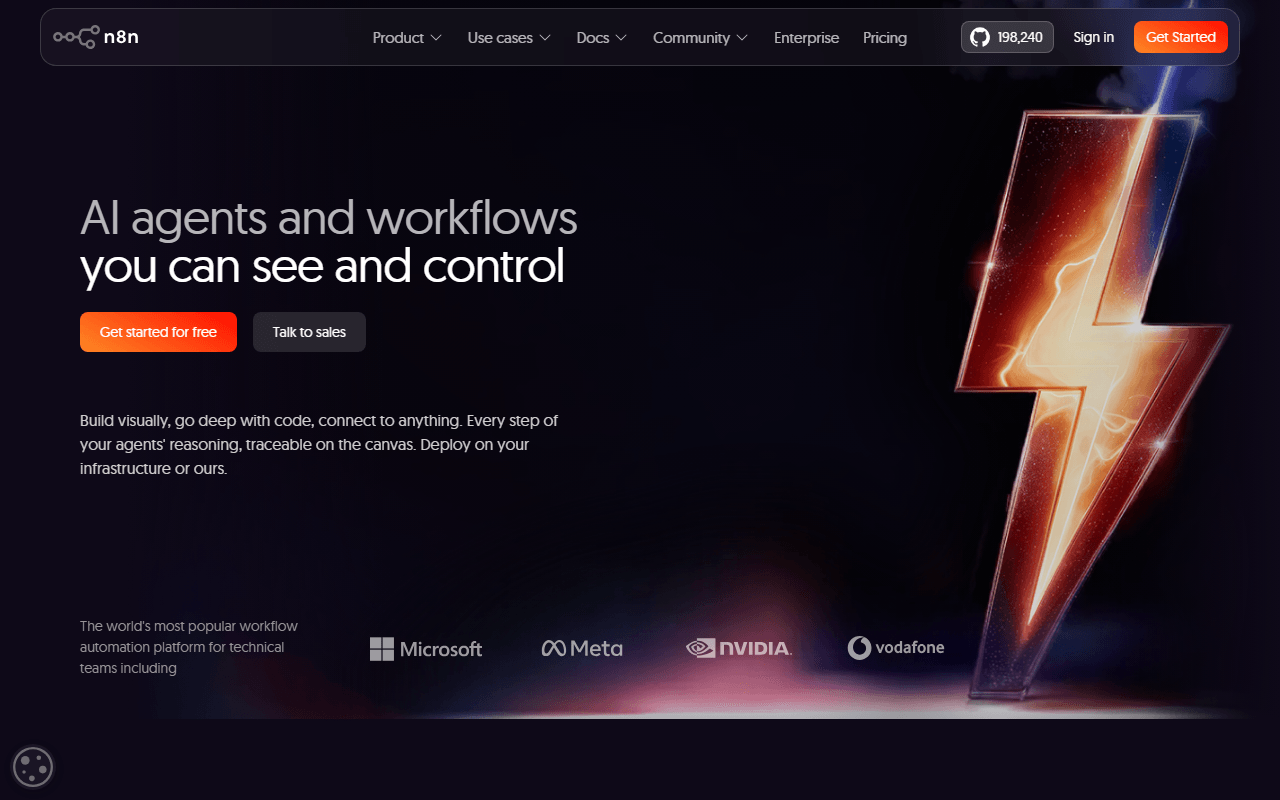
n8n fixes the exact thing that makes Make's free tier run out: the per-module meter. It counts a single execution per whole workflow run no matter how many steps are inside, so a step-heavy automation that would chew through Make's operations is one execution in n8n. Self-host the fair-code Community Edition and even that meter disappears, leaving unlimited workflows and unlimited executions on your own server.
- Free plan, paid from €20/month (as of July 2026)
- Germany
 Germany
- Best for:
- Teams with multi-step workflows who can self-host and want to stop counting per-module usage
- The catch:
- The free route is self-hosting with Docker or Node.js and a database, and n8n Cloud has no free-forever plan, only a trial from 20 euros a month.
Compared to Make
- Advantage: Counts one execution per run, not an operation per module
- Advantage: Self-hostable free with unlimited workflows and executions
- Advantage: Deeper code and AI capabilities than Make's builder
- Tradeoff: Make is fully hosted and needs no server; n8n's free path does
- Tradeoff: Make's visual canvas is more polished for beginners than n8n's
- Worth knowing: Both connect to a broad catalogue of apps
Unlimited runs on the cloud free tier, plus free self-hosting
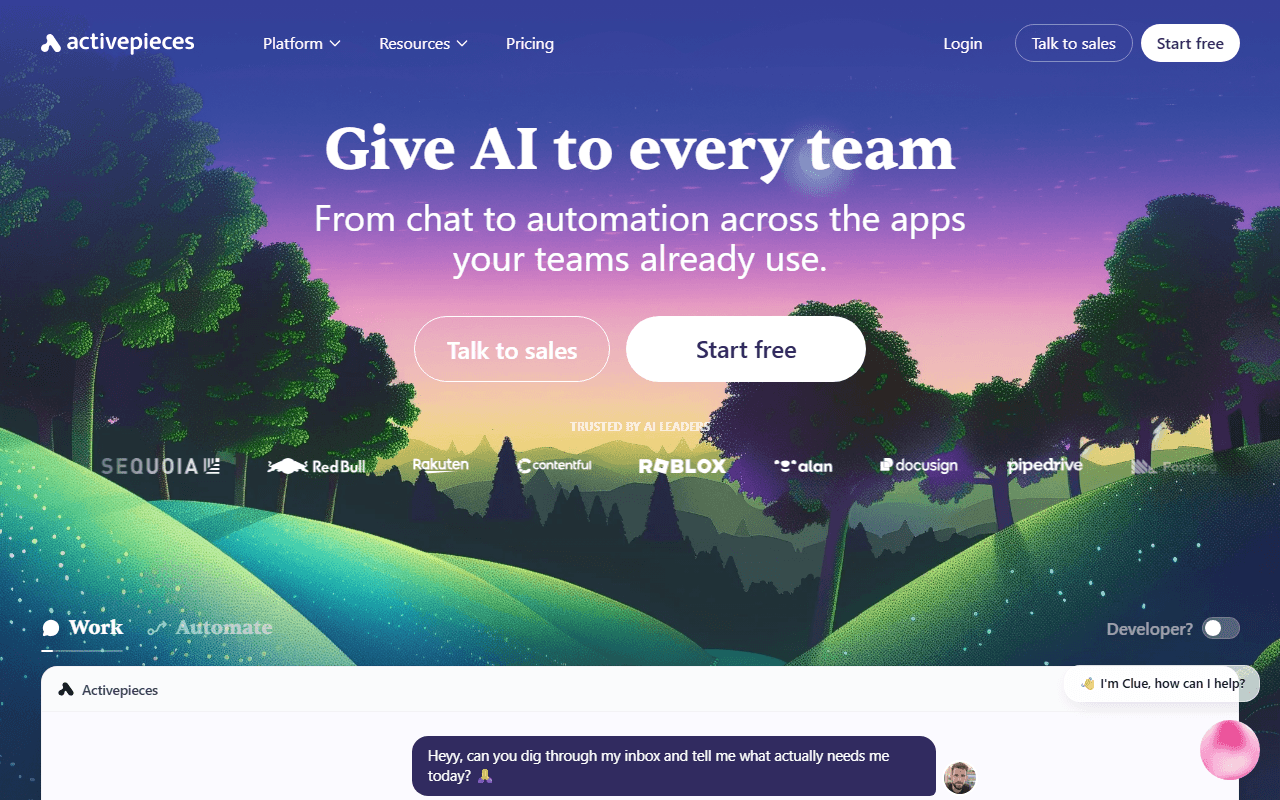
Activepieces removes Make's meter in a different way: its cloud free tier gives you 10 active flows with unlimited runs, so how often a flow fires never costs you anything. It is true MIT open source, self-hosts free with unlimited flows, and its builder keeps the approachable, visual feel that draws people to Make in the first place. For a Make user hitting the operation cap, unlimited runs is the headline.
- Free plan, paid from $5/month (as of July 2026)
- United States
- Open source (MIT (Community Edition))
 United States
- Best for:
- Make users who want unlimited runs and an open source option without giving up an easy builder
- The catch:
- Its connector library is smaller than Make's, and the cloud free tier caps you at 10 active flows before charging $5 per flow.
Compared to Make
- Advantage: Unlimited runs on the free cloud tier, versus Make's operation cap
- Advantage: True MIT open source with free self-hosting
- Advantage: Approachable visual builder, close to Make's ease
- Tradeoff: Fewer connectors than Make's mature catalogue
- Tradeoff: Cloud free tier limited to 10 active flows
- Worth knowing: Both offer AI steps and a visual canvas
Compute-based credits instead of counting every module call
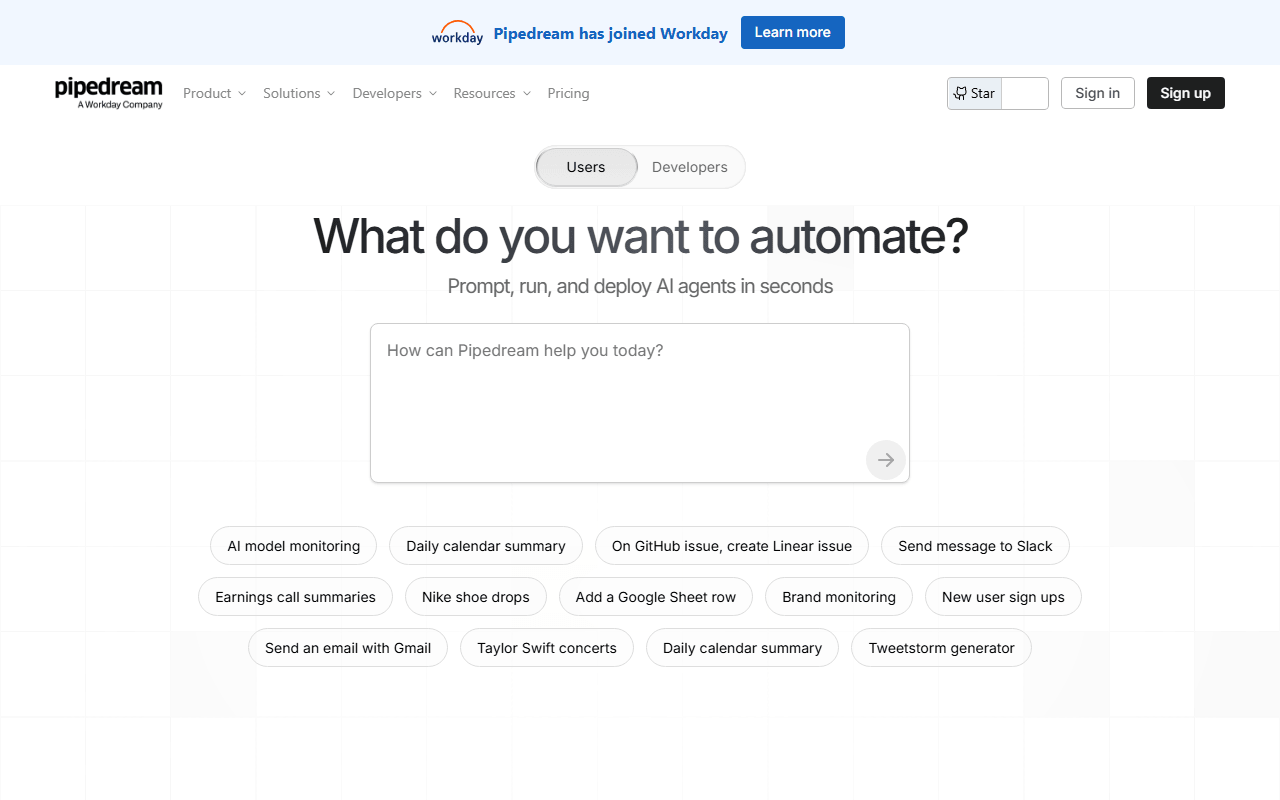
Pipedream is the hosted option that reframes the metering problem. Instead of an operation per module, it bills credits tied to compute time, so most workflows cost a single credit regardless of how many steps they contain. For a developer whose Make scenarios are step-heavy, that model can be gentler, and you get to drop into Node.js or Python wherever a prebuilt step falls short.
- Free plan (as of July 2026)
- United States
- Best for:
- Developers on Make who want code-first control and billing tied to compute rather than module count
- The catch:
- Pipedream renders its pricing client-side, so we could not verify the exact free-tier numbers, and it is far more code-oriented than Make's visual canvas.
Compared to Make
- Advantage: Credits tied to compute, not an operation per module
- Advantage: Full Node.js and Python at any step, beyond Make's functions
- Advantage: Open source connectors you can inspect and extend
- Tradeoff: Much more code-first than Make's approachable visual builder
- Tradeoff: Exact free-tier limits could not be confirmed first-party
- Worth knowing: Both are hosted with no self-hosting option
Free and open source, and the better fit when workflows leave the browser
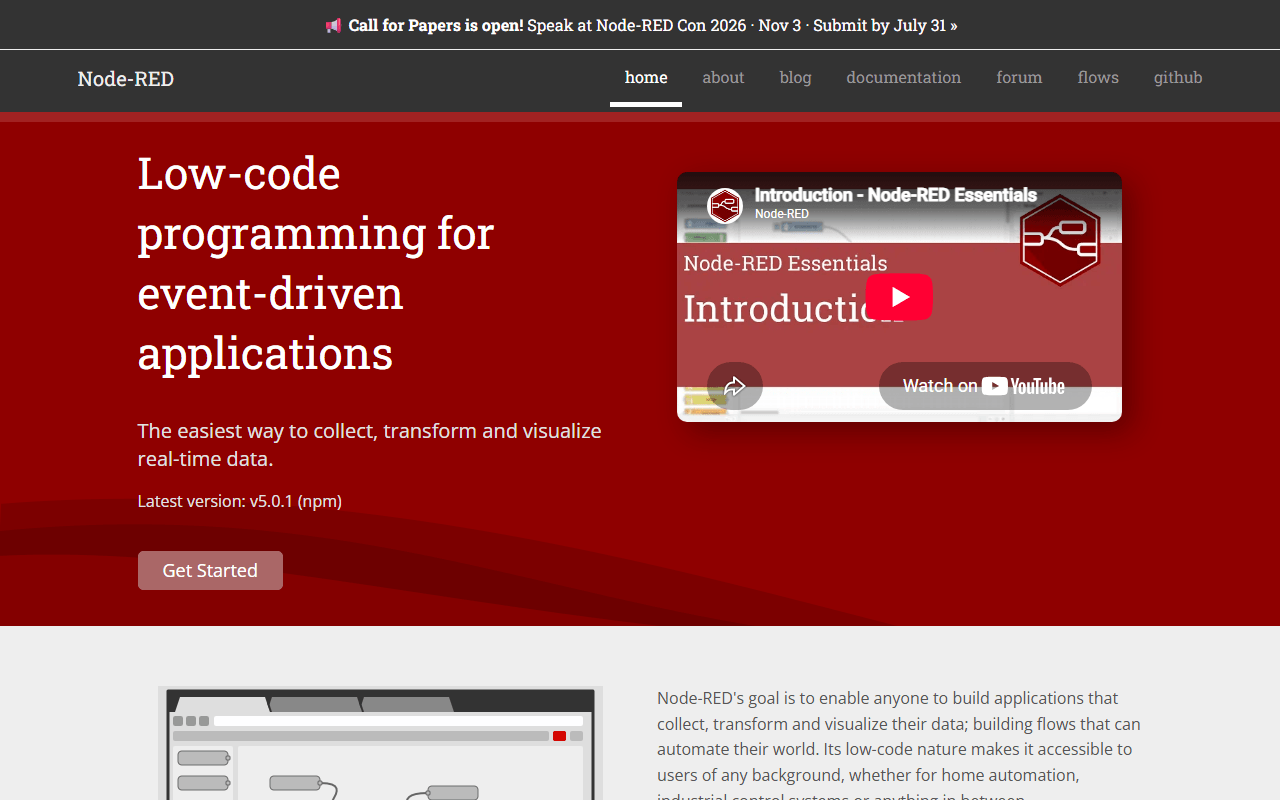
Node-RED is the free choice when your automation needs to reach hardware, sensors, MQTT, or local files, places Make's hosted platform cannot follow. It is Apache-2.0, costs nothing, and runs on your own machine, so there is no meter to hit at all. It is a flow canvas like Make's in spirit, just self-hosted and aimed more at the physical and local world than at pure SaaS.
- Completely free (as of July 2026)
- United States
- Open source (Apache-2.0)
- Best for:
- Make users whose automations touch hardware, IoT, or local systems and who want a free engine
- The catch:
- It is self-host only and more technical than Make, and its SaaS connectors come from a community palette rather than a curated catalogue.
Compared to Make
- Advantage: Completely free and open source with no operation meter
- Advantage: Reaches hardware, IoT, and local systems Make cannot
- Advantage: Flow-based canvas familiar to Make users
- Tradeoff: Self-host only, where Make is fully hosted
- Tradeoff: SaaS connector coverage is thinner and more manual than Make's
- Worth knowing: Best for local and IoT work rather than pure app-to-app SaaS
A free, self-hosted agent system for private monitoring and scraping
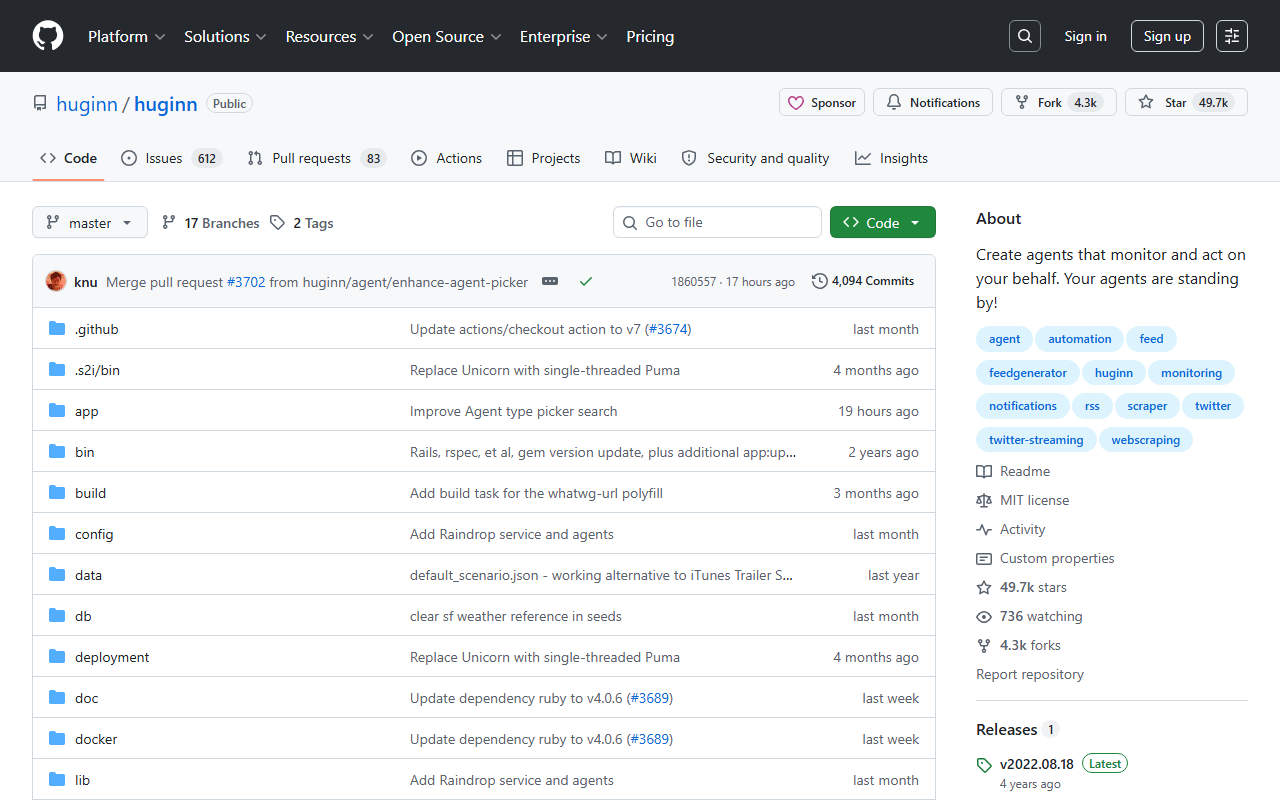
Huginn is the narrow, developer-focused option here. If the Make scenarios you care about are really about watching sources, scraping pages, and firing alerts, Huginn does that on your own server for free under MIT, with your data staying private. It will not replace a broad Make setup full of SaaS connectors, but for monitoring and reacting it is capable and costs nothing.
- Completely free (as of July 2026)
- United States
- Open source (MIT)
- Best for:
- Developers who mainly use automation for monitoring and alerting and want it self-hosted and private
- The catch:
- It is a Ruby on Rails app to run and maintain, the interface is dated, and it lacks Make's breadth of ready-made connectors.
Compared to Make
- Advantage: Free and open source under MIT, fully self-hosted and private
- Advantage: Purpose-built for scraping, monitoring, and alerting
- Advantage: No usage meter of any kind
- Tradeoff: Narrower than Make; not a broad SaaS connector platform
- Tradeoff: Ruby on Rails plus a database to set up and maintain
- Tradeoff: Config-driven and dated next to Make's visual canvas
How to choose
Start with whether you can run a server, because that unlocks the cheapest paths. Self-hosted n8n bills per whole run and is free with unlimited executions, and Activepieces self-hosts free too with a friendlier builder, so both end the operation-counting problem outright. If you would rather stay hosted, Pipedream's credit model ties cost to compute time rather than module calls, which can be kinder to step-heavy workflows. Node-RED is the free choice if your automations touch hardware or local systems, and Huginn suits developers who mainly need private monitoring agents. Pick by how your workflows are shaped and whether a server is on the table.