Discover honest, community-driven software alternatives. Learn about our mission

Free workflow automation tools, and the unit each one counts

A workflow automation tool wires your apps together so data moves on its own. A new form submission becomes a CRM record, a Slack message, and a spreadsheet row, and you never touch a single step of it. Zapier made this idea mainstream, and for a lot of people it is still the default name for the whole category.

The reason you are here is usually the bill. Zapier's free plan caps you at 100 tasks a month and two-step Zaps, one trigger and one action, which runs out fast (as of July 2026). The first real paid tier starts at $19.99 a month and climbs with every task you run. Because Zapier counts each step of each run as a task, a busy multi-step workflow eats through an allowance quickly, and the price follows it up.

Our pick is n8n. It counts a whole workflow run as one execution rather than billing you per step, and you can self-host its fair-code Community Edition for nothing, so the only real ceiling is the server you put it on.

7 free tools, ranked and reviewed as of July 2026.

Our shortlist, by how much server you want to run

Best overall

n8n logo

n8n

Best FreeAutomation Tool

n8n is the most capable free option in this category, and the one most people land on after Zapier's task meter gets expensive. It counts a whole workflow run as one execution rather than billing per step, and the fair-code Community Edition self-hosts free with unlimited workflows and executions (as of July 2026). Real code steps, native AI nodes, and webhooks mean you rarely hit a wall.

n8n wins because it fixes the two things people resent about Zapier at the same time. It bills per workflow execution rather than per step, so a workflow with twenty nodes still counts as a single run, and the fair-code Community Edition is free to self-host with unlimited workflows and unlimited executions (as of July 2026). It also goes deeper than most no-code tools, with real code steps, native AI nodes, and raw webhooks, so you rarely hit a wall. The catch is honest: the free path is self-hosting, which means Node.js, a database, and your own updates and backups, and n8n Cloud has no free-forever plan, only a trial that then starts at 20 euros a month. Its Sustainable Use License also lets you run n8n for your own business but not resell it as a hosted service, so it is fair-code rather than OSI open source.

Read our n8n review

Best for building visually with no server

The free tier is 1,000 operations a month across 2 active scenarios (as of July 2026), and an operation is counted per module call, so step-heavy scenarios burn through it fast.

Best if you count live automations, not runs

The cloud free tier gives you 10 active flows with unlimited runs (as of July 2026), so a flow that fires all day costs the same as one that fires weekly, and flow 11 is $5 a month.

Best for automations that touch hardware

Apache-2.0 and completely free including commercial use, with no paid tier at all (as of July 2026), and it runs happily on a Raspberry Pi, though SaaS connectors come from a community palette.

Inside: what we counted as free, and how we treated the meters

We rank by how far the free option actually gets you for real automation work, not by how many connectors a tool advertises. A tool you can self-host for nothing beats one that only rents. A genuine free-forever cloud tier beats a trial. Predictable pricing beats a meter that charges you more for adding steps. And we are blunt about the catch, so 'free if you can run Docker' never sits next to a hosted plan a non-technical person can use in ten minutes.

What does each free tier actually let you run?

#ToolFree planStarting priceCountry
1
n8n logo
n8n
Yes€20/monthGermany
2
Activepieces logo
Activepieces
Yes$5/monthUnited States
3
Make logo
Make
Yes$9/monthCzech Republic
4
Pipedream logo
Pipedream
Yes-United States
5
Node-RED logo
Node-RED
Free / open source-United States
6
Huginn logo
Huginn
Free / open source-United States
7
Zapier logo
Zapier
Yes$19.99/monthUnited States

Every tool here, ranked, with its meter and its catch

1.

n8n

Best FreeAutomation Tool

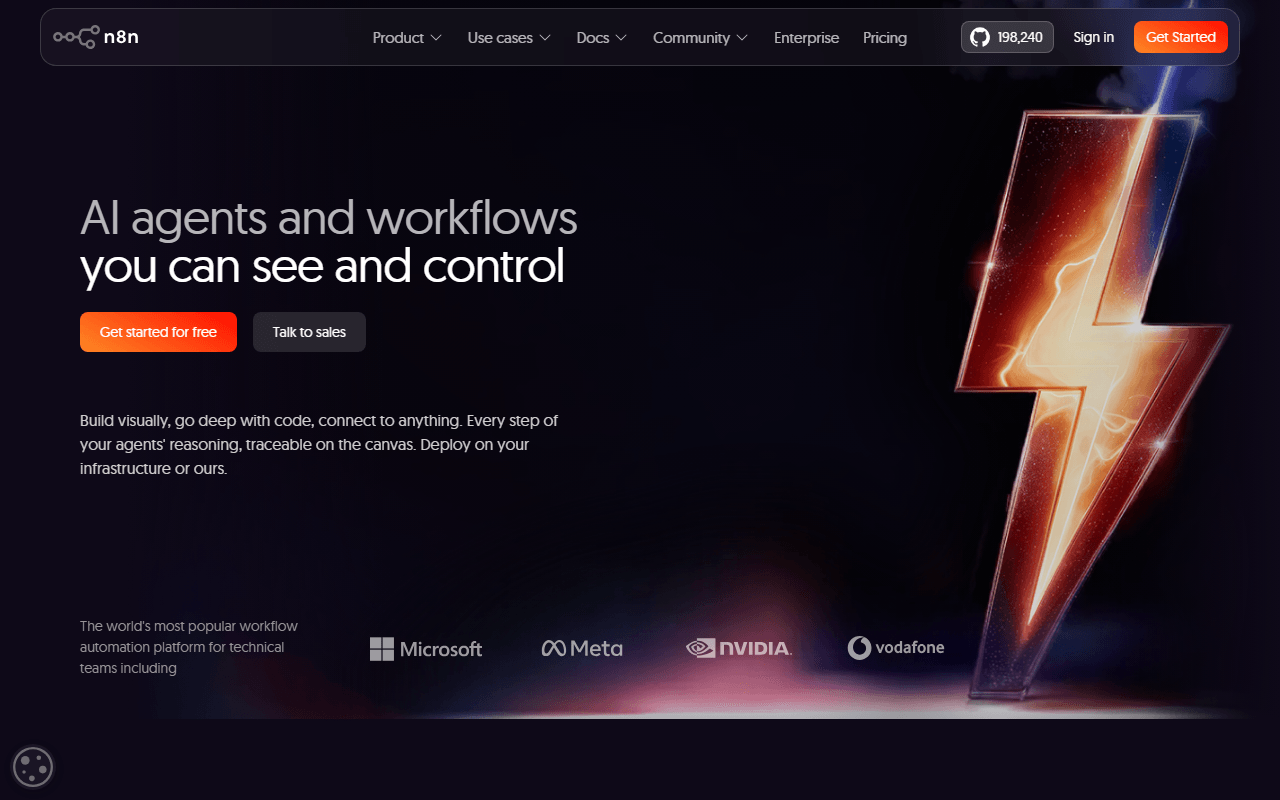
n8n is the most capable free option in this category, and the one most people land on after Zapier's task meter gets expensive. It counts a whole workflow run as one execution rather than billing per step, and the fair-code Community Edition self-hosts free with unlimited workflows and executions (as of July 2026). Real code steps, native AI nodes, and webhooks mean you rarely hit a wall.

n8n screenshot
  • Free plan, paid from €20/month (as of July 2026)
  • Germany
Best for:
Teams and technical builders who can run a server, want deep multi-step automations without per-step billing, and value an AI-native engine they can own outright.
The catch:
Free means self-hosting: Node.js, a database, and your own updates and backups. n8n Cloud has no free-forever plan, only a trial from 20 euros a month, and the Sustainable Use License bars you from reselling n8n as a hosted service.
2.

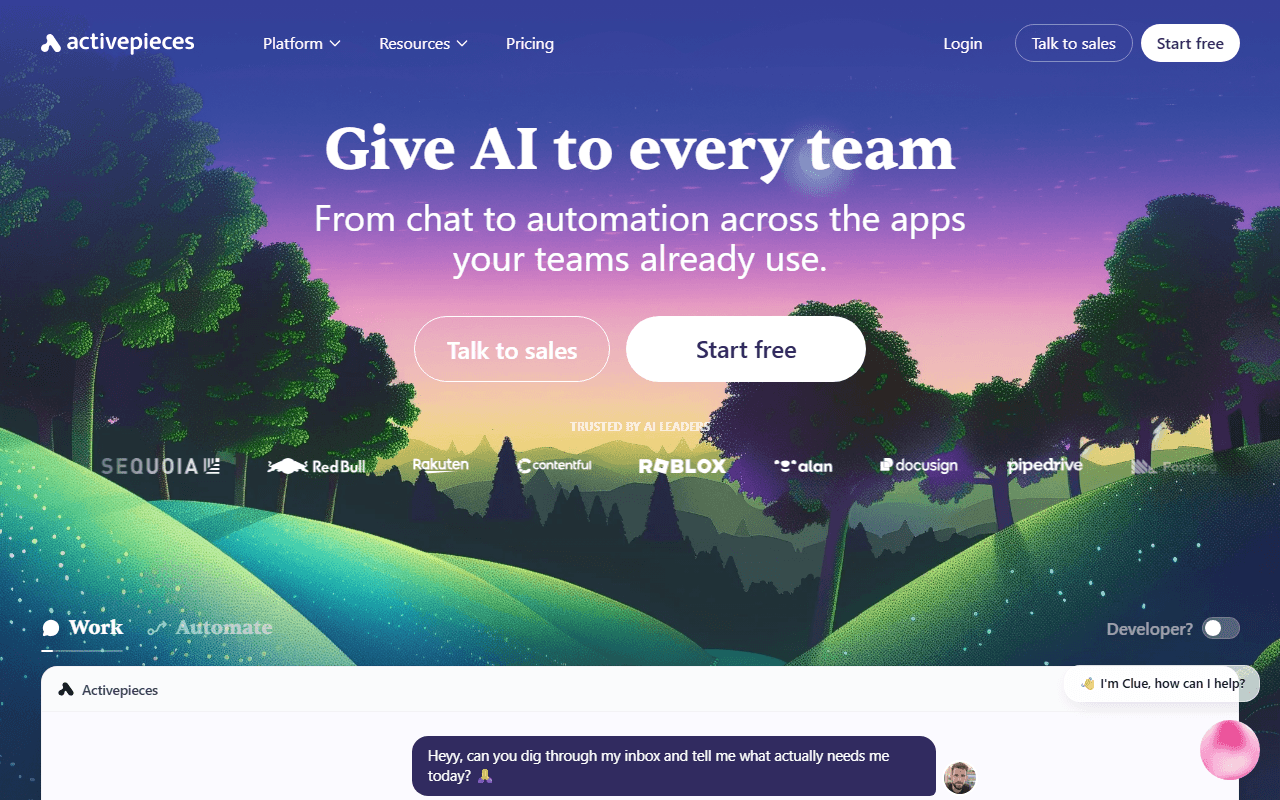
Activepieces is the friendliest of the open source engines. It is genuinely MIT-licensed, self-hosts free with unlimited flows, and its cloud free tier gives you 10 active flows with unlimited runs (as of July 2026). The builder is closer to Zapier's clean feel than n8n's denser canvas, so non-developers get further before needing help.

Activepieces screenshot
  • Free plan, paid from $5/month (as of July 2026)
  • United States
  • Open source (MIT (Community Edition))
Best for:
Small teams who want an open source Zapier feel, self-hosting without a steep learning curve, and AI steps built in from the start.
The catch:
The cloud free tier is capped by active flows, not runs, so beyond 10 live automations it is $5 per active flow per month. Its connector library is younger and smaller than Zapier's or Make's, so check your specific apps first.
3.

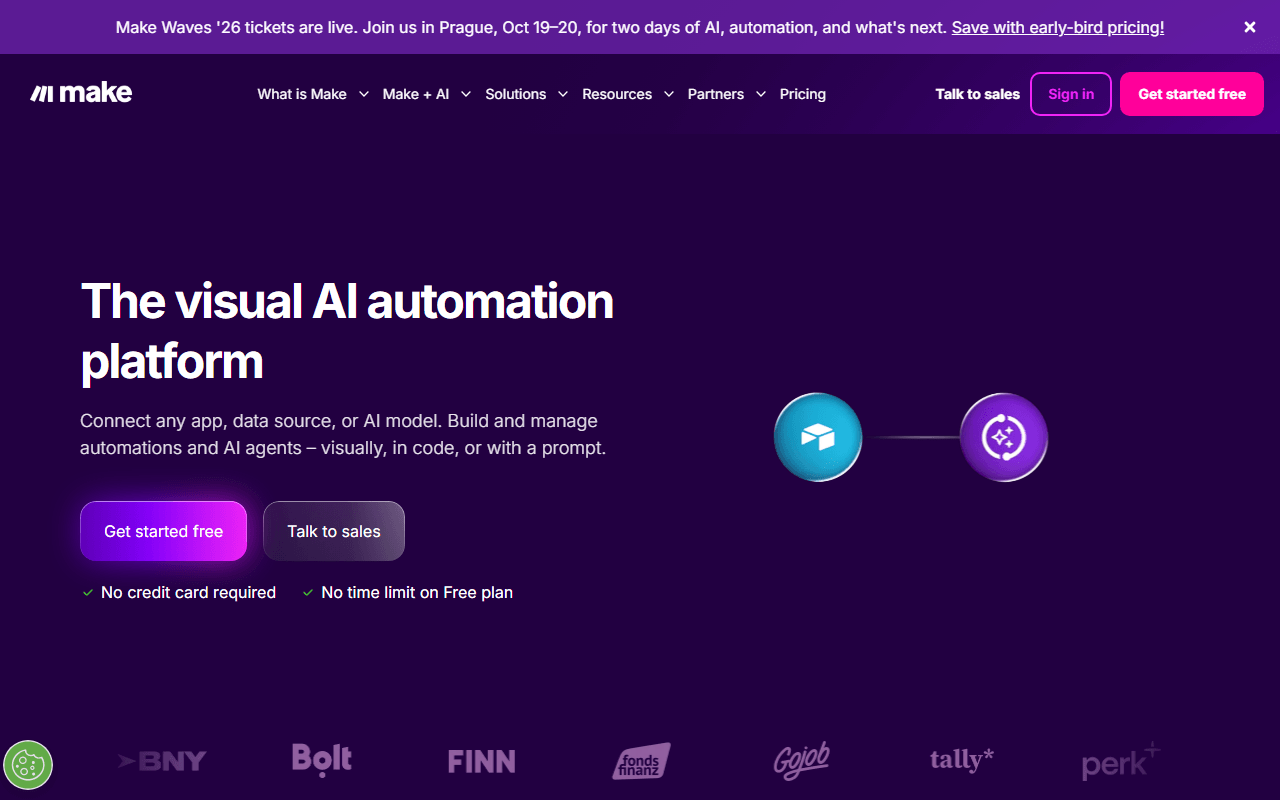
Make is the best pick if you will not host anything yourself. Its free cloud tier gives 1,000 operations a month across two active scenarios (as of July 2026), and its visual canvas shows data flowing between modules in a way that makes complex branching easy to follow. It is Zapier's closest hosted rival on connector count.

Make screenshot
  • Free plan, paid from $9/month (as of July 2026)
  • Czech Republic
Best for:
Non-technical builders who want a strong free hosted tier, and anyone who thinks visually and wants to see data move through a flow rather than read a step list.
The catch:
The free tier's 1,000 operations and two-scenario cap fill up fast, and Make counts an operation per module call, so multi-step scenarios burn through it. There is no self-hosting, so your data and your pricing live with the vendor.
4.

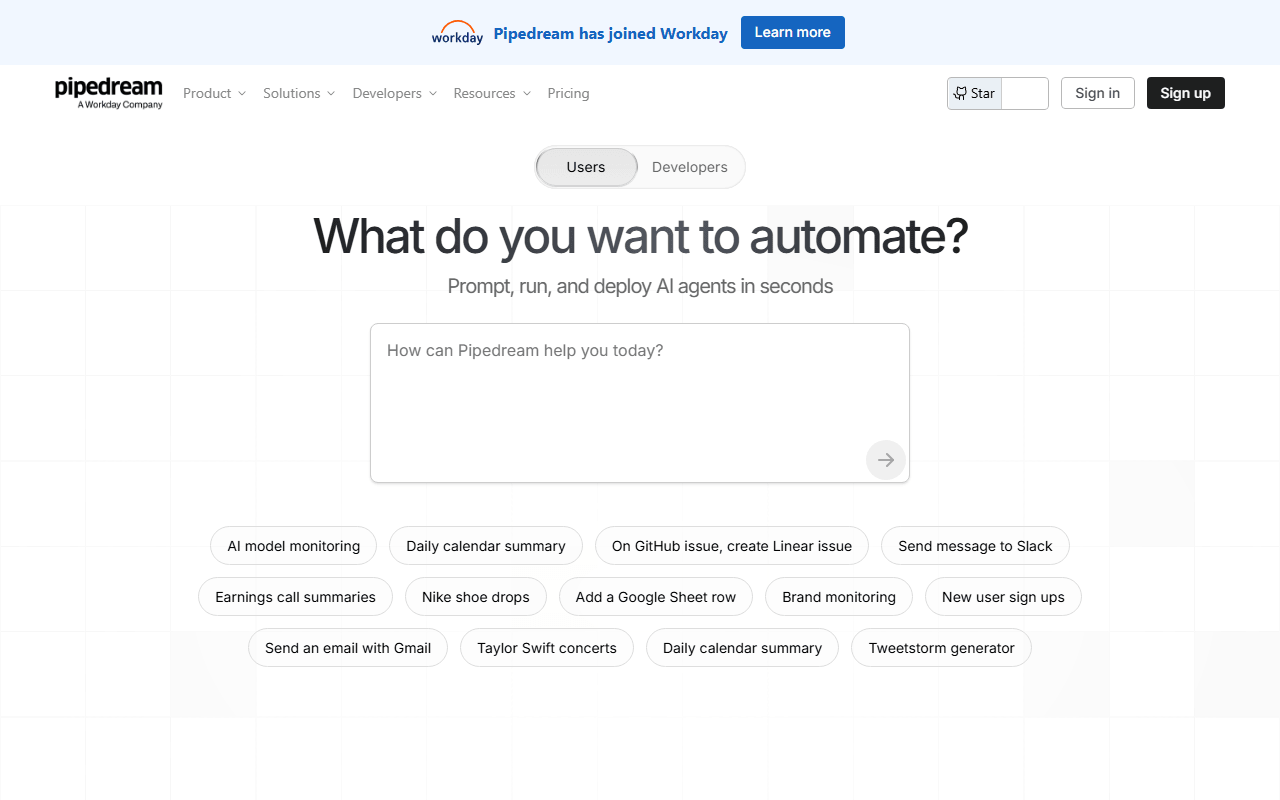
Pipedream is automation for people who would rather write a few lines of code than click through a builder. It has a free tier and connects to thousands of apps, and its open source component registry means you can inspect and extend the connectors. Billing is credit-based, tied to compute time rather than to a per-step task count.

Pipedream screenshot
  • Free plan (as of July 2026)
  • United States
Best for:
Developers who want code-first workflows, want to drop into Node.js or Python at any step, and prefer a hosted platform to running their own server.
The catch:
Pipedream renders its pricing client-side, so we could not confirm the exact free-tier numbers first-party (as of July 2026). The credit model rewards fast workflows and punishes slow ones, and it is a hosted product, not something you self-host.
5.

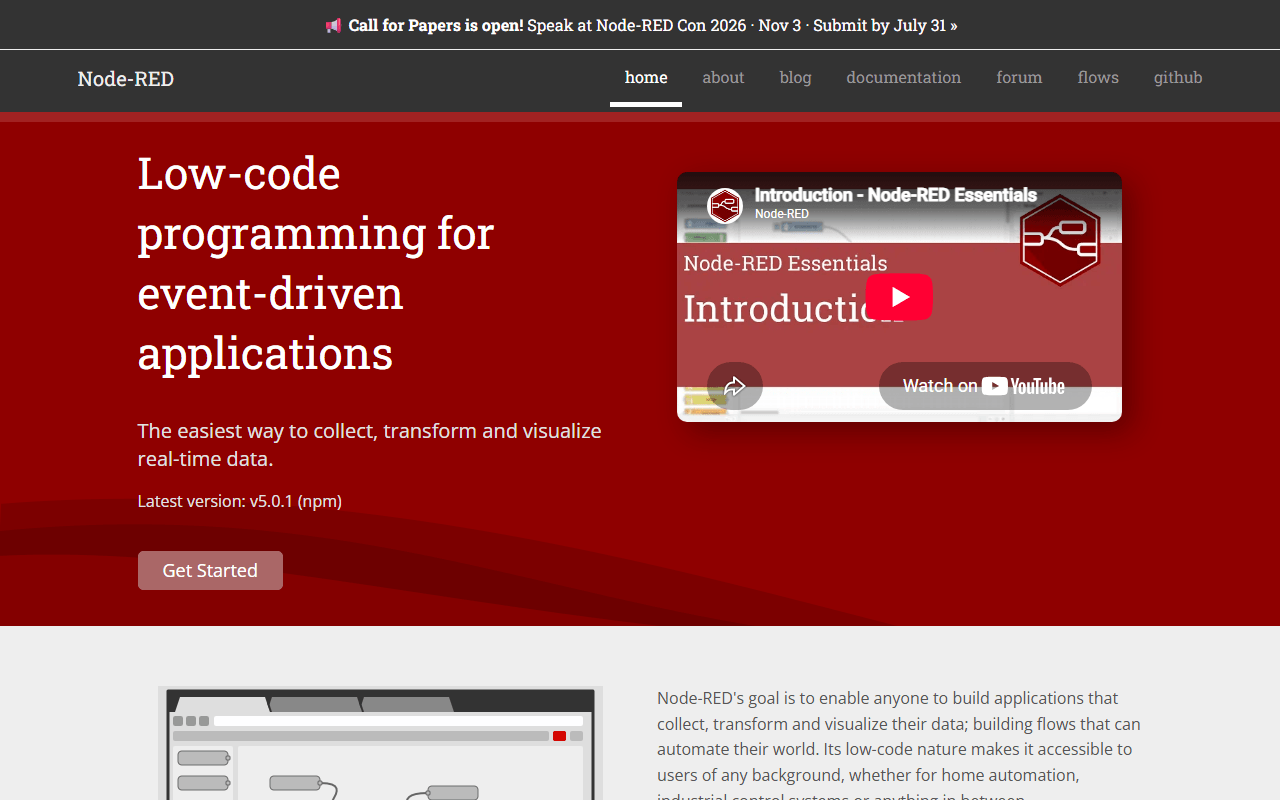
Node-RED is fully free and open source under Apache-2.0, a project of the OpenJS Foundation, and it never charges you a cent. Its flow-based canvas wires nodes together for event-driven automation, and it shines when your automations touch hardware, local files, MQTT, or IoT devices rather than only SaaS apps.

Node-RED screenshot
  • Completely free (as of July 2026)
  • United States
  • Open source (Apache-2.0)
Best for:
Developers and makers automating around hardware, home labs, IoT, or local systems, and anyone who wants a free flow engine that runs happily on a Raspberry Pi.
The catch:
It is self-host only and leans technical: you install it on Node.js and wire logic yourself, and its SaaS connectors come from a community palette rather than a polished first-party catalogue, so app-to-app work takes more setup than Zapier or Make.
6.

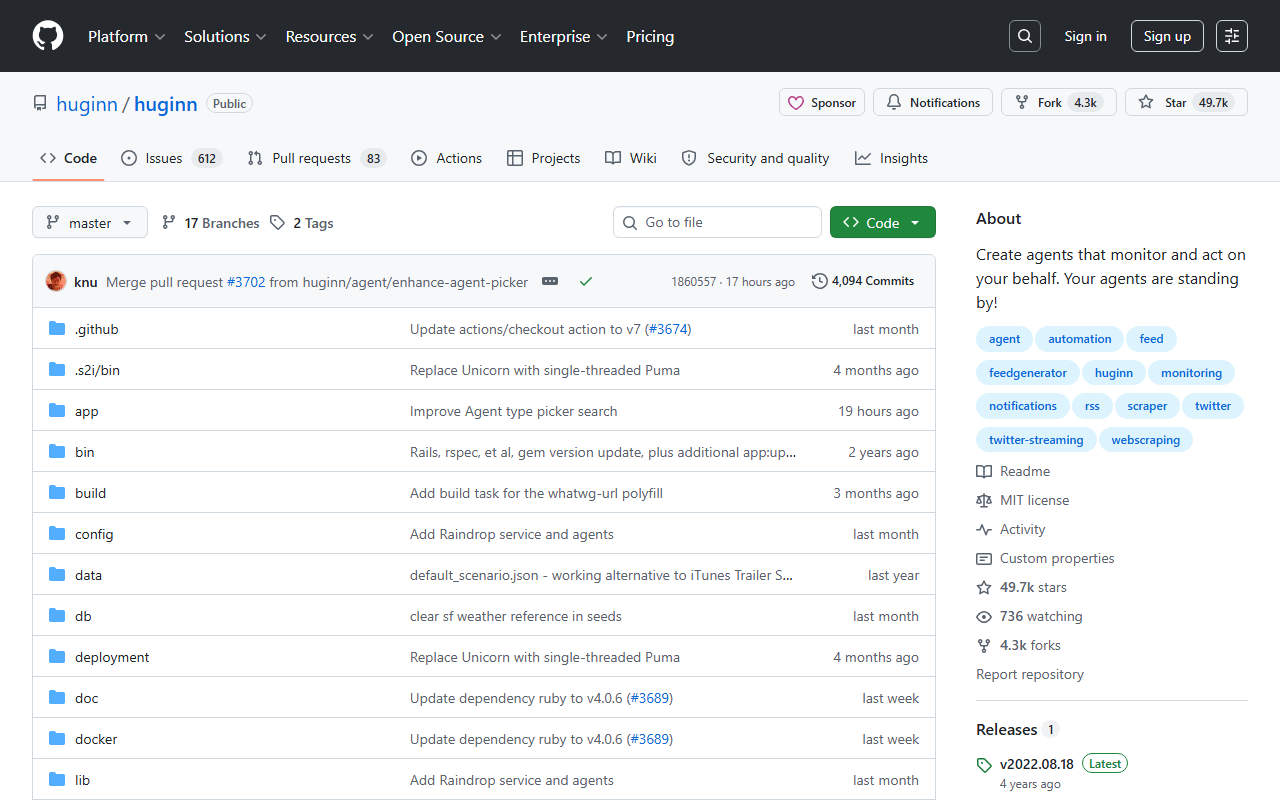
Huginn is the developer's self-hosted answer to IFTTT and Zapier, MIT-licensed and free forever. You build agents that watch websites, scrape pages, track events, and take actions, all on your own server with your data never leaving it. It has been quietly maintained for over a decade.

Huginn screenshot
  • Completely free (as of July 2026)
  • United States
  • Open source (MIT)
Best for:
Developers who want a private, hackable agent system on their own box, especially for scraping, monitoring, and alerting rather than slick SaaS-to-SaaS connectors.
The catch:
It is Ruby on Rails with a MySQL or PostgreSQL database, so setup and upkeep are a real project. The interface is dated and config-driven rather than drag-and-drop, and there is no hosted option, so this is developers only.
7.

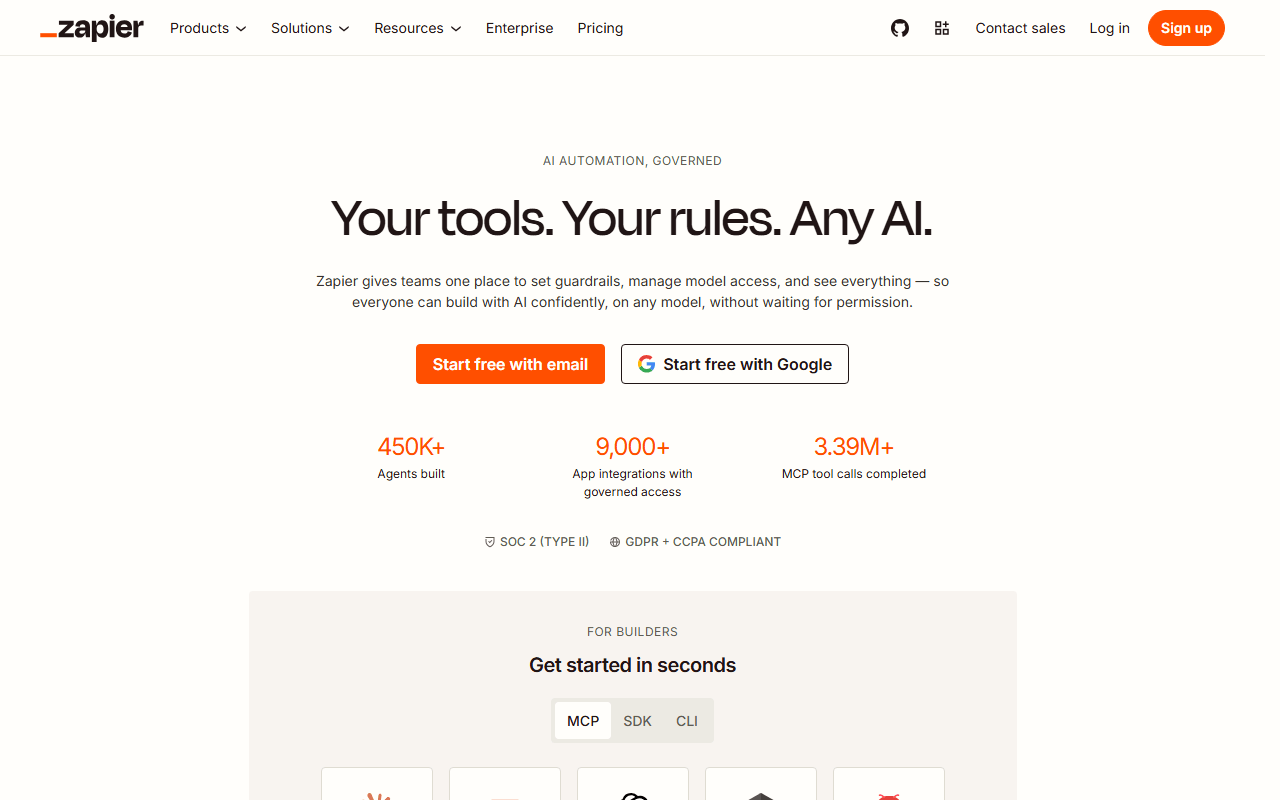
Zapier built this category and still leads on connector count, with thousands of app integrations and the most polished setup experience of the lot. It is on this list as the incumbent people leave, for one reason: the free plan is the thinnest here, capped at 100 tasks a month and two-step Zaps (as of July 2026).

Zapier screenshot
  • Free plan, paid from $19.99/month (as of July 2026)
  • United States
Best for:
Non-technical teams who want the widest integration catalogue and the smoothest setup, and who will pay for it once the free tier runs out.
The catch:
The free plan's 100 tasks and two-step limit are the walls most people hit, and paid plans start at $19.99 a month and scale with task volume. Zapier counts every step of every run as a task, so step-heavy workflows get pricey, and there is no self-hosting.

Match the billing unit to the shape of your workflows

Start with whether you can run a server. If you can, n8n self-hosted is the most capable free option and the first one we would reach for, with Activepieces close behind if you want a friendlier interface and Node-RED if your automations lean toward hardware, local scripts, or IoT. If you will not host anything, Make has the best genuine free cloud tier at 1,000 operations a month across two active scenarios, and Pipedream fits you if you would rather write a little code than click through a builder. Huginn is for developers who specifically want an IFTTT-style agent system on their own box. Zapier still leads on connector count and polish, but its free tier is the thinnest here, so treat it as the incumbent to leave rather than the way to spend nothing.

Tasks, operations, executions, and the fair-code question

What is the best free Zapier alternative?

For most people it is n8n, which you self-host free with unlimited workflows and unlimited executions, and which bills by whole workflow run rather than per step (as of July 2026). If you cannot run a server, Make has the strongest genuine free cloud tier, with 1,000 operations a month across two active scenarios. Both remove the exact limits, task counting and a two-step cap, that push people off Zapier's free plan.

Which of these tools is actually free forever, not a trial?

Huginn and Node-RED are fully free and open source, self-host only, with no paid tier at all. n8n and Activepieces are free forever if you self-host the community edition, and both also sell a hosted cloud. Make, Pipedream, and Zapier have genuine free-forever cloud tiers with caps. The one thing to watch: n8n Cloud itself has no free-forever plan, only a trial, so 'free n8n' means self-hosting (as of July 2026).

What does self-hosting an automation tool actually require?

For n8n, Activepieces, and Node-RED, it is a Docker container or a Node.js install plus a database, then your own updates, backups, and security. Huginn is Ruby on Rails with MySQL or PostgreSQL. None of it is exotic, and each has a one-command Docker setup, but it is a real developer task and not a click-and-go signup. If nobody on your side is comfortable running a small server, pick a hosted free tier like Make instead.

Why do these tools charge by 'tasks' or 'operations'?

Most hosted automation platforms meter usage, and the unit is the catch. Zapier counts a task for every step of every run, so a five-step workflow that runs 100 times is 500 tasks. Make counts an operation per module call, which works similarly. n8n instead counts one execution per whole workflow run regardless of steps, which is why a step-heavy workflow is far cheaper to run there. Read the unit before the headline price, because it decides your real bill.

Is n8n open source?

Not in the strict OSI sense. n8n ships under the Sustainable Use License, part of the fair-code model, which means the source is public and you can self-host and modify it for your own internal or commercial use for free. What you cannot do is host n8n as a service for third parties or resell it without a commercial license. So it is fair-code rather than open source, and we label it that way to be accurate. Node-RED (Apache-2.0), Activepieces and Huginn (MIT) are true open source.

Keep exploring

Browse every category, or read our full reviews of the tools above.