Free alternatives to Pipedream
Pipedream is excellent for developers, but it asks things not everyone can give. It is code-first, which is a wall if nobody on your side writes JavaScript or Python, and its pricing renders client-side, so even we could not confirm the exact free-tier numbers first-party (as of July 2026). It is hosted only, so you cannot self-host and own it, and its credit model rewards fast workflows while charging more for slow, long-running ones. If you want a visual no-code builder, transparent published pricing, or the option to run automation on your own server, these are the alternatives to weigh.
Facts checked as of July 2026Read our Pipedream review
Jump to an alternative


n8n
Best Free Alternative ToPipedreamKeeps the code power, adds a visual canvas, transparent per-run pricing, and self-hosting
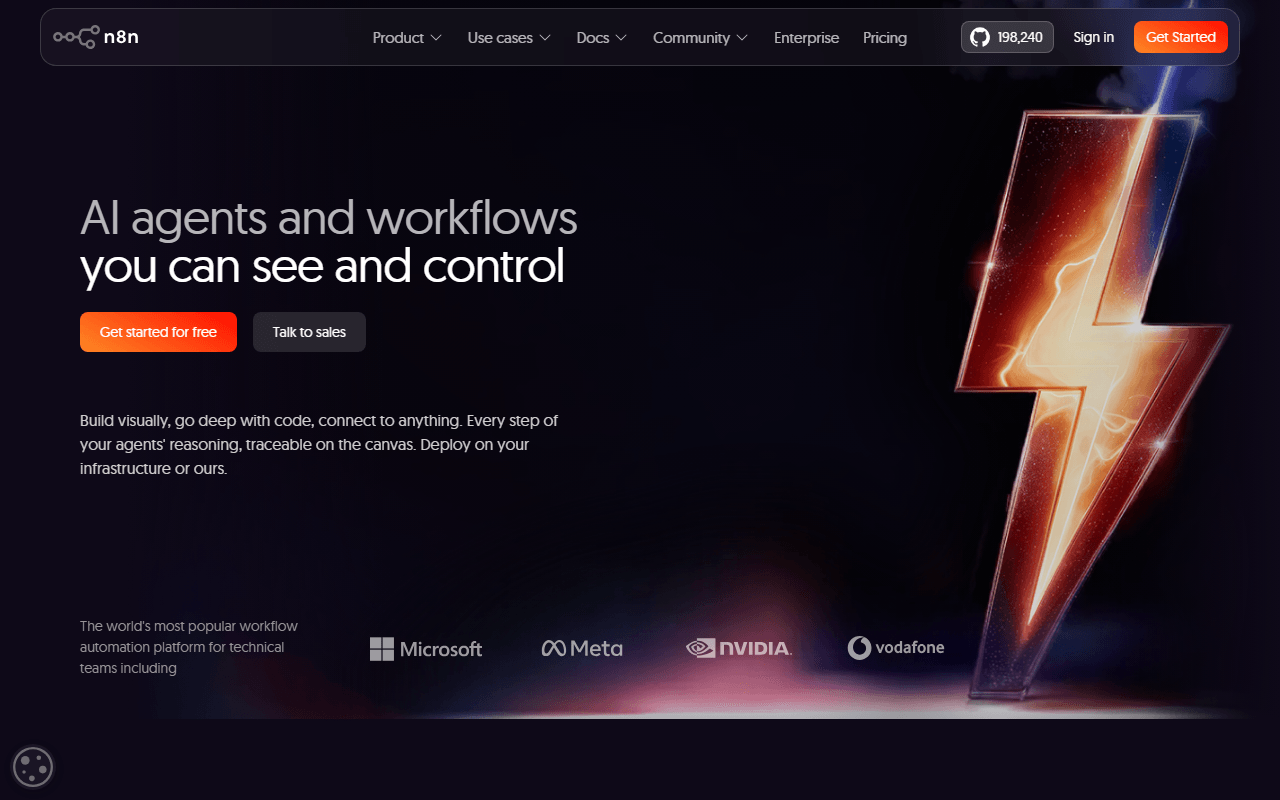
n8n gives a Pipedream user the parts they like, code steps and deep control, while fixing the parts they do not. You still drop into JavaScript or Python, but on a visual canvas rather than a code-first flow, its pricing is published plainly, and you can self-host the Community Edition free with unlimited executions instead of being locked to a hosted platform. It bills one execution per whole run, which is easy to reason about.
- Free plan, paid from €20/month (as of July 2026)
- Germany
 Germany
- Best for:
- Developers who want Pipedream's code depth with a visual canvas, clear pricing, and self-hosting
- The catch:
- n8n is fair-code rather than true open source, and its free route is self-hosting, so you take on Docker, a database, and your own upkeep.
Compared to Pipedream
- Advantage: Visual canvas alongside code steps, not code-first like Pipedream
- Advantage: Self-hostable free, so you own it rather than renting a hosted platform
- Advantage: Pricing published plainly, unlike Pipedream's client-side page
- Worth knowing: Keeps JavaScript and Python code steps like Pipedream
- Worth knowing: Fair-code license, where Pipedream's connectors are open source
- Tradeoff: Free means self-hosting work; Pipedream is hosted with nothing to run
A polished visual builder with clearly published pricing
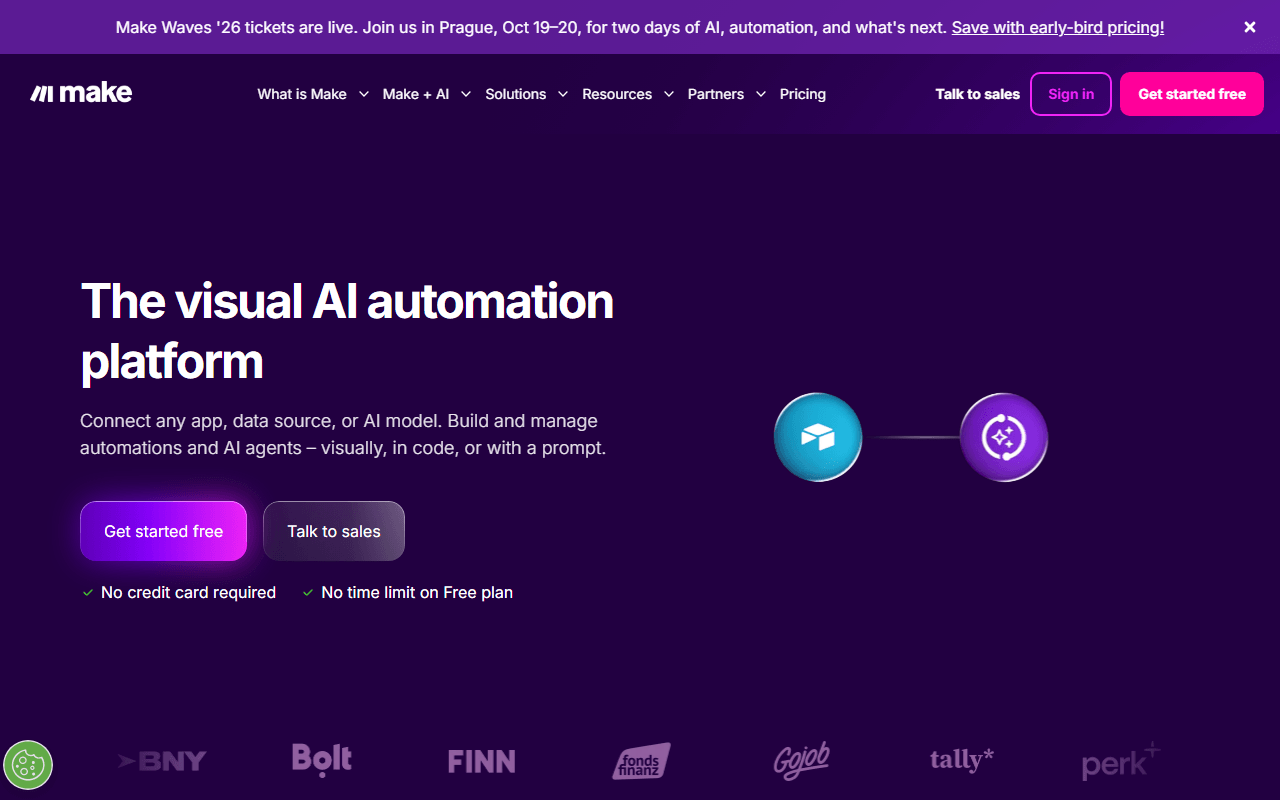
Make is the answer for someone who found Pipedream too code-heavy. It is fully hosted like Pipedream but built around a visual canvas, so you wire modules together instead of writing functions, and its free tier is published clearly: 1,000 operations a month across two active scenarios (as of July 2026). For non-developers, it gets you far further, faster.
- Free plan, paid from $9/month (as of July 2026)
- Czech Republic
 Czech Republic
- Best for:
- Non-developers who want a visual builder and pricing they can read before signing up
- The catch:
- Make meters an operation per module call, so multi-step scenarios use the free 1,000 quickly, and it lacks Pipedream's drop-into-code freedom for developers.
Compared to Pipedream
- Advantage: Visual no-code builder, far more approachable than Pipedream's code-first flow
- Advantage: Free tier published plainly (1,000 operations, two scenarios)
- Advantage: Mature, deep connector catalogue
- Worth knowing: Operation-per-module metering to watch, like Pipedream's credits
- Tradeoff: Less code freedom than Pipedream's Node.js and Python steps
- Worth knowing: Hosted only with no self-hosting, same as Pipedream
A friendly open source builder you can self-host free
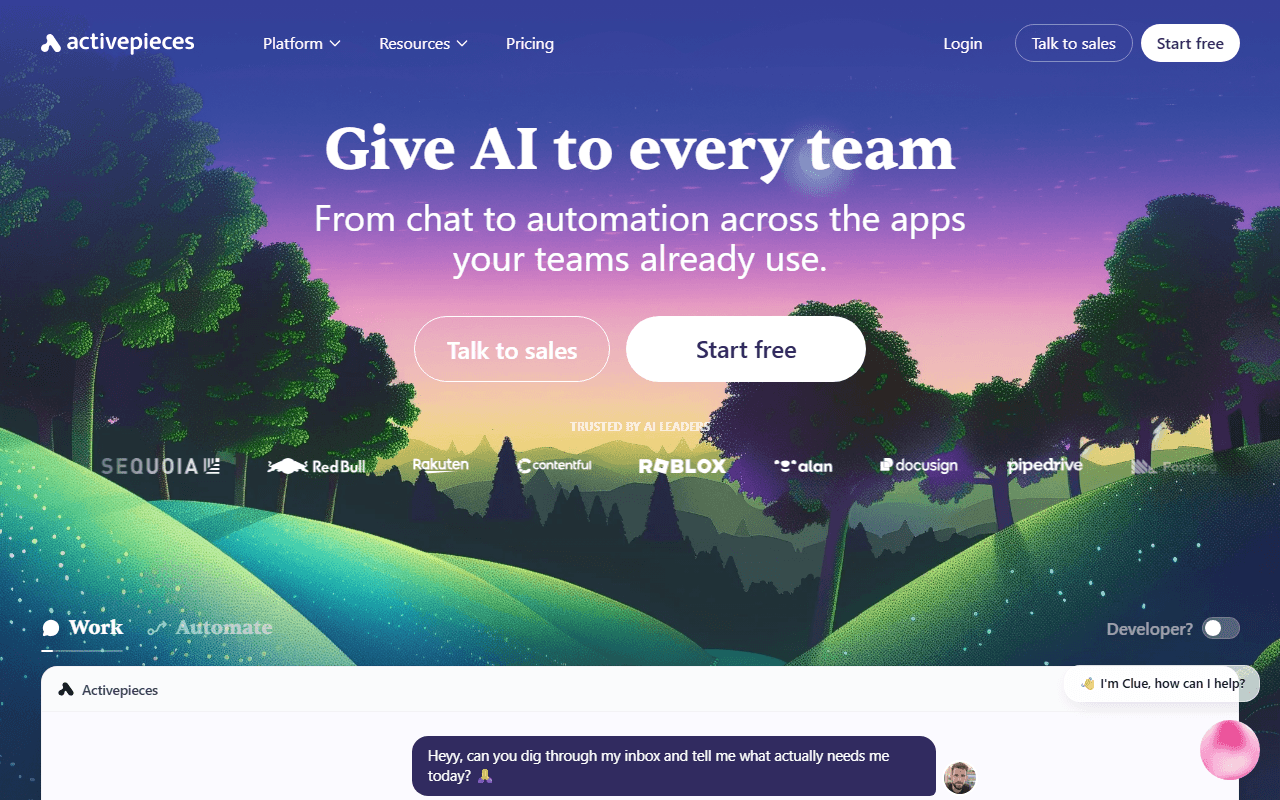
Activepieces splits the difference between Pipedream's power and a no-code tool. It is MIT open source with a clean visual builder, self-hosts free with unlimited flows, and publishes its pricing plainly, so the opacity that frustrates Pipedream users is gone. AI agents are built in, and you can still add code when you need it.
- Free plan, paid from $5/month (as of July 2026)
- United States
- Open source (MIT (Community Edition))
 United States
- Best for:
- People who want an approachable open source builder with transparent pricing and free self-hosting
- The catch:
- Its connector library is younger and smaller than Pipedream's thousands of apps, and the cloud free tier caps at 10 active flows before charging $5 per flow.
Compared to Pipedream
- Advantage: Friendly visual builder rather than Pipedream's code-first flow
- Advantage: MIT open source and self-hostable free, unlike hosted-only Pipedream
- Advantage: Pricing published plainly, not rendered client-side
- Tradeoff: Smaller connector library than Pipedream's thousands of apps
- Tradeoff: Cloud free tier capped at 10 active flows
- Worth knowing: Both offer open source components and AI steps
A free, open source flow canvas you fully control
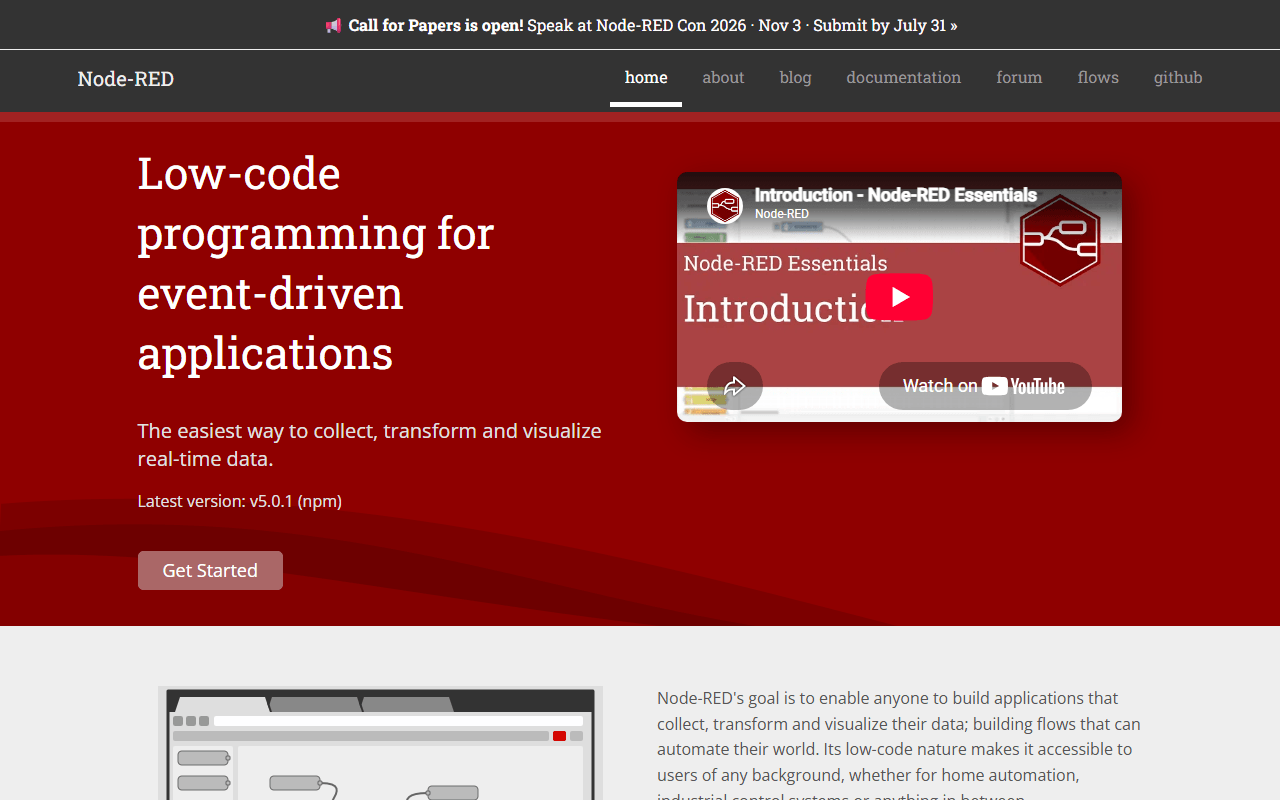
Node-RED suits the developer who likes Pipedream's control but wants to own the engine and see plain, no-surprise pricing, because there is none. It is Apache-2.0 and completely free, a visual flow canvas you self-host, and it is the stronger choice when automations touch hardware, MQTT, or local files.
- Completely free (as of July 2026)
- United States
- Open source (Apache-2.0)
- Best for:
- Developers who want a free, self-hosted flow engine, especially for hardware and local work
- The catch:
- It is self-host only and its SaaS connectors come from a community palette, so pure app-to-app work takes more setup than Pipedream's thousands of ready connectors.
Compared to Pipedream
- Advantage: Completely free and open source, no client-side pricing to decode
- Advantage: Self-hosted, so you own the engine rather than renting it
- Advantage: Visual flow canvas instead of Pipedream's code-first approach
- Tradeoff: SaaS connectors from a community palette, thinner than Pipedream's thousands
- Tradeoff: Self-host only, where Pipedream is hosted with nothing to run
- Worth knowing: Stronger for hardware and local systems than Pipedream
The most beginner-friendly hosted no-code option
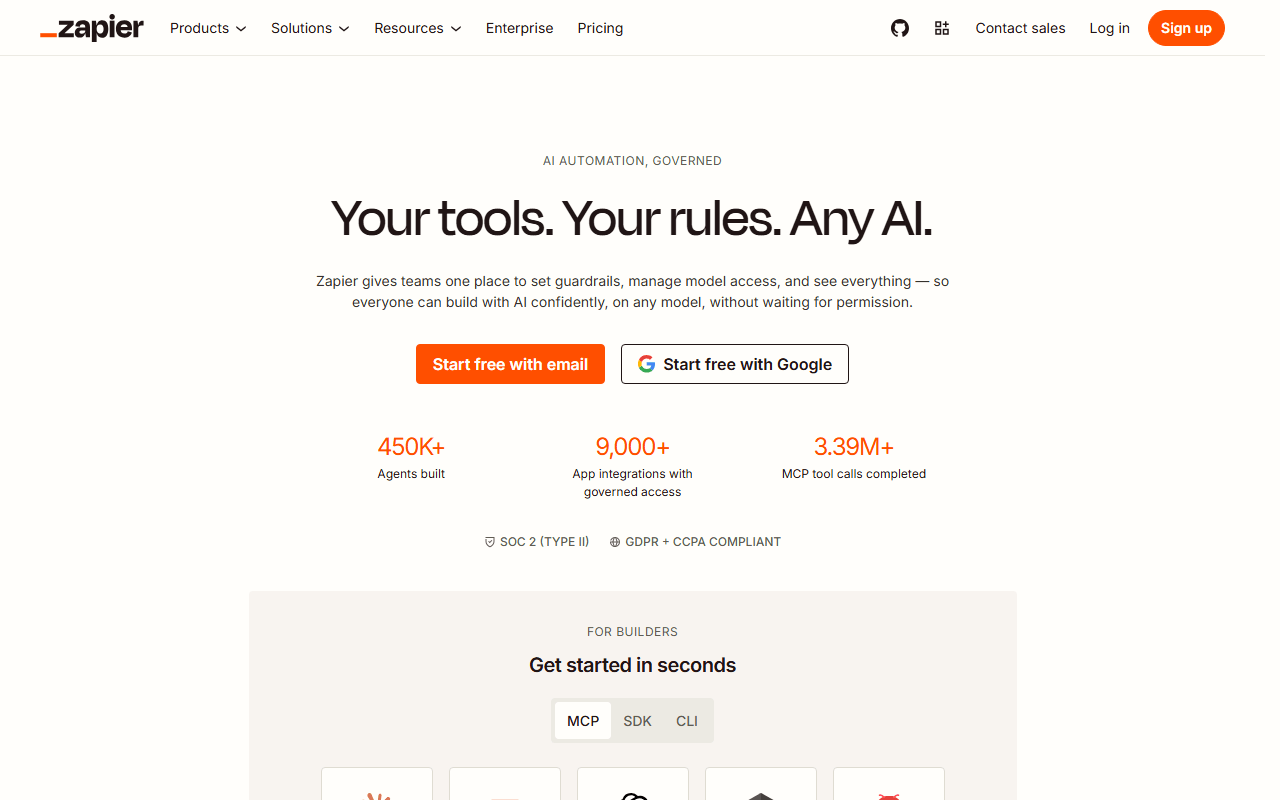
Zapier is the pick for a Pipedream user who wants the opposite experience: no code, the widest connector catalogue, and the smoothest setup. Everything is hosted and its pricing is published clearly. The catch is a thin free tier.
- Free plan, paid from $19.99/month (as of July 2026)
- United States
- Best for:
- Non-developers who want the widest connectors and the easiest setup
- The catch:
- Zapier's free plan is capped at 100 tasks a month and two-step Zaps (as of July 2026), and it bills a task per step, so it can cost more than Pipedream's compute credits for step-heavy work.
Compared to Pipedream
- Advantage: No-code and beginner-friendly, unlike Pipedream's code-first flow
- Advantage: Widest connector catalogue in the category
- Advantage: Pricing published plainly, not client-side like Pipedream
- Tradeoff: Free plan capped at 100 tasks and two-step Zaps
- Tradeoff: Bills a task per step, which adds up for multi-step work
- Worth knowing: Hosted only with no self-hosting, same as Pipedream
A free, self-hosted agent system for monitoring and scraping
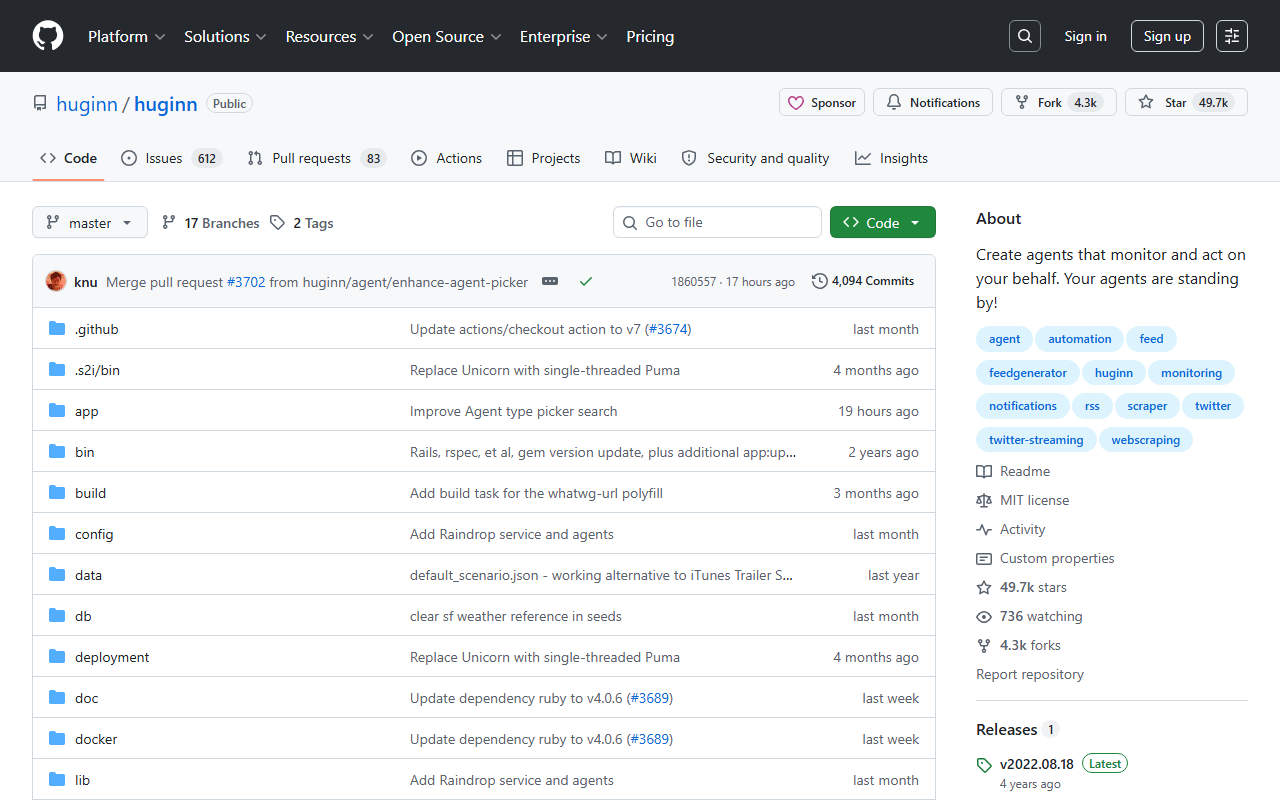
Huginn is a narrow alternative for the monitoring slice of what people build in Pipedream. It is MIT-licensed and free forever, self-hosted, and built to watch pages, track feeds, and fire alerts with your data staying private. It is developer-focused like Pipedream but aimed at monitoring rather than broad SaaS automation.
- Completely free (as of July 2026)
- United States
- Open source (MIT)
- Best for:
- Developers who mainly want private, self-hosted monitoring and scraping agents
- The catch:
- It is a Ruby on Rails app with a database to maintain, its interface is dated, and it lacks Pipedream's thousands of connectors and code-anywhere flexibility.
Compared to Pipedream
- Advantage: MIT open source and self-hosted, unlike hosted-only Pipedream
- Advantage: No client-side pricing; it is simply free
- Advantage: Purpose-built for scraping, monitoring, and alerting
- Tradeoff: Far narrower than Pipedream's general, code-first platform
- Tradeoff: Ruby on Rails plus a database to set up and maintain
- Tradeoff: Dated interface next to Pipedream's modern developer tooling
How to choose
If you want a visual builder instead of code, Make has the most polished canvas and a clearly published free tier, and Activepieces gives you a friendly builder you can also self-host free. If you want to keep real code power but own your stack, n8n self-hosts free, bills transparently per run, and still lets you drop into JavaScript or Python. Node-RED is the free, fully open source choice for developers who want a flow canvas they control, especially around hardware. Zapier is the most beginner-friendly hosted option, though its free tier is thin, and Huginn is a niche pick for self-hosted monitoring agents.