Free alternatives to Node-RED
Node-RED is completely free and superb for hardware and local automation, but it shows its edges the moment you need broad SaaS work. Its app connectors come from a community node palette rather than a curated first-party catalogue, so app-to-app automation takes more wiring than a hosted tool (as of July 2026). It is self-host only, with no hosted option and no built-in team workspace, so it is a single-instance engine you run and extend yourself. If you want stronger SaaS connectors, a hosted tier, or a shared team workspace, these are the alternatives to weigh.
Facts checked as of July 2026Read our Node-RED review
Jump to an alternative


n8n
Best Free Alternative ToNode-REDKeeps self-hosting and ownership, adds a real SaaS catalogue and team workspaces
n8n is the step up for a Node-RED user who wants stronger SaaS automation without giving up self-hosting. It self-hosts free with unlimited workflows and executions, but ships a first-party 400+ connector catalogue, native AI nodes, and team workspaces that Node-RED lacks. It also offers a hosted cloud if you later want one, and it still lets you write code when a prebuilt step is missing.
- Free plan, paid from €20/month (as of July 2026)
- Germany
 Germany
- Best for:
- Node-RED users who want a stronger SaaS engine and team features while keeping self-hosting
- The catch:
- n8n is fair-code rather than Node-RED's fully open Apache-2.0 license, and its canvas, while modern, is denser to learn.
Compared to Node-RED
- Advantage: First-party 400+ connector catalogue, versus Node-RED's community palette
- Advantage: Native AI nodes and team workspaces Node-RED lacks
- Advantage: Offers a hosted cloud option as well as free self-hosting
- Tradeoff: Fair-code license, where Node-RED is fully open Apache-2.0
- Worth knowing: Both self-host free, so the ownership model is similar
- Tradeoff: Less suited to raw hardware and IoT than Node-RED
Truly open source with a friendlier builder and curated pieces
Activepieces keeps Node-RED's open source, self-hosted values while giving you a cleaner builder and a curated connector library aimed at SaaS. It is MIT-licensed, self-hosts free with unlimited flows, and adds a hosted cloud free tier if you want to skip the server. AI agents are built in, and the whole experience is more approachable for app-to-app work than Node-RED's node palette.
- Free plan, paid from $5/month (as of July 2026)
- United States
- Open source (MIT (Community Edition))
 United States
- Best for:
- Open source fans who want a friendlier builder and curated SaaS connectors, self-hosted or cloud
- The catch:
- Its connector library is still younger than the big incumbents, and it is less suited than Node-RED to hardware and local automation.
Compared to Node-RED
- Advantage: Curated SaaS connector pieces, versus Node-RED's community palette
- Advantage: Friendlier, more approachable builder for app-to-app work
- Advantage: Adds a hosted cloud free tier alongside free self-hosting
- Worth knowing: MIT open source, matching Node-RED's permissive licensing
- Tradeoff: Weaker than Node-RED for hardware, IoT, and local systems
- Tradeoff: Connector library still younger than the incumbents
A deep hosted catalogue and a strong free tier, no server to run
Make is the pick for a Node-RED user whose real need is broad SaaS automation without running a server. It is fully hosted with a mature, deep connector catalogue and a visual canvas, and its free tier gives 1,000 operations a month across two active scenarios (as of July 2026). For app-to-app work it is far less hands-on than Node-RED.
- Free plan, paid from $9/month (as of July 2026)
- Czech Republic
 Czech Republic
- Best for:
- People who want broad SaaS automation on a hosted tier with no server to maintain
- The catch:
- Make is proprietary with no self-hosting, so you give up Node-RED's ownership, and its operation-per-module meter drains the free tier on multi-step scenarios.
Compared to Node-RED
- Advantage: Deep, curated SaaS connector catalogue, versus Node-RED's community palette
- Advantage: Fully hosted with nothing to install or maintain
- Advantage: Team features and shared scenarios Node-RED lacks
- Tradeoff: Proprietary with no self-hosting, unlike Node-RED's open source
- Tradeoff: Operation-per-module metering; Node-RED has no meter at all
- Tradeoff: Weaker for hardware and local automation than Node-RED
Hosted, code-first automation with thousands of connectors
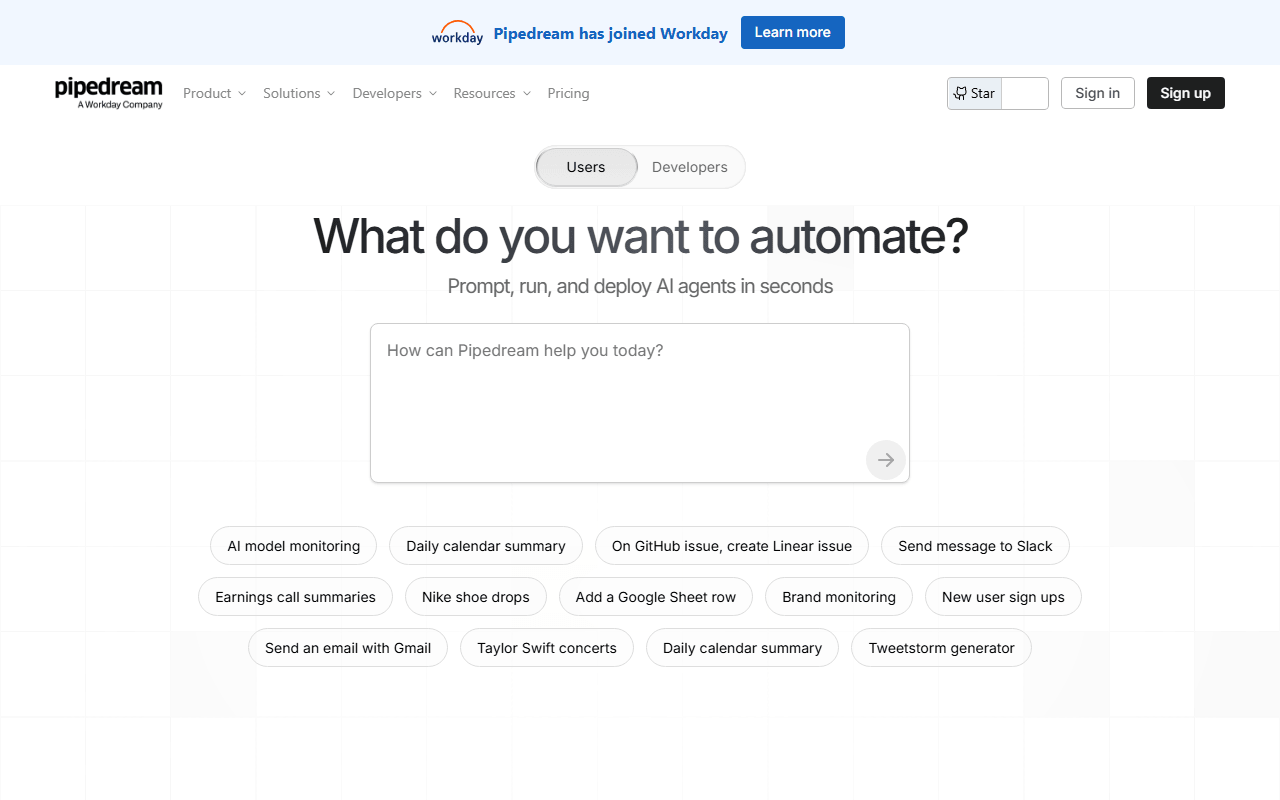
Pipedream suits the Node-RED developer who wants broad SaaS reach and is happy to write code, but would rather not maintain a server. It is hosted, connects to thousands of apps, and lets you drop into Node.js or Python at any step, with open source connectors. Billing is credit-based on compute time.
- Free plan (as of July 2026)
- United States
- Best for:
- Developers who want thousands of connectors and code steps on a hosted platform
- The catch:
- Pipedream renders its pricing client-side, so we could not confirm the exact free-tier numbers, and it is hosted only, giving up Node-RED's self-hosting and hardware reach.
Compared to Node-RED
- Advantage: Connects to thousands of apps, more than Node-RED's community palette
- Advantage: Fully hosted, so no server to run and maintain
- Worth knowing: Code steps in Node.js or Python, like Node-RED's function nodes
- Tradeoff: Exact free-tier limits render client-side and could not be verified
- Tradeoff: Hosted only, where Node-RED is self-hosted and yours
- Tradeoff: No hardware or local-system reach like Node-RED's
The widest connectors and the smoothest setup, fully hosted
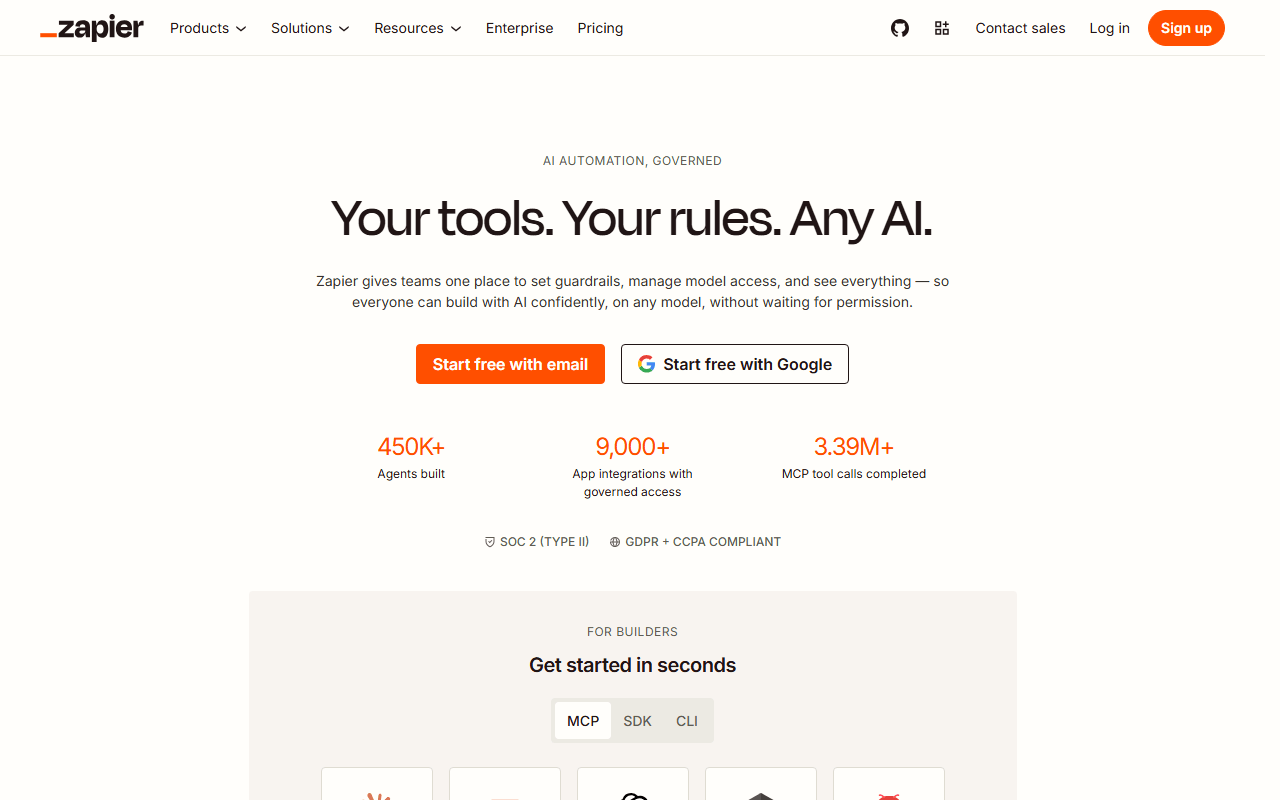
Zapier is the pick if broad SaaS connectors are the exact thing Node-RED was missing. It has the widest catalogue in the category and the most polished setup, all hosted, with team features on paid tiers. The catch is the thin free plan.
- Free plan, paid from $19.99/month (as of July 2026)
- United States
- Best for:
- Non-technical users who want the widest connectors and no server to run
- The catch:
- Zapier's free plan is capped at 100 tasks a month and two-step Zaps (as of July 2026), where Node-RED is free without limits, and it bills a task per step.
Compared to Node-RED
- Advantage: Widest connector catalogue, far beyond Node-RED's community palette
- Advantage: Fully hosted and beginner-friendly, no server to run
- Advantage: Team workspaces on paid tiers, which Node-RED lacks
- Tradeoff: Free plan capped at 100 tasks and two-step Zaps; Node-RED is free without caps
- Tradeoff: Proprietary with no self-hosting, unlike Node-RED
- Tradeoff: No hardware or local-system automation like Node-RED's
A fellow self-hosted open source tool, built for monitoring
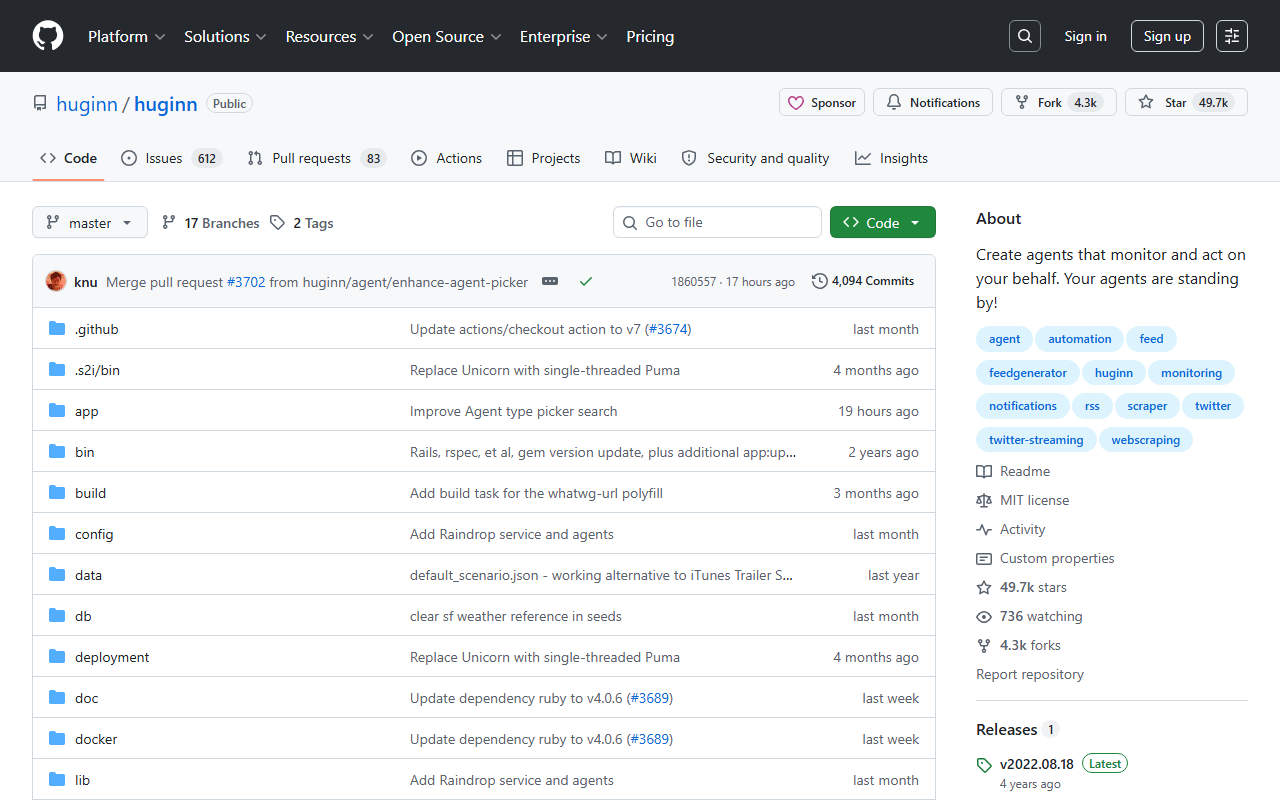
Huginn stays in Node-RED's self-hosted open source world but aims at a different job. It is MIT-licensed and free forever, and it is built to watch websites, scrape pages, and fire alerts. If your Node-RED flows lean toward monitoring the web rather than hardware, Huginn is purpose-built for exactly that.
- Completely free (as of July 2026)
- United States
- Open source (MIT)
- Best for:
- Developers who want a self-hosted, open source tool focused on web monitoring and scraping
- The catch:
- It is a Ruby on Rails app with a database rather than Node-RED's lighter Node.js runtime, its interface is dated, and it is narrower than a general flow engine.
Compared to Node-RED
- Worth knowing: Free and open source under MIT, like Node-RED's Apache-2.0
- Advantage: Purpose-built for scraping, monitoring, and alerting on the web
- Worth knowing: Self-hosted and private, matching Node-RED's model
- Tradeoff: Heavier Ruby on Rails plus database setup than Node-RED's Node.js
- Tradeoff: Weaker for hardware and local systems than Node-RED
- Tradeoff: Dated, config-driven interface next to Node-RED's flow canvas
How to choose
If you want to keep self-hosting and ownership but get a real SaaS connector catalogue and team features, n8n is the natural upgrade, with Activepieces close behind if a truly permissive license and a friendlier builder matter more than raw depth. If you would rather not run a server for SaaS work, Make has the strongest hosted free tier and a deep catalogue, and Zapier has the widest connectors of all with a thin free tier. Pipedream fits developers who want hosted, code-first workflows, and Huginn is a fellow self-hosted open source tool aimed squarely at monitoring and scraping.