Free alternatives to Activepieces
Activepieces is one of the easiest open source automation tools to like, but it has real edges. Its connector library is younger and smaller than the incumbents, so a specific app you need may not have a piece yet (as of July 2026). Its cloud free tier is capped at 10 active flows before it charges $5 per active flow, and self-hosting, while friendly, is still a Docker install with your own updates and backups. If you have outgrown its depth, need a wider connector catalogue, or want a fully hosted platform with a bigger free tier, these are the alternatives to weigh.
Facts checked as of July 2026Read our Activepieces review
Jump to an alternative


n8n
Best Free Alternative ToActivepiecesA deeper self-hosted engine with more connectors and per-run billing
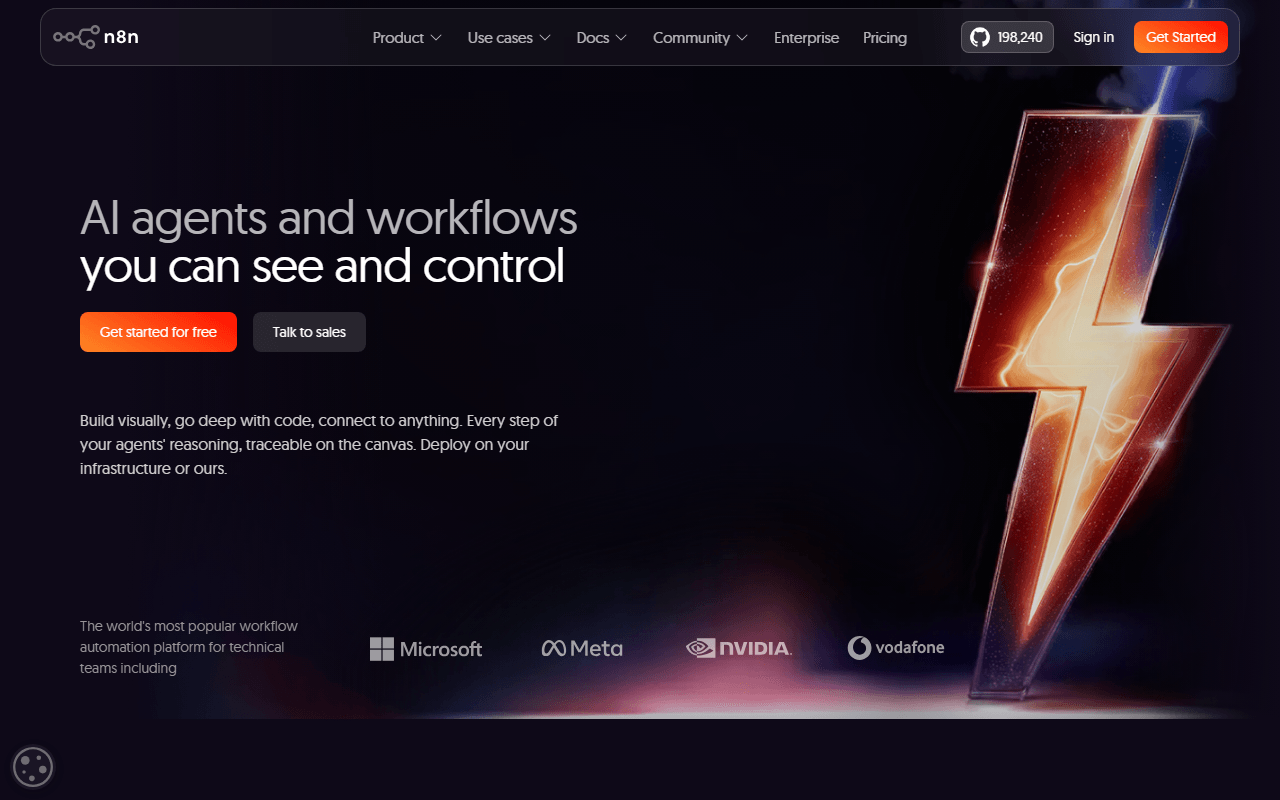
n8n is where Activepieces users go when they want more depth. It self-hosts free with unlimited workflows and unlimited executions like Activepieces' Community Edition, but it goes further with real code steps, native AI nodes, raw webhooks, and a larger 400+ connector catalogue. It counts one execution per whole workflow run, so step-heavy automations stay cheap.
- Free plan, paid from €20/month (as of July 2026)
- Germany
 Germany
- Best for:
- Activepieces users who can self-host and want a deeper engine with more connectors
- The catch:
- n8n is fair-code under the Sustainable Use License rather than true MIT open source, and its canvas is denser and slower to learn than Activepieces' builder.
Compared to Activepieces
- Advantage: Larger 400+ connector catalogue than Activepieces' younger library
- Advantage: Deeper code steps, AI nodes, and webhooks than Activepieces
- Worth knowing: Self-hosts free with unlimited workflows and executions, like Activepieces
- Tradeoff: Fair-code license, where Activepieces is genuinely MIT open source
- Tradeoff: Denser canvas that is slower to learn than Activepieces' builder
- Tradeoff: n8n Cloud is trial-only; Activepieces has a real cloud free tier
A deeper connector catalogue on a fully hosted free tier
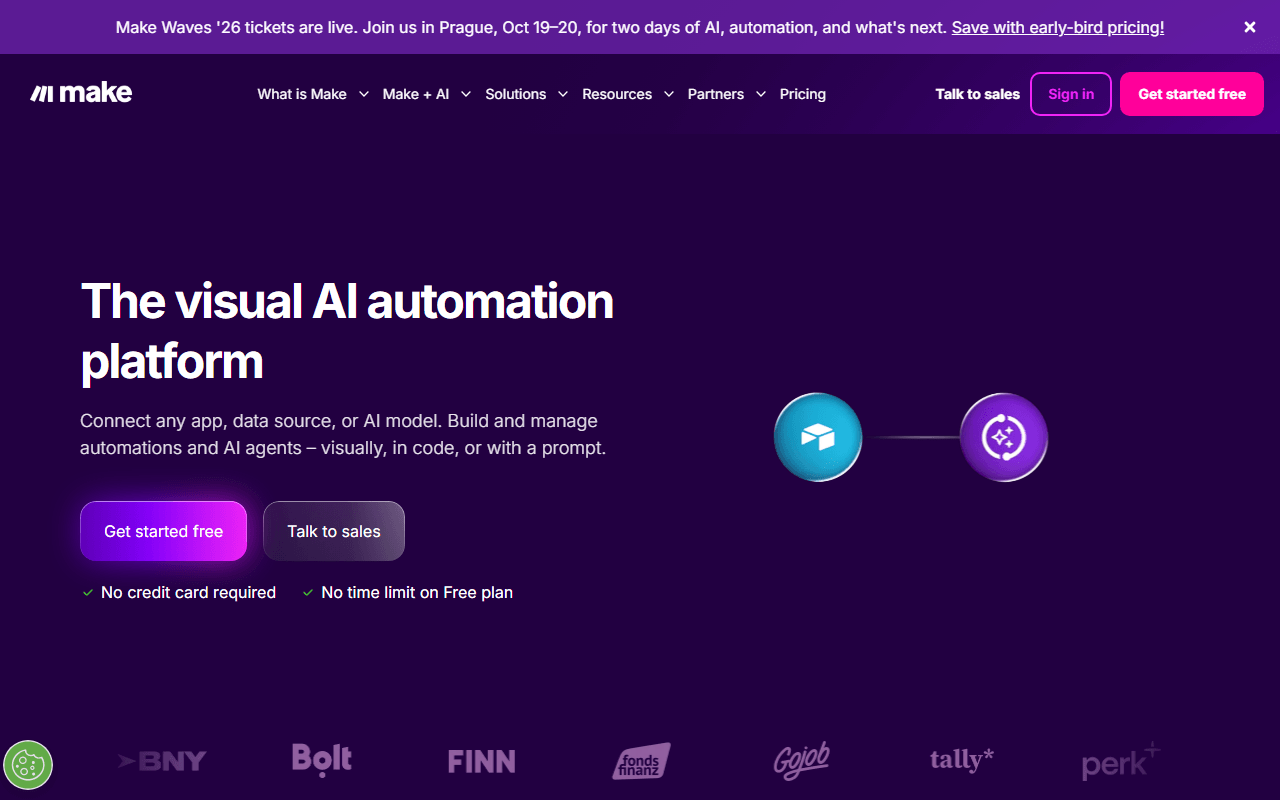
Make is the pick if Activepieces' younger connector library is your main frustration and you would rather not self-host. It is fully hosted with a mature, deep catalogue close to Zapier's, and its free tier gives 1,000 operations a month across two active scenarios (as of July 2026). Its visual canvas is polished and makes branching easy to follow.
- Free plan, paid from $9/month (as of July 2026)
- Czech Republic
 Czech Republic
- Best for:
- Activepieces users who want a wider connector catalogue and a strong hosted free tier
- The catch:
- Make meters an operation per module call, so multi-step scenarios drain the free tier fast, and it is proprietary with no self-hosting, unlike Activepieces' MIT Community Edition.
Compared to Activepieces
- Advantage: Deeper, more mature connector catalogue than Activepieces
- Worth knowing: Free tier allows 1,000 operations across two scenarios, fully hosted
- Advantage: Polished visual canvas for branching and loops
- Tradeoff: Operation-per-module metering; Activepieces cloud gives unlimited runs
- Tradeoff: No self-hosting, where Activepieces is MIT and self-hostable free
- Tradeoff: Proprietary, versus Activepieces' open source code
Code-first automation with thousands of connectors
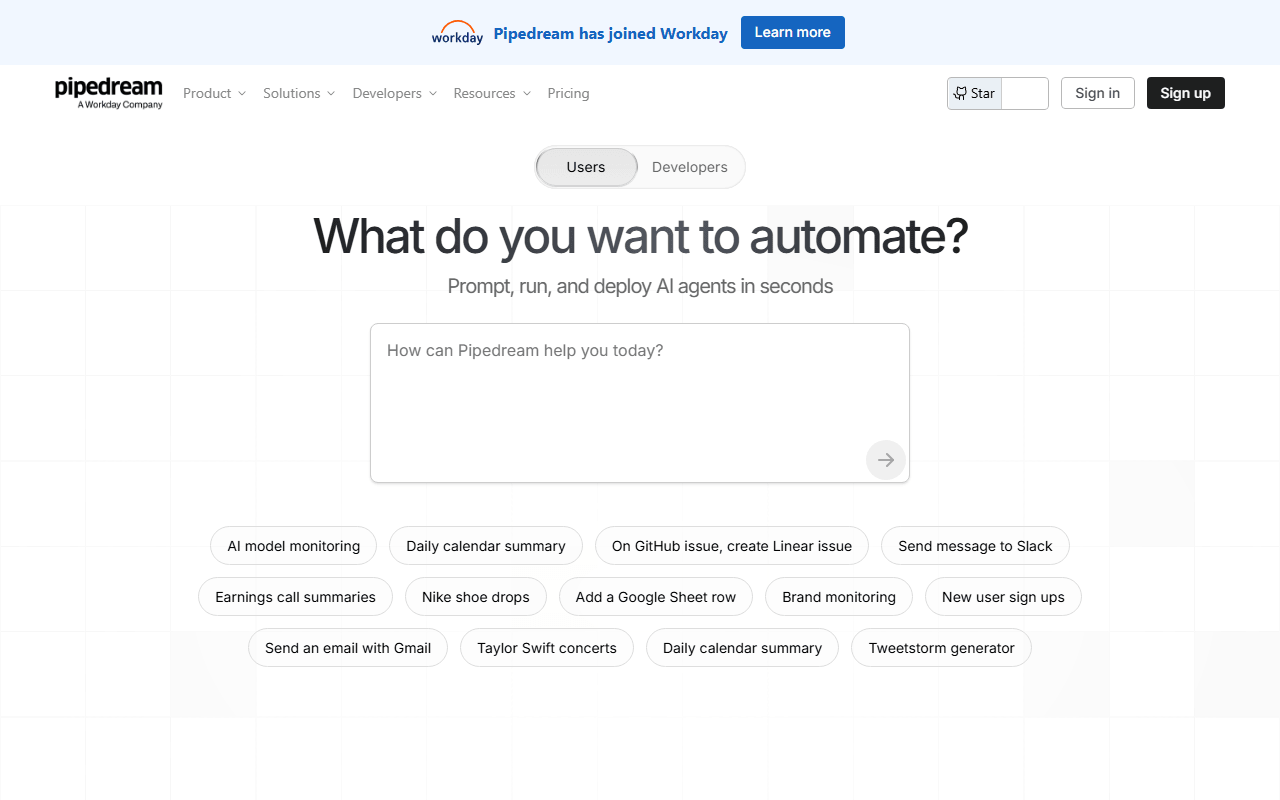
Pipedream suits the Activepieces user who wants to write more code and reach more apps. It is hosted, connects to thousands of apps, and lets you drop into Node.js or Python at any step, with open source connectors you can extend. Billing is credit-based on compute time rather than per flow or per step.
- Free plan (as of July 2026)
- United States
 United States
- Best for:
- Developers who want code-first workflows and a wider app reach than Activepieces
- The catch:
- Pipedream renders its pricing client-side, so we could not confirm the exact free-tier numbers, and it is code-first and hosted only, giving up Activepieces' friendly builder and self-hosting.
Compared to Activepieces
- Advantage: Connects to thousands of apps, more than Activepieces' library
- Advantage: Full Node.js and Python at any step for developers
- Worth knowing: Open source component registry you can extend, like Activepieces' pieces
- Tradeoff: Code-first, so less approachable than Activepieces' builder
- Tradeoff: Exact free-tier limits could not be verified first-party
- Tradeoff: Hosted only, where Activepieces self-hosts free under MIT
Fully open source, and stronger when automations touch hardware
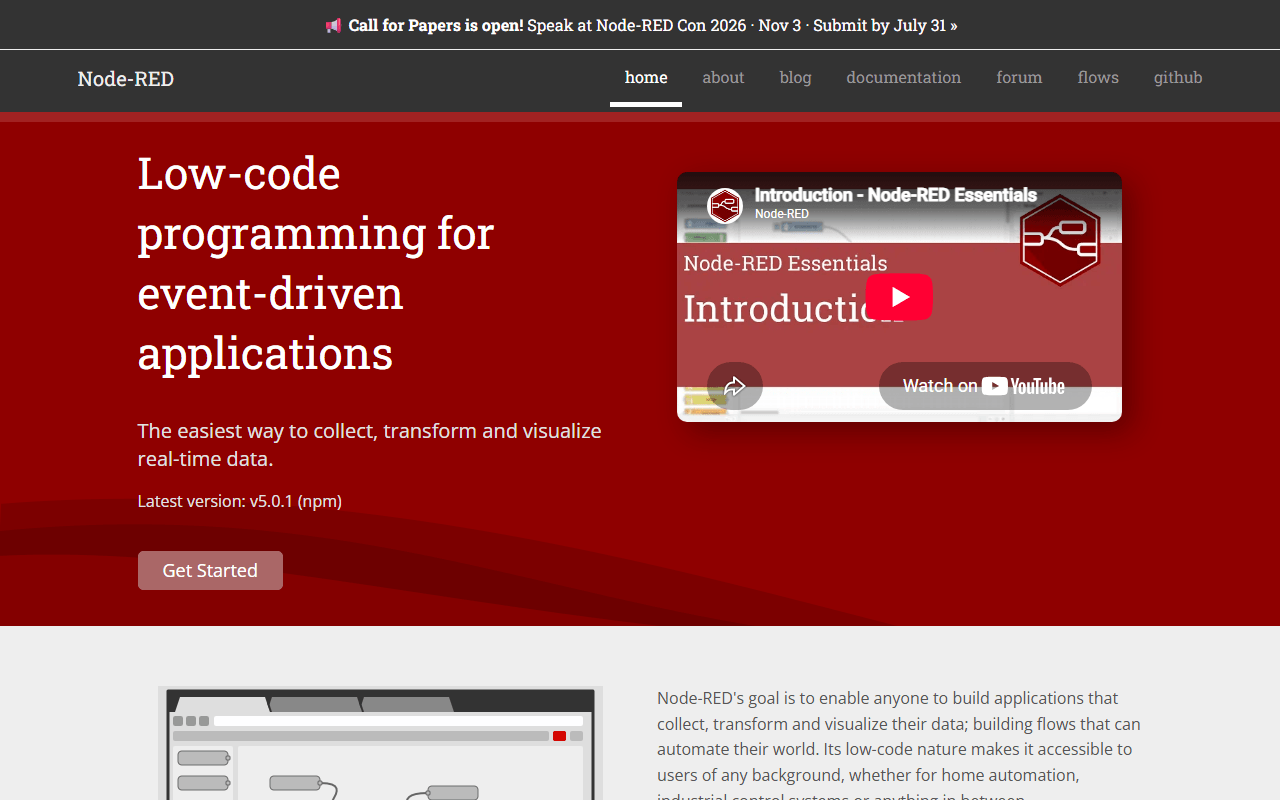
Node-RED shares Activepieces' open source, self-hosted spirit but aims at a different job. It is Apache-2.0, completely free, and the better engine when your automations reach hardware, MQTT, or local files rather than only SaaS apps. It runs on anything down to a Raspberry Pi.
- Completely free (as of July 2026)
- United States
- Open source (Apache-2.0)
- Best for:
- Open source self-hosters whose automations touch hardware, IoT, or local systems
- The catch:
- Its SaaS connectors come from a community palette rather than Activepieces' curated pieces, and it has no hosted option or built-in team workspace.
Compared to Activepieces
- Worth knowing: Apache-2.0 open source, like Activepieces' permissive MIT
- Advantage: Stronger for hardware, IoT, and local systems than Activepieces
- Advantage: Runs on tiny hardware like a Raspberry Pi
- Tradeoff: SaaS connectors from a community palette, less curated than Activepieces' pieces
- Tradeoff: No hosted cloud option, where Activepieces offers a free one
- Tradeoff: No built-in team workspace out of the box
The widest connector catalogue, fully hosted
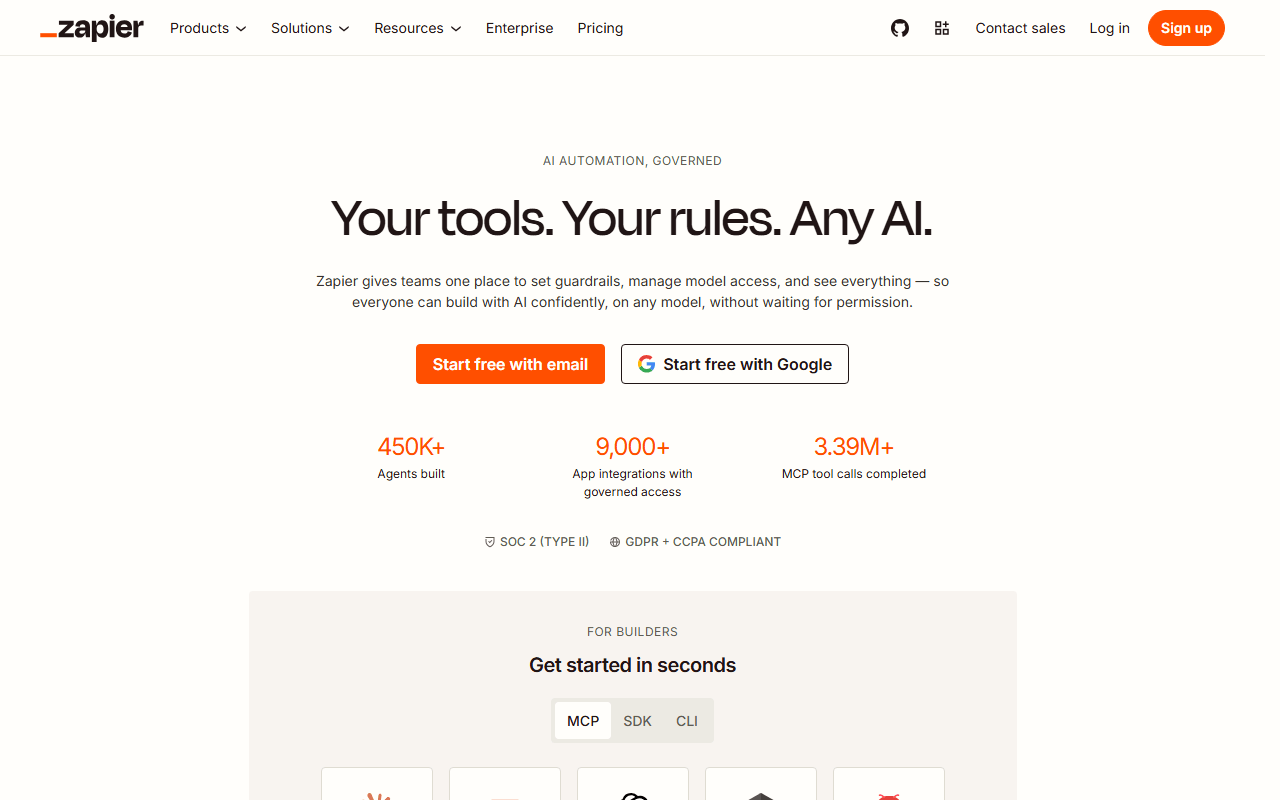
Zapier is worth a look if the one thing Activepieces lacked for you was connectors. It has the widest catalogue in the category and the most polished setup, all hosted. The catch is the free tier, which is the thinnest here.
- Free plan, paid from $19.99/month (as of July 2026)
- United States
- Best for:
- People who need the widest connectors and want a hosted, polished no-code tool
- The catch:
- Zapier's free plan is capped at 100 tasks a month and two-step Zaps (as of July 2026), thinner than Activepieces' cloud free tier, and it bills a task per step.
Compared to Activepieces
- Advantage: Widest connector catalogue, ahead of Activepieces' younger library
- Advantage: Most polished setup experience, fully hosted
- Tradeoff: Free plan capped at 100 tasks and two-step Zaps, thinner than Activepieces cloud
- Tradeoff: Bills a task per step; Activepieces cloud gives unlimited runs
- Tradeoff: Proprietary with no self-hosting, unlike Activepieces' MIT edition
A free, self-hosted agent system for monitoring the web
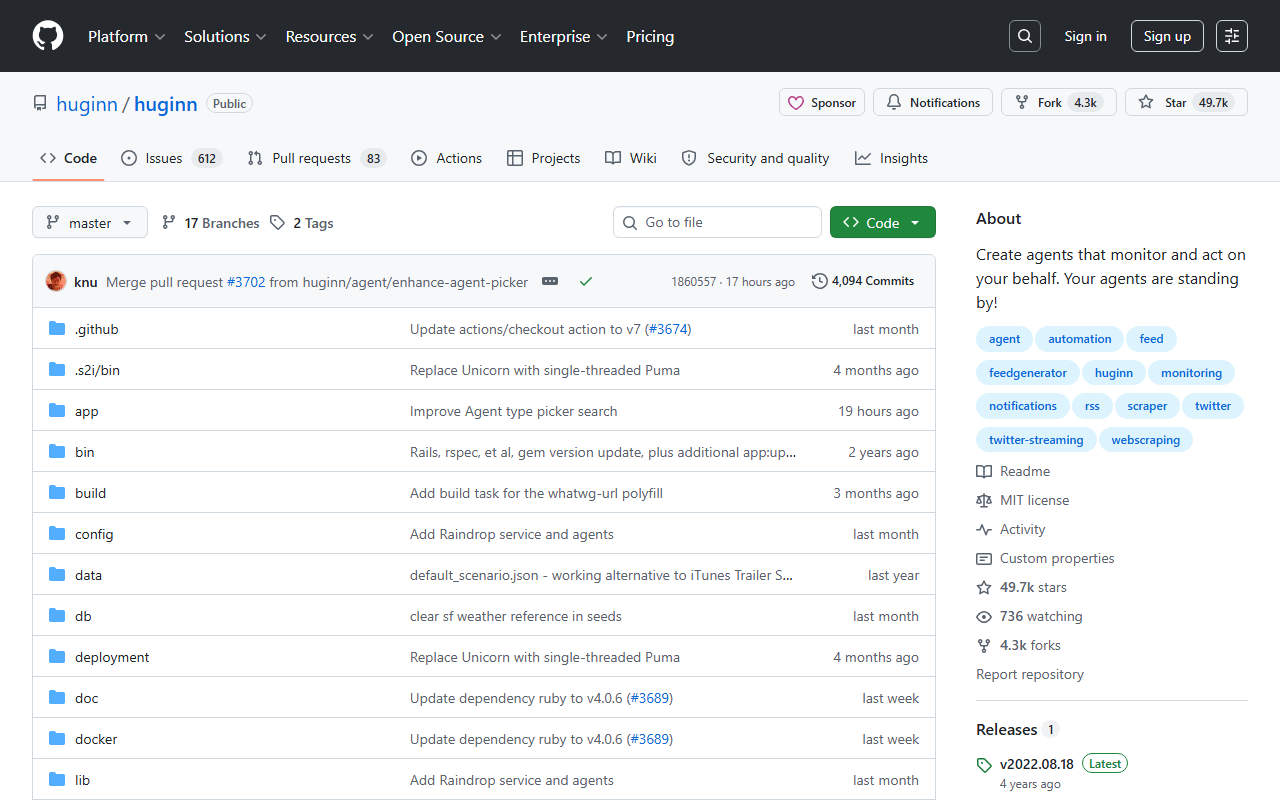
Huginn is a narrow, developer-focused alternative. If the Activepieces flows you care about are really about scraping, monitoring, and alerting, Huginn does that on your own server for free under MIT. It will not match Activepieces as a general builder, but for private monitoring it is capable and costs nothing.
- Completely free (as of July 2026)
- United States
- Open source (MIT)
- Best for:
- Developers who mainly want private, self-hosted monitoring and scraping agents
- The catch:
- It is a Ruby on Rails app with a database to maintain, its interface is dated, and it is far narrower than Activepieces.
Compared to Activepieces
- Worth knowing: MIT-licensed and self-hosted, like Activepieces' Community Edition
- Advantage: Purpose-built for scraping, monitoring, and alerting
- Advantage: No cloud metering of any kind
- Tradeoff: Narrower than Activepieces; not a general automation builder
- Tradeoff: Ruby on Rails plus a database, a heavier setup than Activepieces' Docker
- Tradeoff: Dated, config-driven interface next to Activepieces' modern builder
How to choose
If you like self-hosting and want more depth, n8n is the natural step up: more connectors, code steps, native AI nodes, and per-run billing, at the cost of a fair-code rather than MIT license. If you would rather not run a server at all, Make has the strongest hosted free tier and a deeper connector catalogue, and Pipedream suits developers who want to write code. Node-RED keeps you fully open source for hardware and local work, and Zapier is the one to consider if connector count is the single thing Activepieces was missing for you. Huginn is a narrow pick for private monitoring agents.