

A browser tab that opens PSD files with layers intact
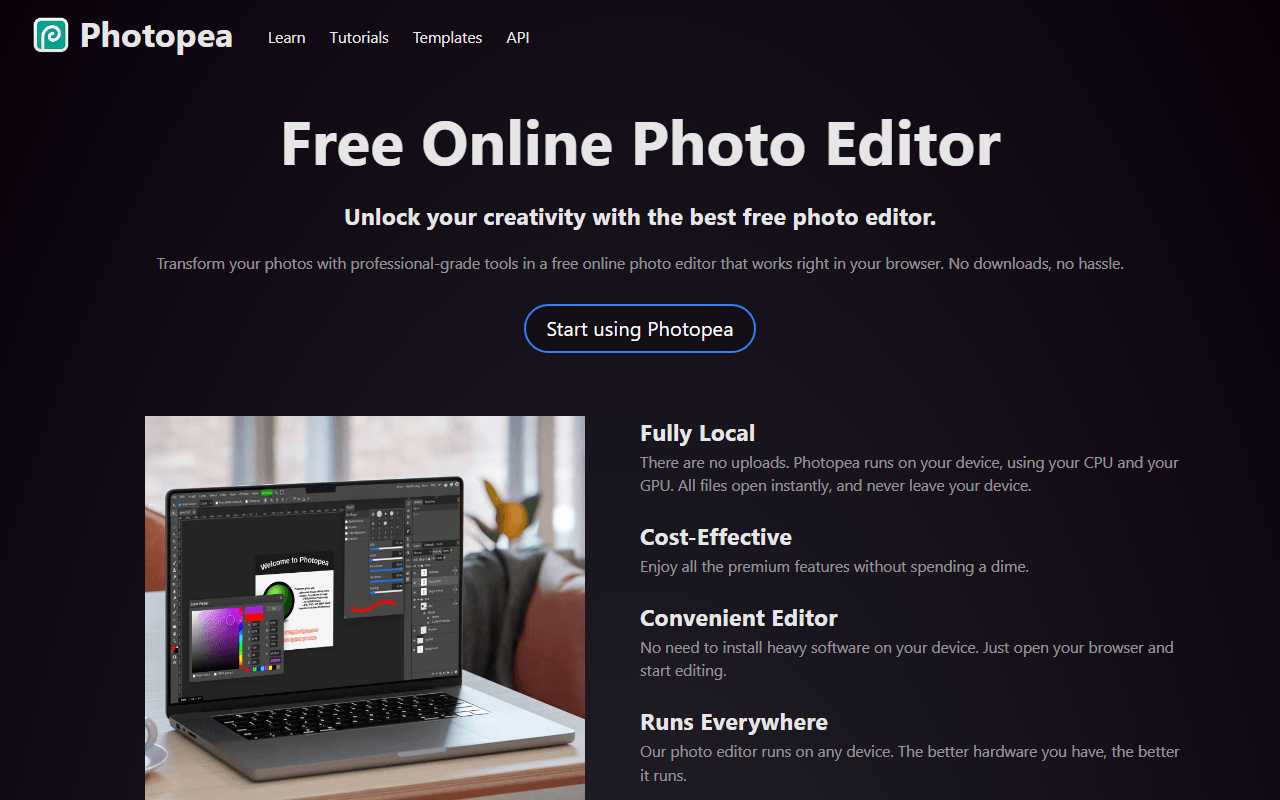
Photopea is a Photoshop-style editor that runs entirely in your browser. It reads PSD, Sketch, XD, XCF, and RAW, and layers, masks, blend modes, and smart objects all survive the trip. It has been built and maintained by one developer, Ivan Kutskir, in Prague since 2012, and it is free because it shows ads.
Reach for it when you cannot install Photoshop
- Occasional Photoshop tasks without a Creative Cloud subscription
- Opening and editing PSD files a client or designer sent you
- Chromebook and locked-down work machines where you cannot install software
- The photo edits Canva puts behind Pro, done free instead
Every feature free, with ads, and the $5 pass price
Photopea is freemium and unusually honest about it: every editing feature is available on the free tier. As of July 2026, free includes all tools, 0.5GB of PeaDrive cloud storage, roughly one AI action per day, and ads beside the canvas. Premium starts at $5 per month, sold as 30, 90, and 365-day passes rather than auto-renewing subscriptions (90 days costs $15). It removes ads, doubles undo history, raises PeaDrive to 5GB, and includes 3,000 AI credits a month.
Browser memory, one AI action a day, and other limits
- Ads take up screen space on the free tier, which gets old during long sessions
- Very large files can push against browser memory limits; a native app handles 2GB PSDs better
- The AI features (background remover included) are limited to about one free use a day
- One developer maintains the whole product; it has been reliable for over a decade, but that is a real dependency to know about
Daily editors should pay; monthly editors should not
For actual photo editing, this is the free tool we point people to first. If you edit daily, the $5 a month to drop the ads is fair; if you edit monthly, the free tier costs you nothing but patience with the sidebar.
Reader reviews
What people who actually use Photopea think of it.
No reviews of Photopea yet. If you have used it, yours would be the first.
The useful part is the specifics: what you used it for, and where it got in your way.
Loading...