Free alternatives to Standard Notes
Standard Notes gives you unlimited encrypted notes synced across unlimited devices for free, which is rare, but the free plan is deliberately bare. It is plain text with no attachments, no rich formatting, and no links between notes, so it is a place to write rather than a knowledge base (as of July 2026). Rich editors and file storage sit behind Productivity at $90 a year. These free tools add the structure and attachments Standard Notes leaves out, with different tradeoffs on privacy.
Facts checked as of July 2026Read our Standard Notes review
Jump to an alternative





Joplin
Best Free Alternative ToStandard NotesOpen source notebooks with attachments, tags, and a web clipper, plus encryption you switch on and free sync to your own storage
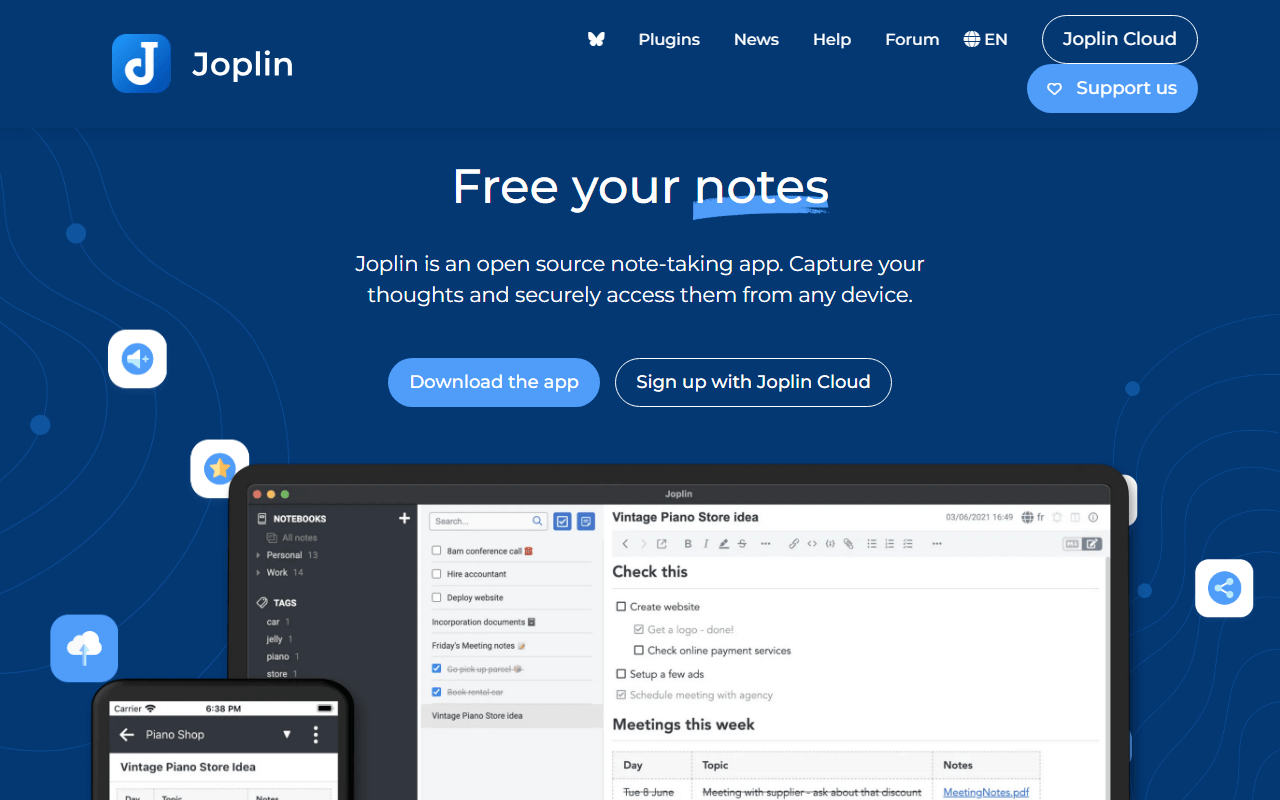
Joplin gives you everything Standard Notes' free plan holds back: notebooks, tags, attachments, rich Markdown, and a web clipper, all free and open source under AGPL-3.0 (as of July 2026). Like Standard Notes it can sync everywhere at no cost, but you point it at Dropbox, OneDrive, Nextcloud, WebDAV, or S3 rather than a hosted service. The privacy trade is the honest catch: end-to-end encryption is off until you enable it, where Standard Notes encrypts by default. The interface also looks a decade old, and there are no backlinks or graph between notes.
- Free plan, paid from €2.4/month (as of July 2026)
- United Kingdom
- Open source (AGPL-3.0-or-later)
 United Kingdom
- Best for:
- Standard Notes users who need attachments and formatting for free and will turn encryption on themselves
- The catch:
- Encryption is off until you enable it, the interface is dated, and there are no backlinks.
Compared to Standard Notes
- Advantage: Attachments, notebooks, tags, and a web clipper, where Standard Notes free is plain text only
- Advantage: Rich Markdown formatting for free, where Standard Notes gates editors behind $90 a year
- Advantage: Open source under AGPL-3.0 with free sync, like Standard Notes' unlimited free sync
- Tradeoff: Encryption is off until you enable it, where Standard Notes encrypts by default
- Tradeoff: The interface looks a decade old
- Tradeoff: No backlinks or graph between notes
Keeps end-to-end encryption on by default like Standard Notes, but adds rich content, attachments, and typed structure
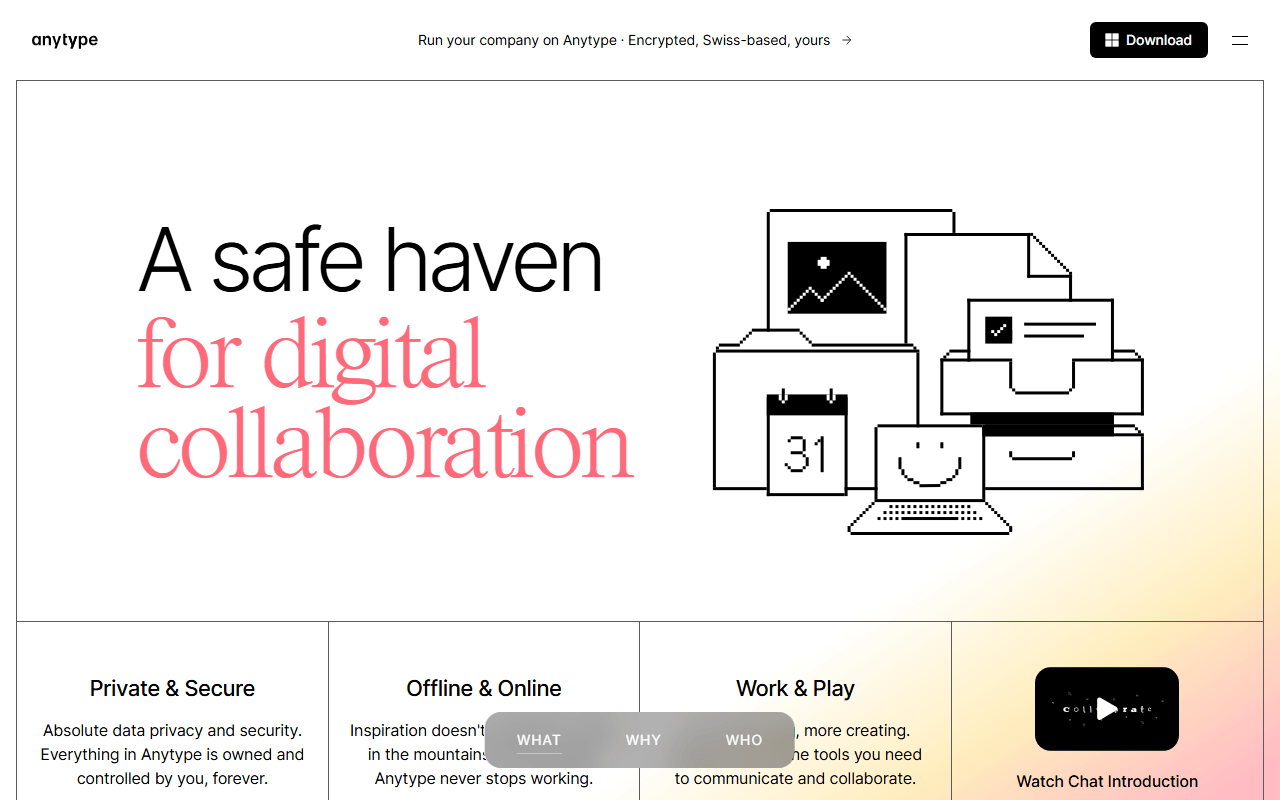
Anytype is the closest match if the reason you used Standard Notes was encryption by default, not just a place to write. It encrypts everything on your device before syncing, the same core promise, but adds rich content, attachments, and typed objects joined by relations (as of July 2026). Local storage is unlimited on every tier. The catches are that free gives only 100 MB of remote sync storage where Standard Notes syncs unlimited for free, the license is source-available rather than OSI open source, and there is no web app.
- Free plan, paid from $4/month (as of July 2026)
- Switzerland
 Switzerland
- Best for:
- Standard Notes users who want encryption by default plus real structure and attachments
- The catch:
- Only 100 MB of free sync storage, a source-available license, and no web app.
Compared to Standard Notes
- Advantage: End-to-end encrypted by default, matching Standard Notes' core
- Advantage: Rich content, attachments, and typed objects, where Standard Notes free is plain text
- Advantage: Structure from relations, not just notes and tags
- Tradeoff: Only 100 MB of remote sync storage on free, where Standard Notes syncs unlimited free
- Tradeoff: Source-available, not OSI open source like Standard Notes' AGPL-3.0
- Tradeoff: No web app, where Standard Notes runs in the browser
A real knowledge base with backlinks, a graph, and a canvas, stored as plain Markdown files you own
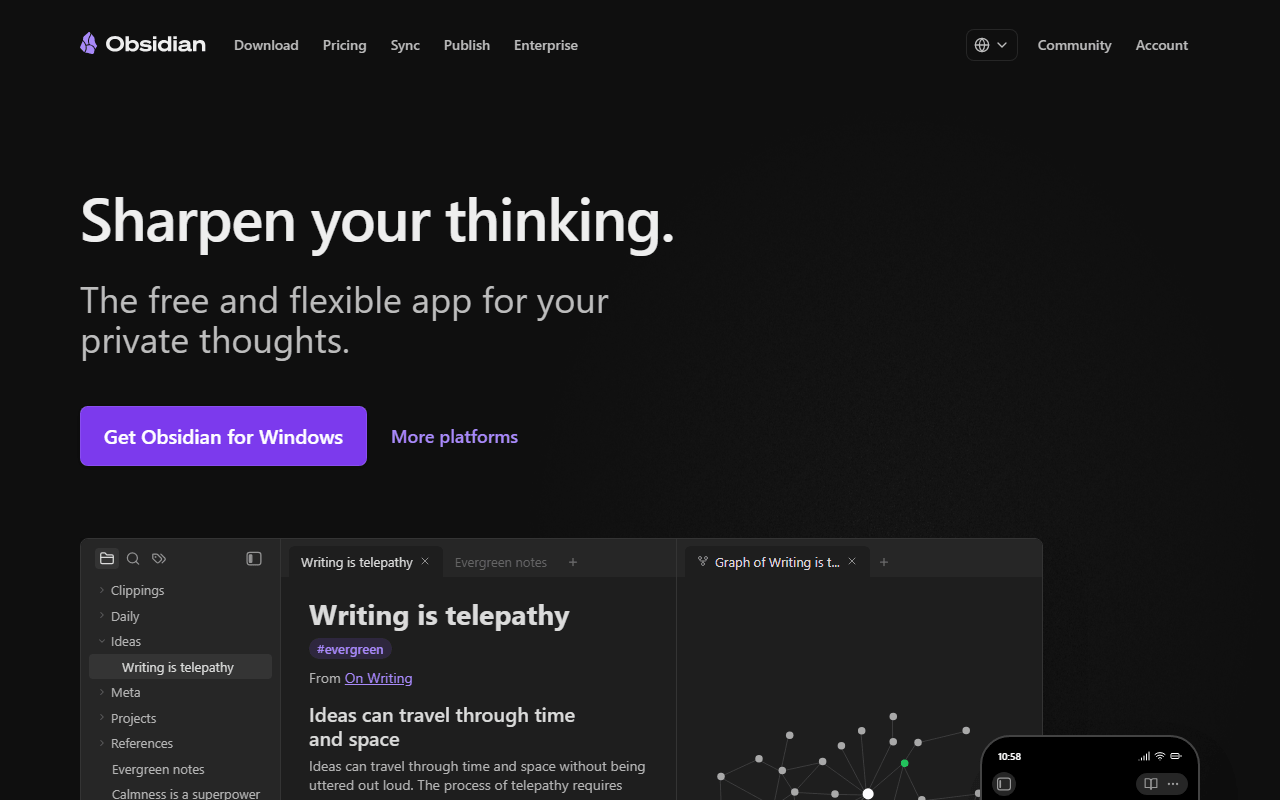
Obsidian is the switch when what you actually wanted from Standard Notes was a knowledge base, not a plain-text notepad. You get backlinks, a graph, a built-in canvas, attachments, and rich Markdown, with every note stored as a plain file you own, all free for personal use (as of July 2026). The privacy trade is real: notes are not end-to-end encrypted by default the way Standard Notes are, so if that was the point, this is a step down. Sync across devices is also a paid add-on at $4 per user per month, where Standard Notes syncs free.
- Free plan, paid from $4/month (as of July 2026)
- Canada
 Canada
- Best for:
- Standard Notes users who want a linked knowledge base in plain files they own
- The catch:
- It is not encrypted by default, it is closed source, and device sync is a paid add-on.
Compared to Standard Notes
- Advantage: Backlinks, graph, and canvas, where Standard Notes has no links between notes
- Advantage: Attachments and rich Markdown for free, where Standard Notes free is plain text
- Advantage: Notes are plain files you own on disk
- Tradeoff: Not end-to-end encrypted by default, where Standard Notes is
- Tradeoff: Sync across devices is $4 per user per month, where Standard Notes syncs free
- Tradeoff: Closed source, where Standard Notes is AGPL-3.0
A free offline knowledge base with block references, a database, PDF annotation, and flashcards
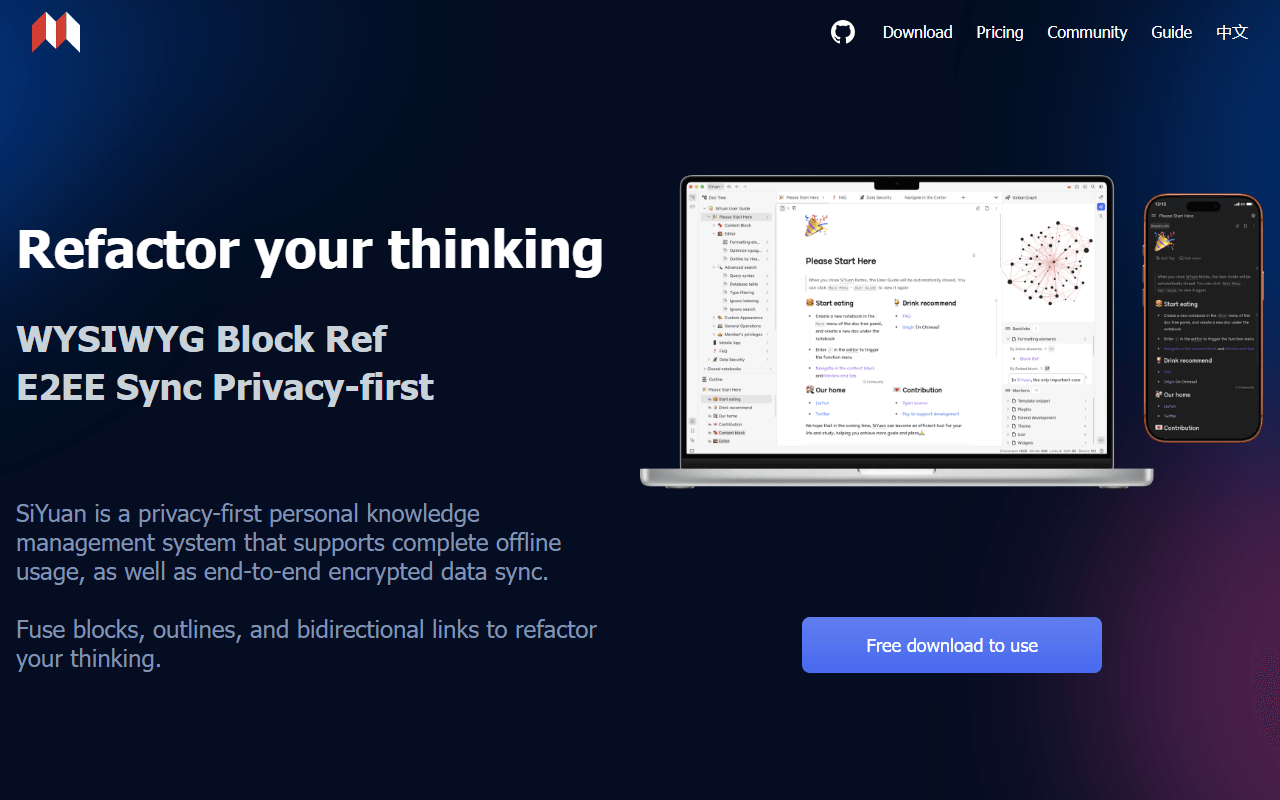
SiYuan is the pick when you want to build something structured, not just write private notes. It is a free-for-life AGPL-3.0 block-based knowledge base with block references, an attribute-view database, PDF annotation, and flashcards, all running fully offline (as of July 2026). It adds the attachments and rich content Standard Notes' free plan lacks. The privacy trade is that it is not end-to-end encrypted where Standard Notes is, sync costs a one-time payment where Standard Notes syncs free, and notes are stored as JSON with rough English docs.
- Free plan, paid from $64 one-time (as of July 2026)
- China
- Open source (AGPL-3.0)
 China
China- Best for:
- Standard Notes users who want an offline knowledge base with block references and flashcards
- The catch:
- It is not encrypted, sync costs a one-time payment, and notes are stored as JSON.
Compared to Standard Notes
- Advantage: Block references, database, and PDF annotation, where Standard Notes is plain notes
- Advantage: Attachments and rich content for free, where Standard Notes free is plain text
- Advantage: Open source under AGPL-3.0 and fully offline, like Standard Notes' open code
- Tradeoff: Not end-to-end encrypted, where Standard Notes is
- Tradeoff: Sync costs a one-time payment, where Standard Notes syncs free
- Tradeoff: Notes stored as JSON, and English docs are rough
Fully open source outliner with local Markdown files, block-level links, and no paid tier
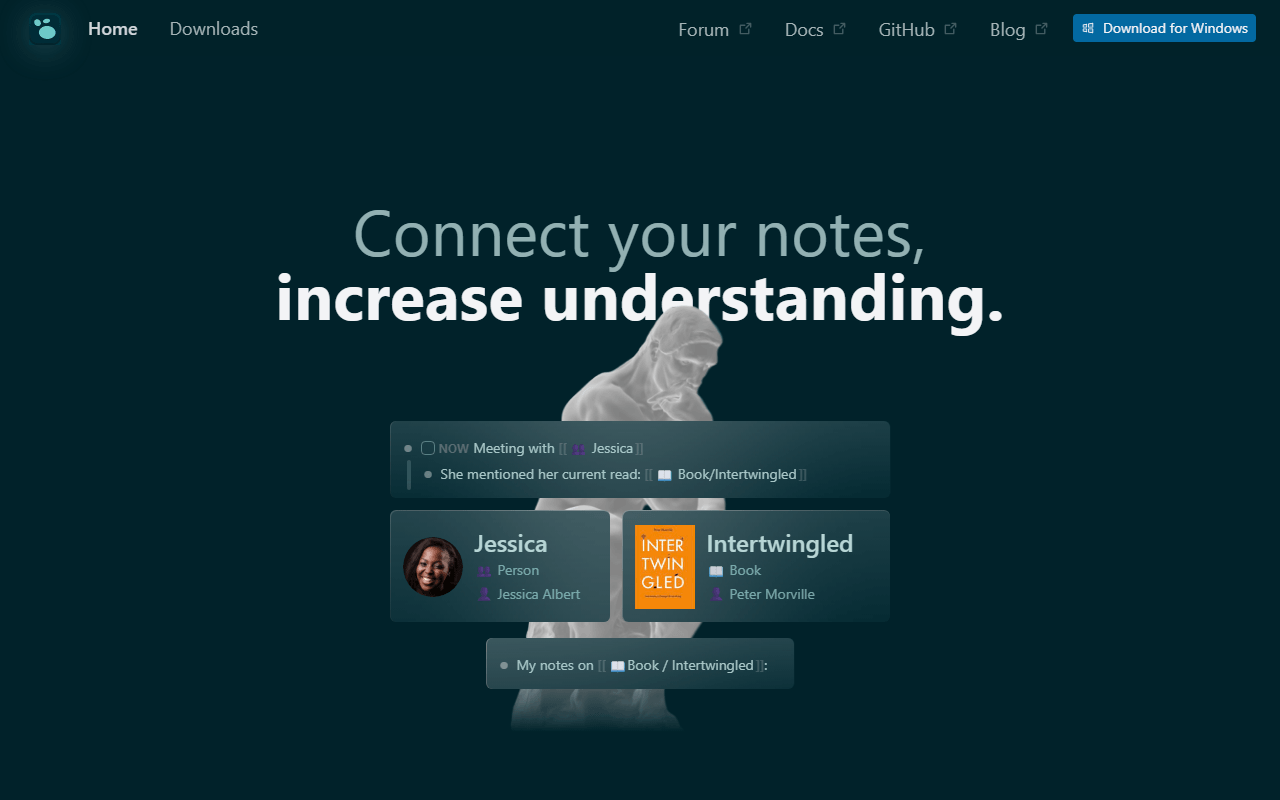
Logseq keeps Standard Notes' open source, own-your-data spirit but turns it into a knowledge base. It stores notes as local Markdown or Org files, links and queries at the block level, and is free under AGPL-3.0 with no paid tier (as of July 2026). Where Standard Notes free is plain text, Logseq gives you rich Markdown and links between notes for nothing. The trade is that it is not end-to-end encrypted by default, official Sync is a beta perk for backers, and the outliner model suits bullets more than long private prose.
- Completely free (as of July 2026)
- United States
- Open source (AGPL-3.0)
 United States
- Best for:
- Standard Notes users who want open source, local files with backlinks and block queries
- The catch:
- It is not encrypted by default, and official sync is beta and limited to backers.
Compared to Standard Notes
- Advantage: Backlinks and block-level queries, where Standard Notes has no links
- Advantage: Rich Markdown and local files for free, where Standard Notes free is plain text
- Advantage: Fully open source under AGPL-3.0, like Standard Notes
- Tradeoff: Not end-to-end encrypted by default, where Standard Notes is
- Tradeoff: Official sync is beta and limited to backers, where Standard Notes syncs free
- Tradeoff: The outliner model suits bullets, not long private prose
A Notion-shaped open source workspace with docs, databases, and collaboration, self-hostable with no caps
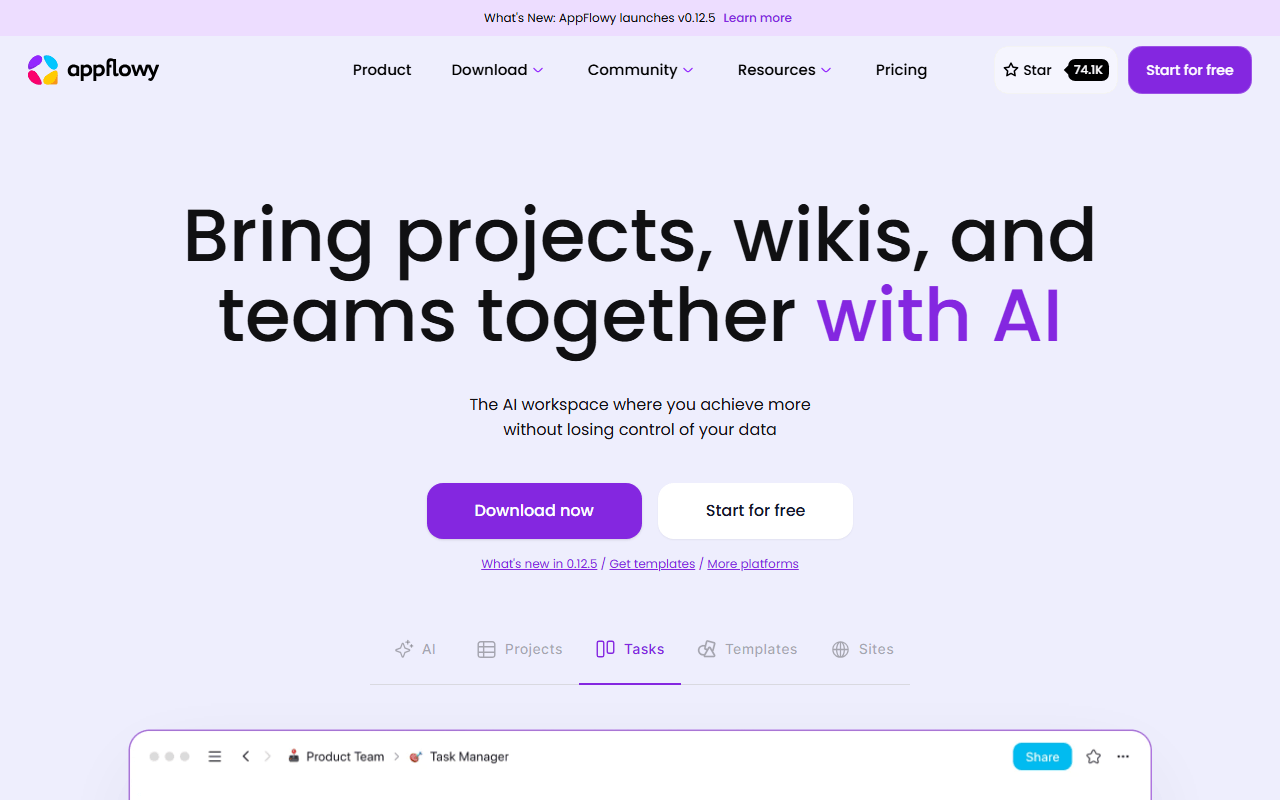
AppFlowy fits if you wanted Standard Notes to be a shared workspace rather than a private notepad. You get a block editor, grid, board, and calendar database views, attachments, and real-time collaboration, all local-first and open source under AGPL-3.0 (as of July 2026). Self-hosting removes the caps, echoing Standard Notes' own self-hostable server. The privacy trade is the catch: notes are not end-to-end encrypted where Standard Notes are, the hosted free plan stops at 2 members and 5 GB, and its database relations and rollups are shallow.
- Free plan, paid from $10/month (as of July 2026)
- Singapore
- Open source (AGPL-3.0)
 Singapore
- Best for:
- Standard Notes users who want docs, databases, and collaboration in an open source workspace
- The catch:
- It is not encrypted, the hosted free plan caps you at 2 members, and databases are shallow.
Compared to Standard Notes
- Advantage: Docs, databases, and attachments, where Standard Notes free is plain text
- Advantage: Real-time collaboration, which Standard Notes does not do
- Advantage: Open source and self-hostable, like Standard Notes' self-hostable server
- Tradeoff: Not end-to-end encrypted, where Standard Notes is
- Tradeoff: Hosted free plan caps you at 2 members and 5 GB
- Tradeoff: Younger database engine with shallow relations and rollups
How to choose
If you can accept turning encryption on yourself, Joplin adds notebooks, tags, attachments, and a web clipper, all open source and syncing free to storage you own. If encryption by default is non-negotiable, Anytype keeps that and adds structure, though its free sync is only 100 MB. For a real knowledge base with backlinks, Obsidian stores plain Markdown files you own, and SiYuan and Logseq are the open source block-based options. Weigh how much privacy you trade for formatting and links before you move.