Free alternatives to Anytype
Anytype's pitch is a private, local-first workspace where everything is encrypted before it leaves your device, and it is free, so the reasons to compare are about the fine print. It is source-available under the Any Source Available License 1.0, which is not the same as OSI open source, so we do not call it open source. The object-and-relation model is more capable than folders and takes a week or two to click, the free tier gives only 100 MB of remote sync storage, and there is no web app (as of July 2026). These free tools trade on one of those.
Facts checked as of July 2026Read our Anytype review
Jump to an alternative





SiYuan
Best Free Alternative ToAnytypeA genuinely open source, structured knowledge base that works fully offline and never rations your sync storage
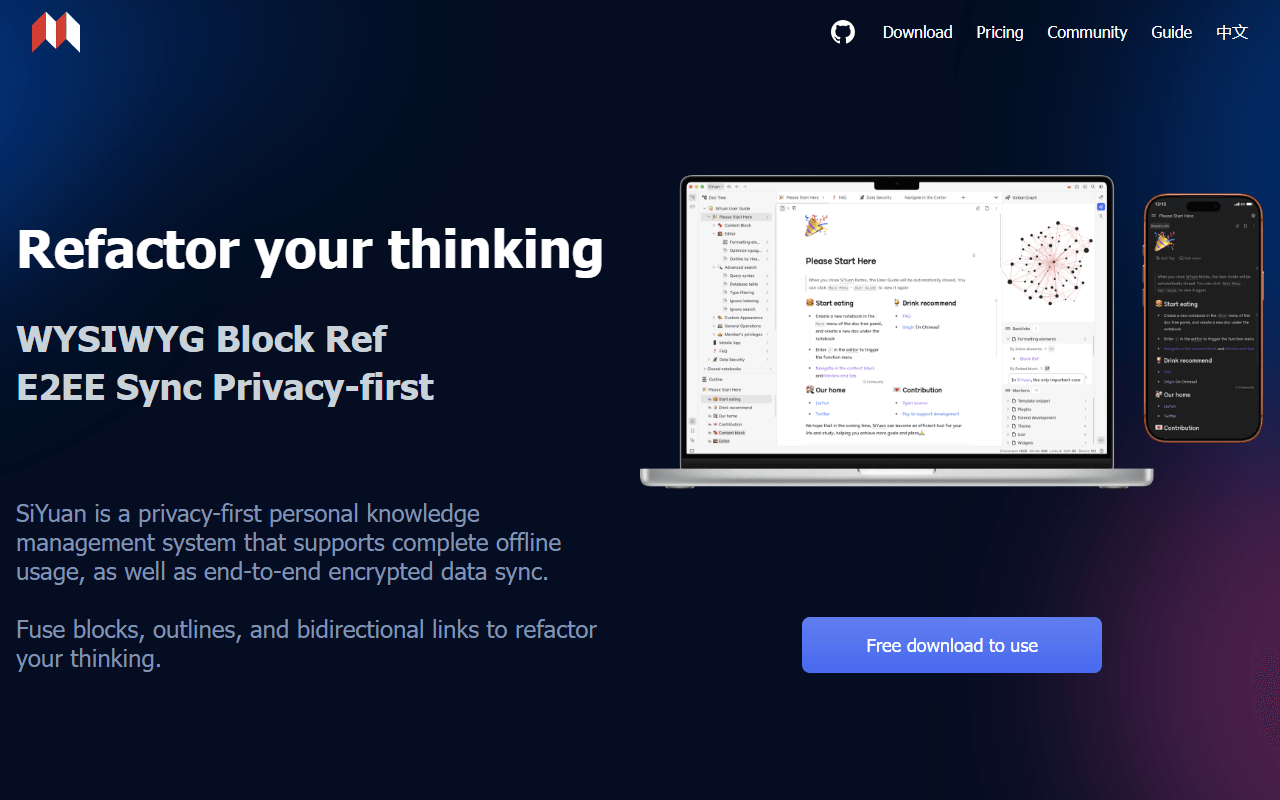
SiYuan keeps the parts of Anytype people value, structure and local-first ownership, while fixing the license and the storage cap. It is a free-for-life AGPL-3.0 knowledge base with block-level references and an attribute-view database, so you get real structure, and it runs entirely offline with no 100 MB ceiling hanging over it (as of July 2026). Sync, if you want it across devices, is a one-time $64 through your own S3 or WebDAV rather than a storage tier you rent. The honest gap is encryption: SiYuan has no end-to-end encryption, so if that was your reason for Anytype, look at Standard Notes instead.
- Free plan, paid from $64 one-time (as of July 2026)
- China
- Open source (AGPL-3.0)
 China
China- Best for:
- Anytype users who want structure and local-first ownership in genuinely open source software
- The catch:
- No end-to-end encryption, notes are stored as JSON, and the English documentation is rough.
Compared to Anytype
- Advantage: Genuinely open source under AGPL-3.0, where Anytype is source-available
- Advantage: No 100 MB remote-storage ceiling, since it runs offline
- Advantage: Block references and a database give structure like Anytype's objects
- Advantage: Sync is a one-time payment, not a rented storage tier
- Tradeoff: No end-to-end encryption, which is Anytype's headline feature
- Tradeoff: Notes stored as JSON and English docs are rough
A far simpler mental model, plain Markdown files you own, with no storage cap and the biggest plugin library here
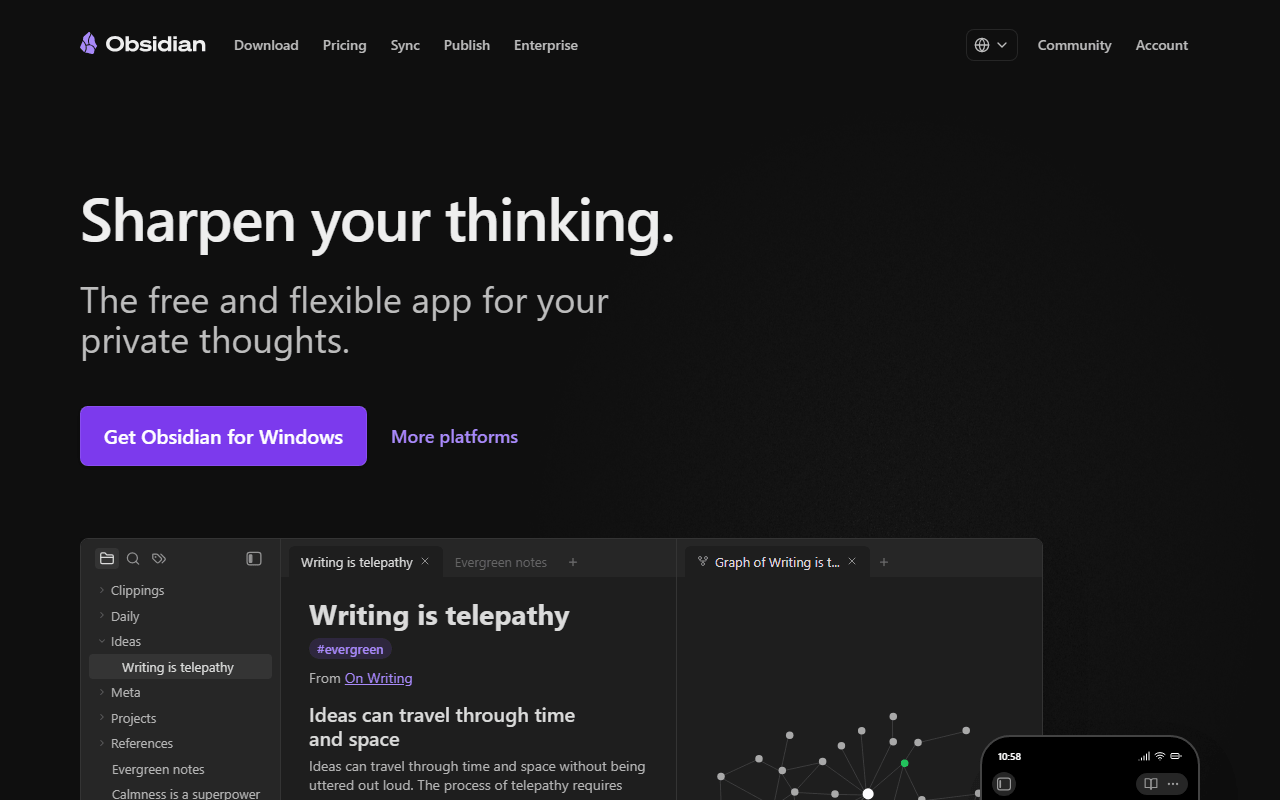
Obsidian is the pick if Anytype's objects and relations were more machinery than you wanted. It points at a folder of plain Markdown files, which is about as simple and portable as note storage gets, and personal use is free with no note, device, or feature limits (as of July 2026). A plugin library over a thousand deep, including Dataview, covers a lot of the structure Anytype gave you through relations. The tradeoffs are the ones Anytype was built to avoid: Obsidian is not encrypted, its core is closed source, and Sync is $4 per user per month unless you use iCloud or Dropbox.
- Free plan, paid from $4/month (as of July 2026)
- Canada
 Canada
- Best for:
- Anytype users who want plain files and a simpler model over encrypted objects
- The catch:
- Not encrypted, closed source, and Sync is a paid add-on.
Compared to Anytype
- Advantage: Plain Markdown files you own, simpler than typed objects
- Advantage: No 100 MB sync-storage cap on your notes
- Advantage: Over a thousand plugins, where Anytype has almost no integrations
- Tradeoff: Not end-to-end encrypted, where Anytype is
- Tradeoff: Closed source, where Anytype is at least source-available
- Tradeoff: Sync is a $4-per-month add-on
Open source with end-to-end encryption on by default, and free sync across unlimited devices with no 100 MB cap
Standard Notes keeps Anytype's encryption promise and fixes both the license and the storage cap, at the cost of structure. It is AGPL-3.0 open source, encryption is the default, and the free plan syncs unlimited notes across unlimited devices with no storage ceiling, backed by Proton (as of July 2026). The catch is that free is plain text with no attachments, backlinks, or objects, so you lose all of Anytype's structure. Rich Super notes arrive on Productivity at $90 a year.
- Free plan, paid from $90/year (as of July 2026)
- Switzerland
- Open source (AGPL-3.0)
 Switzerland
- Best for:
- Anytype users who care most about open source encryption and can live in plain text
- The catch:
- Free is plain text with no attachments or structure, so Anytype's object model is gone.
Compared to Anytype
- Advantage: Genuinely open source under AGPL-3.0, where Anytype is source-available
- Advantage: Encryption on by default, matching Anytype's core promise
- Advantage: Free sync across unlimited devices with no 100 MB cap
- Tradeoff: Free plan is plain text with no attachments or objects
- Tradeoff: No structure, relations, or databases
- Tradeoff: Rich formatting needs Productivity at $90 per year
Fully open source and local Markdown, with block-level links for connecting notes
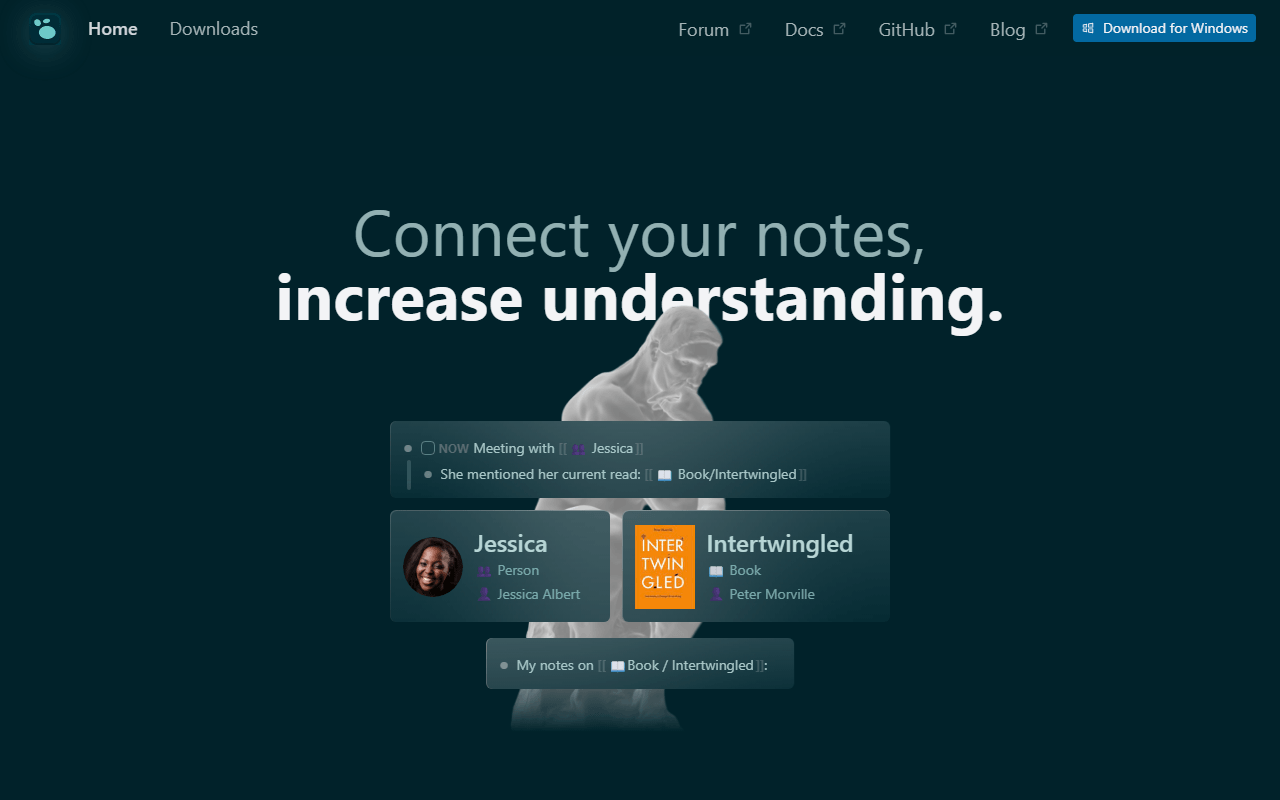
Logseq is the open source, local-first option if Anytype's license was the sticking point but you still want to link ideas. It is a free AGPL-3.0 outliner storing local Markdown or Org-mode files, with block-level links and queries that give a lighter version of Anytype's connected structure (as of July 2026). It is not encrypted and it is an outliner, so it suits capture over long prose. Sync is beta and backer-only, so most people use iCloud, Dropbox, or Git.
- Completely free (as of July 2026)
- United States
- Open source (AGPL-3.0)
 United States
- Best for:
- Anytype users who want open source, local notes and block-level linking
- The catch:
- Not encrypted, and official sync is beta and backer-only.
Compared to Anytype
- Advantage: Fully open source under AGPL-3.0, where Anytype is source-available
- Advantage: Local Markdown files with no remote-storage cap
- Advantage: Block-level links for connecting notes
- Tradeoff: Not end-to-end encrypted, where Anytype is
- Tradeoff: The outliner model is more rigid than Anytype's objects
- Tradeoff: Official sync is beta and gated to backers
Structured databases plus real-time collaboration, under a genuine AGPL open source license
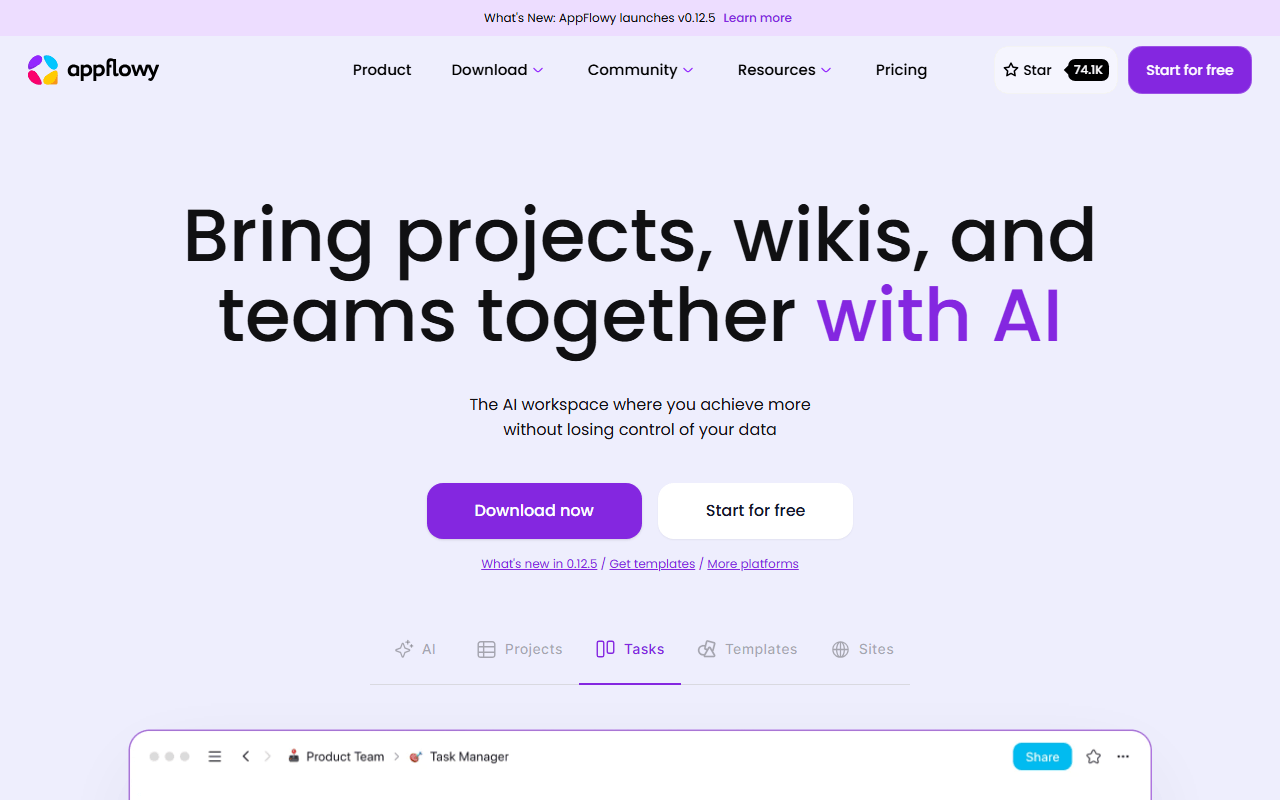
AppFlowy is the pick if you liked Anytype's structure but want collaboration and a genuine open source license. It offers a block editor with grid, board, and calendar views and real-time collaboration, all local-first so it works offline, under AGPL-3.0 (as of July 2026). The hosted free plan covers one workspace of up to 2 members with 5 GB of storage, more generous than Anytype's 100 MB, and self-hosting removes the caps if you run Docker. The tradeoff is privacy: AppFlowy is not end-to-end encrypted the way Anytype is.
- Free plan, paid from $10/month (as of July 2026)
- Singapore
- Open source (AGPL-3.0)
 Singapore
- Best for:
- Anytype users who want structured, collaborative workspaces in open source software
- The catch:
- Not end-to-end encrypted, and the hosted free tier stops at 2 members.
Compared to Anytype
- Advantage: Genuinely open source under AGPL-3.0, where Anytype is source-available
- Advantage: Real-time collaboration, which Anytype barely does
- Advantage: 5 GB of hosted free storage against Anytype's 100 MB
- Tradeoff: Not end-to-end encrypted, where Anytype is
- Tradeoff: Hosted free tier caps at 2 members
- Tradeoff: Younger, so database relations and rollups are thin
Docs, databases, and an infinite whiteboard in one app with an MIT-licensed client
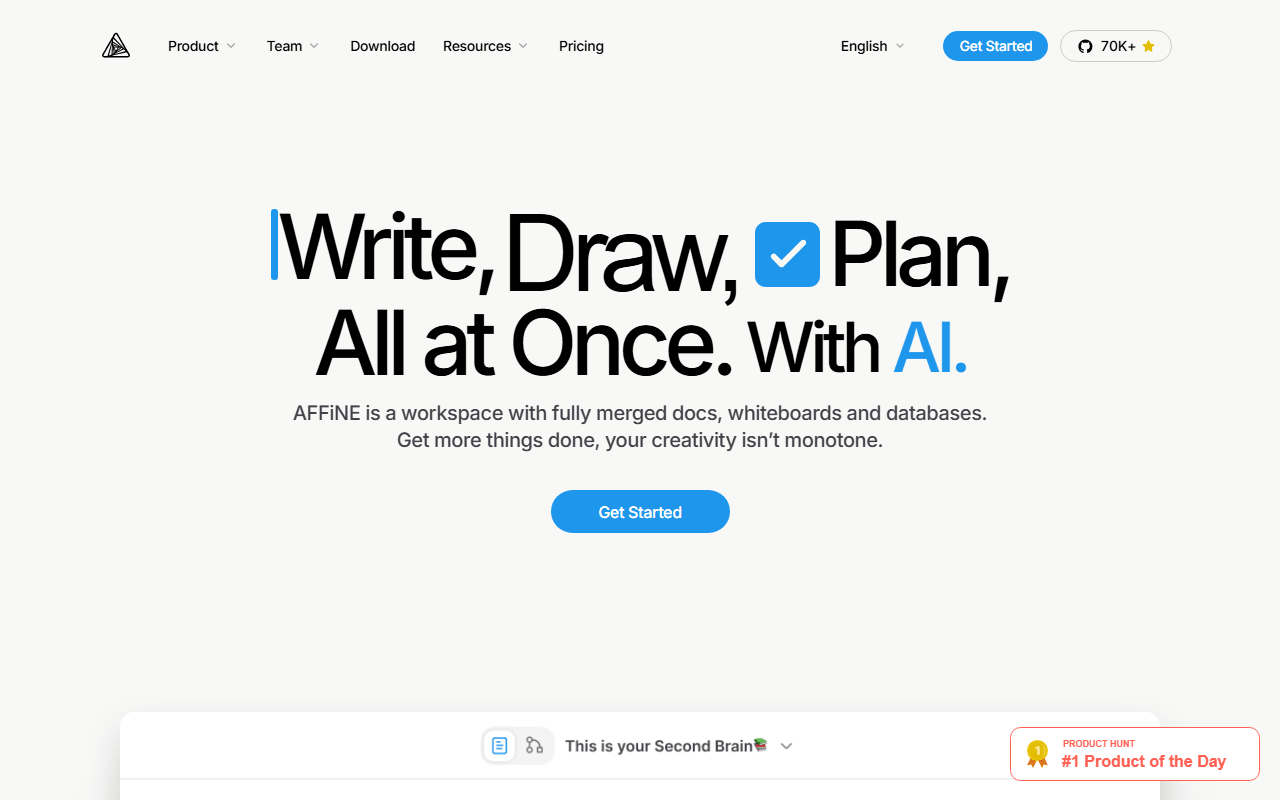
AFFiNE suits Anytype users who want structure plus a visual canvas and are not wedded to encryption. Any page flips into an infinite whiteboard, and it adds database views on top, with a free tier of 10 GB, up to 3 members, and unlimited local workspaces (as of July 2026). The client is MIT licensed, more permissive than Anytype's source-available terms, though the server directory carries a separate license. It is not end-to-end encrypted, and stability is the recurring complaint, so back it up.
- Free plan, paid from $6.75/month (as of July 2026)
- Singapore
- Open source (MIT (client); server directory under a separate license)
- Best for:
- Anytype users who want a whiteboard and databases over encrypted objects
- The catch:
- Not end-to-end encrypted, the 3-device cap is tight, and sync bugs still surface.
Compared to Anytype
- Advantage: MIT-licensed client, more permissive than Anytype's source-available license
- Advantage: Document-and-whiteboard in one object, which Anytype lacks
- Advantage: 10 GB of free cloud storage against Anytype's 100 MB
- Tradeoff: Not end-to-end encrypted, where Anytype is
- Tradeoff: Only 3 logged-in devices on free
- Tradeoff: Less stable than Anytype
Open source notebooks with encryption you can switch on, syncing free to storage you already own
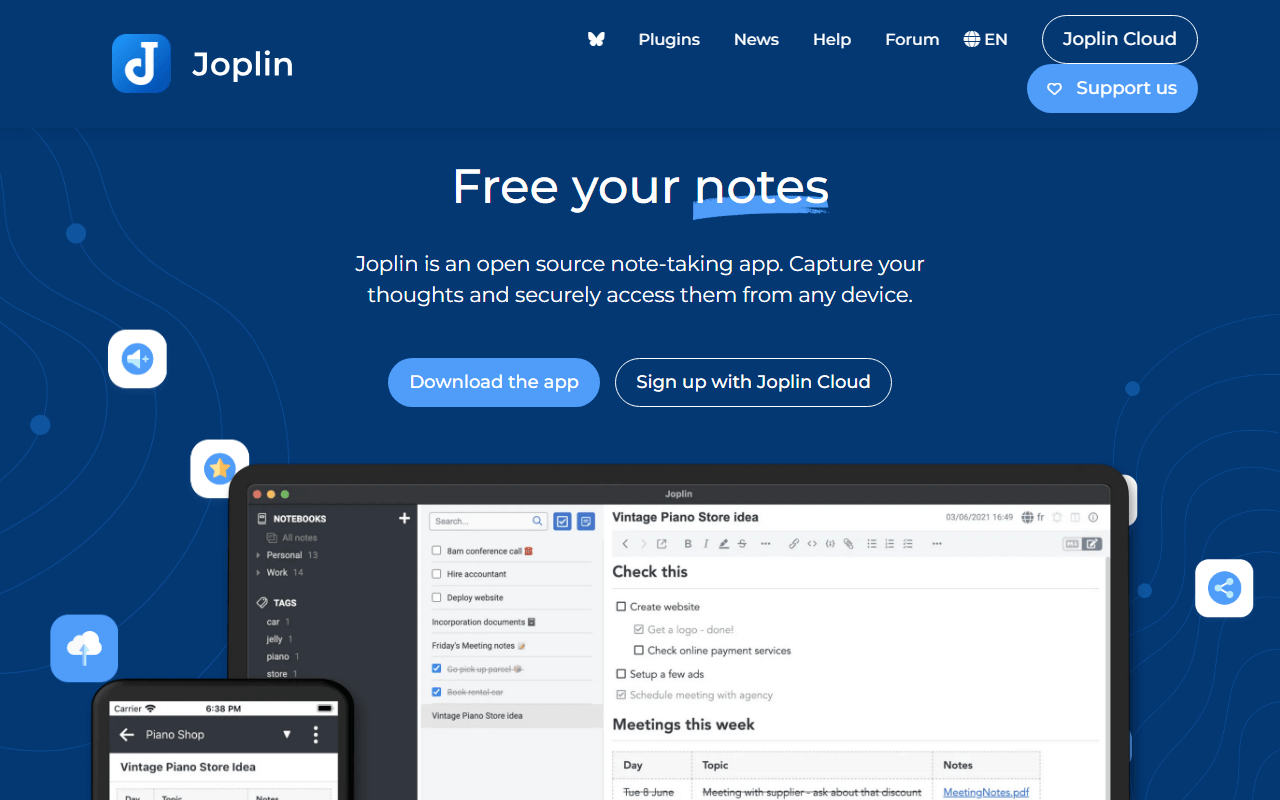
Joplin is the pragmatic open source option if Anytype's object model was too much and you want plain notebooks. It is AGPL-3.0 on every platform, with notebooks, tags, a web clipper, and end-to-end encryption you enable yourself, syncing free to Dropbox, OneDrive, Nextcloud, WebDAV, or S3 (as of July 2026). There is no 100 MB cap, because you bring your own storage. The costs are a dated interface and encryption that is off until you turn it on, unlike Anytype's default.
- Free plan, paid from €2.4/month (as of July 2026)
- United Kingdom
- Open source (AGPL-3.0-or-later)
 United Kingdom
- Best for:
- Anytype users who want simple open source notebooks with free, optional encryption
- The catch:
- The interface is dated, and encryption is off until you enable it.
Compared to Anytype
- Advantage: Genuinely open source under AGPL-3.0, where Anytype is source-available
- Advantage: Free sync to your own storage with no 100 MB cap
- Advantage: Built-in web clipper Anytype does not have
- Tradeoff: Encryption is off by default, where Anytype encrypts everything
- Tradeoff: No object model or relations, just notebooks and tags
- Tradeoff: The interface looks a decade old
How to choose
If the license is what bothers you, SiYuan and Logseq are genuinely open source and keep your notes local, and Standard Notes is open source with encryption on by default. If the object model was too much, Obsidian's folder of Markdown files is the simpler mental model, though it is not encrypted. Pick Standard Notes when encryption is the whole point and you can live in plain text, and AppFlowy or AFFiNE when you want structure plus real collaboration. Anytype's encryption plus structure combination is genuinely rare, so if both matter equally, it may still be the one to stay on.