Free alternatives to SiYuan
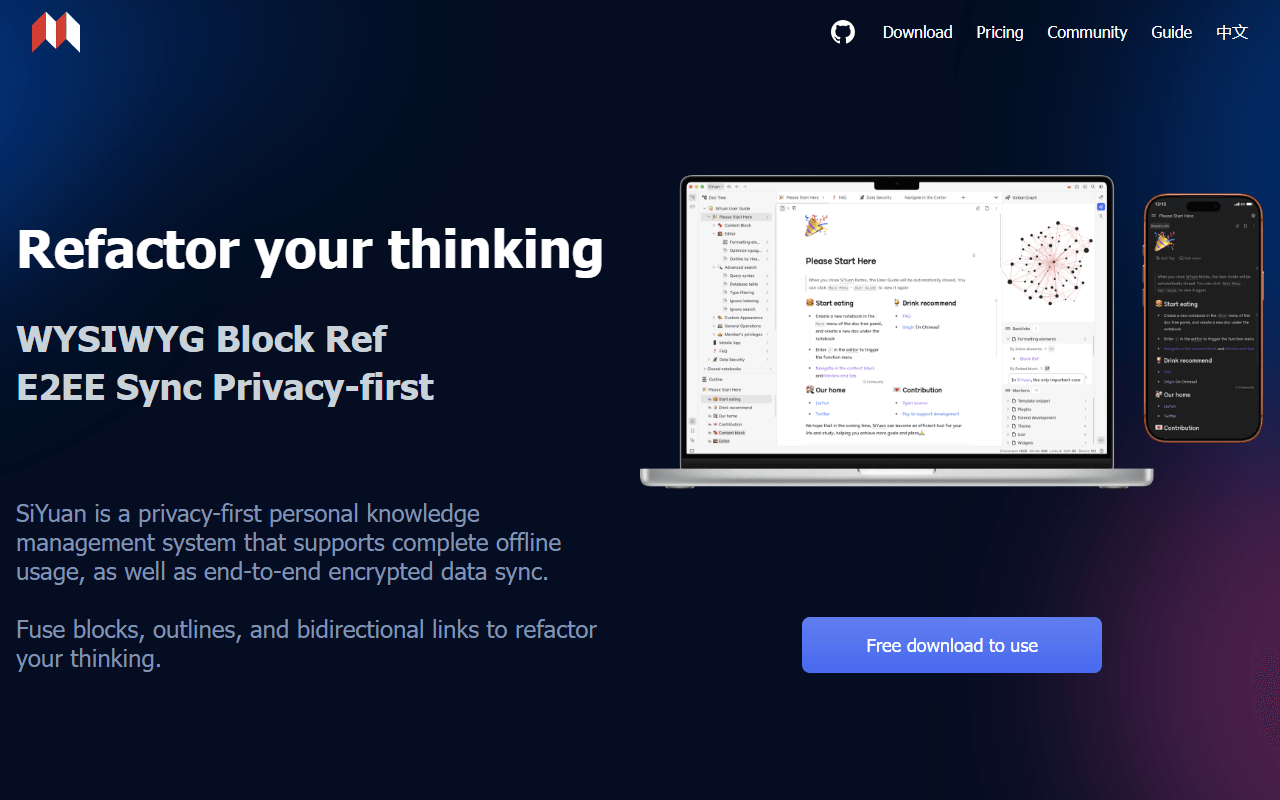
SiYuan gives you block references, a database, and flashcards in one free offline app, so the reasons to look elsewhere are about fit rather than money. Notes are stored as JSON rather than plain Markdown files, the English documentation and interface are translated and rough, and any form of sync costs money, even if only once (as of July 2026). These free tools keep the local-first, own-your-notes idea while smoothing one of those edges.
Facts checked as of July 2026Read our SiYuan review
Jump to an alternative





Obsidian
Best Free Alternative ToSiYuanThe same block-linked, offline note-taking, but stored as plain Markdown files you own instead of JSON, with polished English docs
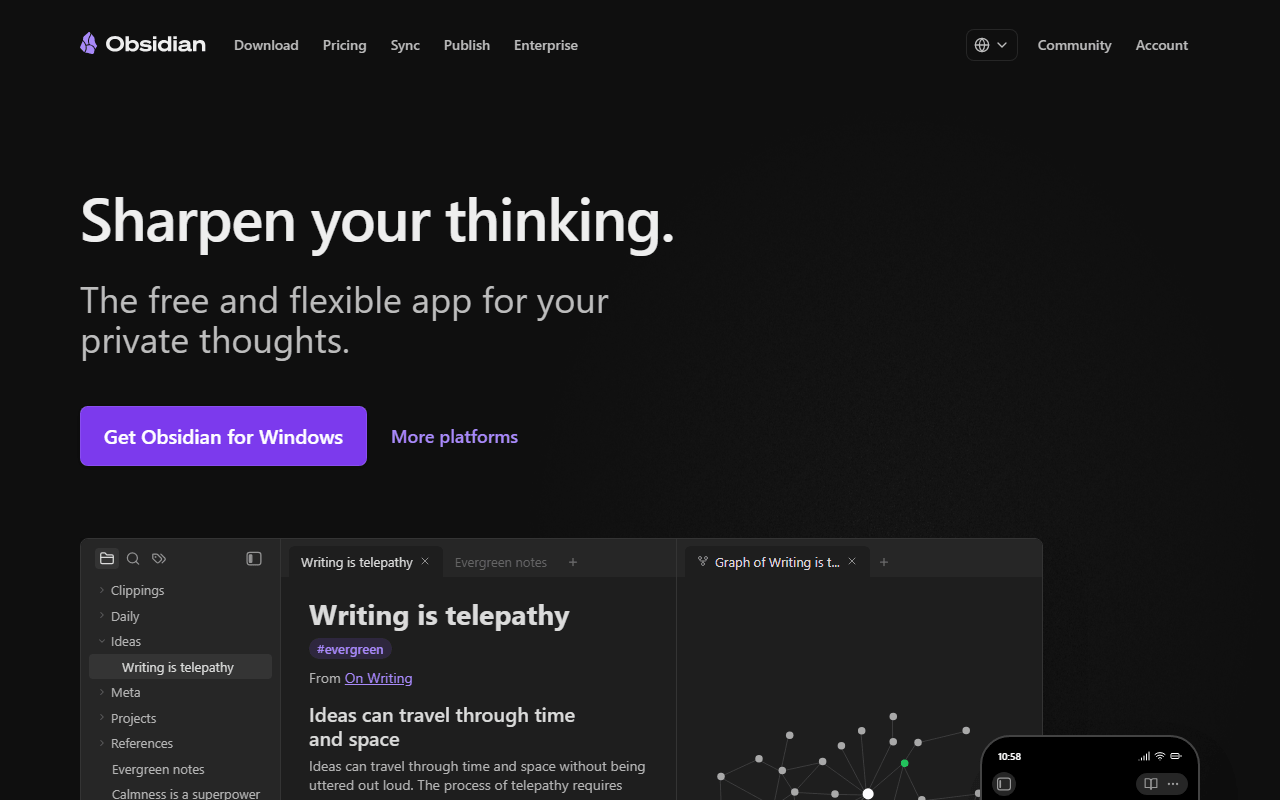
Obsidian answers SiYuan's biggest complaint directly: instead of JSON in a database, every note is a plain Markdown file in a folder you control, so leaving is just opening the folder. You keep backlinks, a graph, and a built-in canvas, the docs are English-first and clear, and the plugin library is over a thousand deep, all free for personal use (as of July 2026). Development is visibly active, which is the contrast people feel after SiYuan's translated interface. The catches are that the core is closed source and sync across devices is a paid add-on at $4 per user per month, where SiYuan charges once or syncs free offline.
- Free plan, paid from $4/month (as of July 2026)
- Canada
 Canada
- Best for:
- SiYuan users who want plain Markdown files and English-first docs without giving up backlinks
- The catch:
- It is closed source, and block references and flashcards need plugins rather than shipping built in.
Compared to SiYuan
- Advantage: Notes are plain Markdown files, where SiYuan stores JSON and exports Markdown
- Advantage: Polished, active development with English-first docs, where SiYuan's are translated and rough
- Advantage: Plugin library over a thousand deep, plus a built-in canvas
- Tradeoff: Closed source, where SiYuan is AGPL-3.0
- Tradeoff: Sync is $4 per user per month, where SiYuan charges once or syncs free offline
- Tradeoff: Block references and flashcards need plugins, where SiYuan builds them in
Fully open source outliner with local Markdown files, block-level links, and no paid tier at all
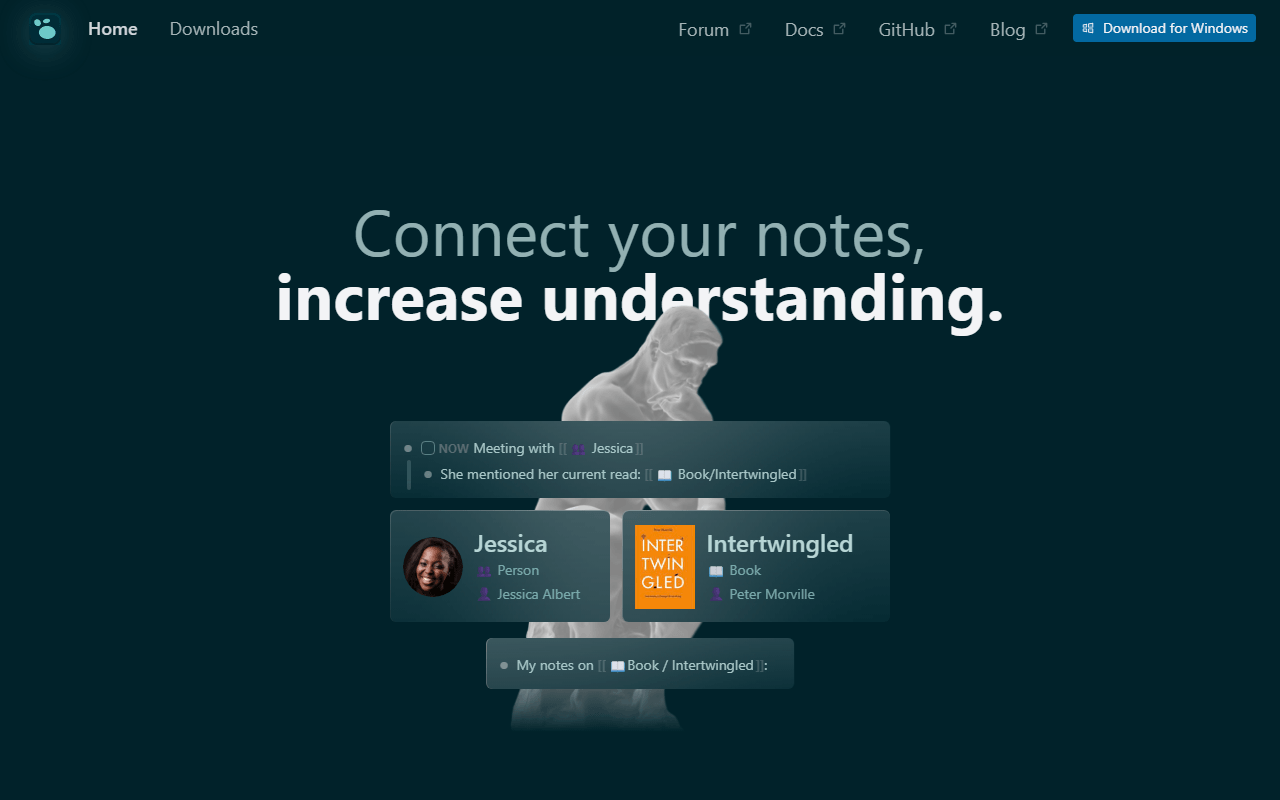
Logseq keeps SiYuan's block-linked way of working but stores notes as plain Markdown or Org files, and it is free with no sync purchase to unlock (as of July 2026). Every bullet is a block you can reference and query, the daily journal is the default entry point, and the whole app is AGPL-3.0 with English-first docs and a larger community than SiYuan's. Where SiYuan charges once for sync, Logseq relies on free iCloud, Dropbox, or Git routes. The trade is that it has no built-in PDF annotation or flashcards, and the outliner model is more rigid than SiYuan's document tree.
- Completely free (as of July 2026)
- United States
- Open source (AGPL-3.0)
 United States
- Best for:
- SiYuan users who want block-level links in plain files, fully open source and free
- The catch:
- It has no built-in PDF annotation or flashcards, and official sync is beta and limited to backers.
Compared to SiYuan
- Advantage: Notes stay as plain Markdown or Org files, not SiYuan's JSON
- Advantage: Every feature is free with no sync purchase, where SiYuan charges for sync
- Advantage: English-first docs and a larger community than SiYuan's
- Worth knowing: Block-level links and queries, similar to SiYuan's block model
- Tradeoff: No built-in PDF annotation or flashcards the way SiYuan has them
- Tradeoff: The outliner model is more rigid than SiYuan's document tree
Notebooks, tags, a web clipper, and free encrypted sync to storage you already own
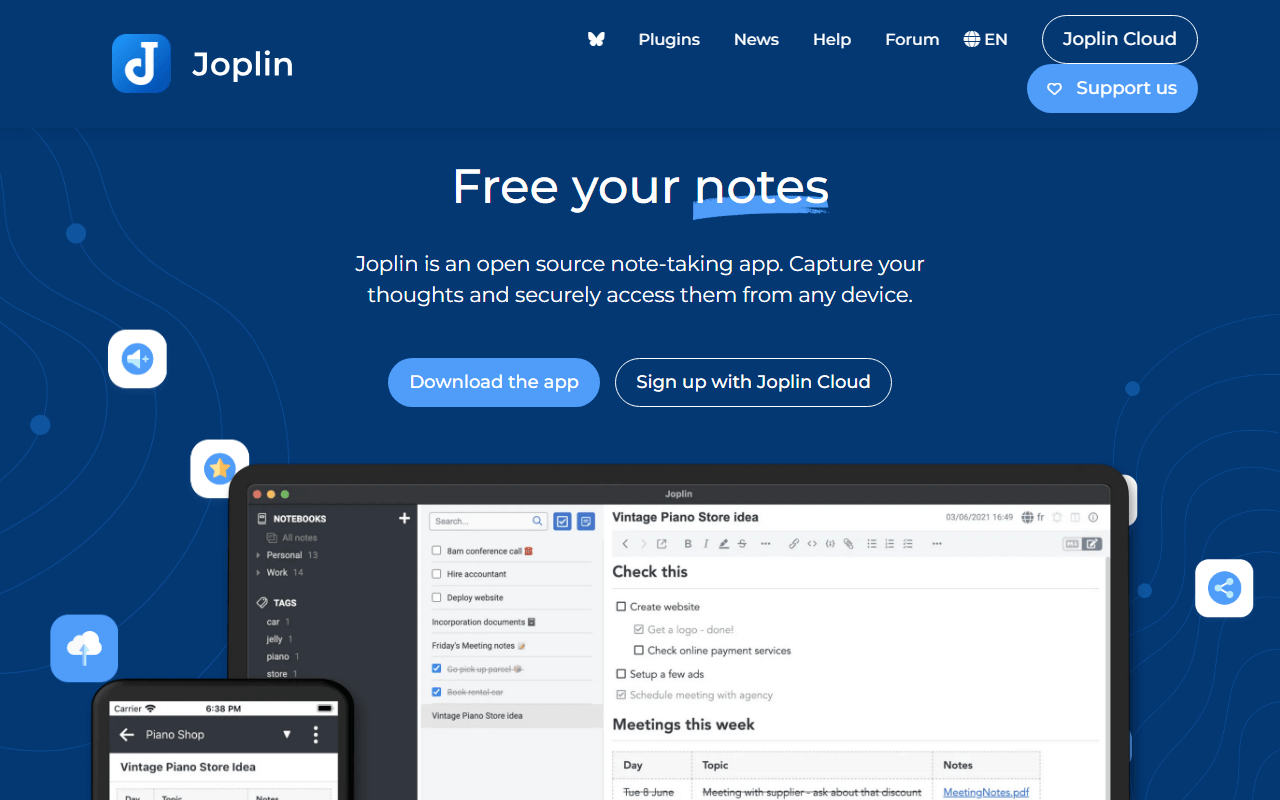
Joplin is the pick when you want a straightforward notebook app rather than SiYuan's dense block workspace, and free sync instead of a purchase. It is AGPL-3.0 on every platform, with notebooks, tags, attachments, a web clipper, and end-to-end encryption you switch on, syncing free to Dropbox, OneDrive, Nextcloud, WebDAV, or S3 (as of July 2026). Its ENEX importer and English docs are well tested. The trade is that it has no block-level references or built-in database, and the interface looks a decade old next to SiYuan's.
- Free plan, paid from €2.4/month (as of July 2026)
- United Kingdom
- Open source (AGPL-3.0-or-later)
 United Kingdom
- Best for:
- SiYuan users who want a simple notebook workflow with free encrypted sync
- The catch:
- There are no block references or built-in database, and the interface is dated.
Compared to SiYuan
- Advantage: Free sync to Dropbox, Nextcloud, WebDAV, or S3, where SiYuan charges for sync
- Advantage: End-to-end encryption you can switch on, which SiYuan does not offer
- Advantage: Fully AGPL-3.0 with English-first docs and a real web clipper
- Tradeoff: No block-level references or built-in database like SiYuan's
- Tradeoff: No flashcards or PDF annotation built in
- Tradeoff: The interface looks a decade old
A Notion-shaped open source workspace with real database views and real-time collaboration, self-hostable with no caps
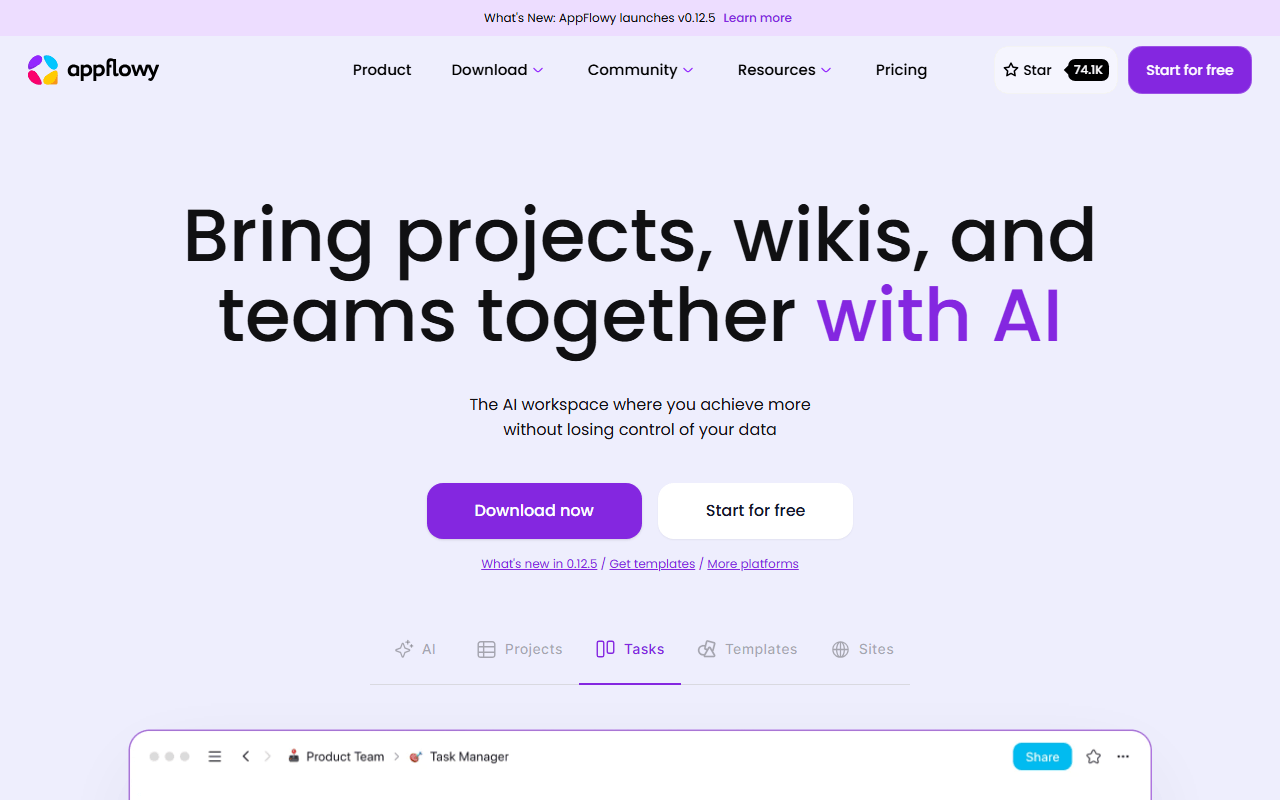
AppFlowy fits if what you wanted from SiYuan was more of a shared workspace than a personal offline vault. You get a block editor with slash commands, grid, board, and calendar database views, and real-time collaboration, all local-first so it works offline (as of July 2026). Self-hosting the AGPL-3.0 stack is free and removes the caps, with no sync purchase to unlock the app. The trade is that the hosted free plan stops at 2 members and 5 GB, it has no block references, flashcards, or PDF annotation, and its database relations and rollups are shallow.
- Free plan, paid from $10/month (as of July 2026)
- Singapore
- Open source (AGPL-3.0)
 Singapore
- Best for:
- SiYuan users who want shared, database-driven pages and collaboration
- The catch:
- The hosted free plan caps you at 2 members, and it lacks SiYuan's block references and flashcards.
Compared to SiYuan
- Advantage: Database views (grid, board, calendar) are more workspace-shaped than SiYuan's
- Advantage: Real-time collaboration, which SiYuan is not built for
- Advantage: Self-hosting is free under AGPL-3.0 with no sync purchase
- Tradeoff: Hosted free plan caps you at 2 members and 5 GB
- Tradeoff: No block references, flashcards, or PDF annotation like SiYuan's
- Tradeoff: Relations and rollups are shallow, and the hosted tier needs an account
Every page doubles as an infinite whiteboard, so diagrams and notes live in one document
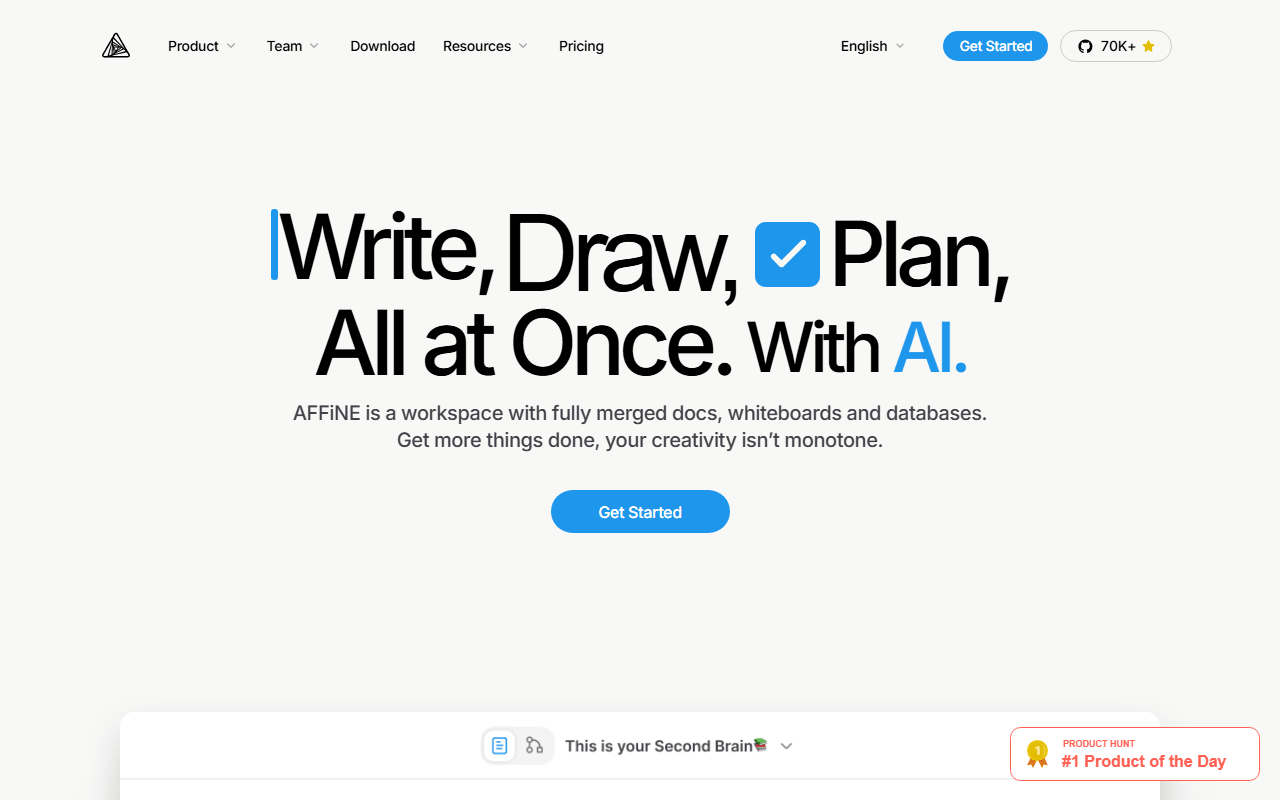
AFFiNE is the choice when your SiYuan notes kept needing a diagram beside them. Any page flips into edgeless mode, where its blocks become cards on an infinite canvas you can connect and draw on, and it adds databases and real-time collaboration on top (as of July 2026). The free plan gives 10 GB of cloud sync, so unlike SiYuan you do not pay to sync. The client is MIT licensed, though the server directory carries a separate license. The trade is a 3-device login cap, a 10 MB file cap, no flashcards or PDF annotation, and stability that is not yet at SiYuan's level.
- Free plan, paid from $6.75/month (as of July 2026)
- Singapore
- Open source (MIT (client); server directory under a separate license)
- Best for:
- SiYuan users whose notes always end up beside a whiteboard or diagram
- The catch:
- The 3-device and 10 MB caps are tight, it lacks flashcards and PDF annotation, and it is less stable.
Compared to SiYuan
- Advantage: Document and whiteboard in one object, which SiYuan has no equivalent for
- Advantage: Real-time collaboration on the free plan, which SiYuan lacks
- Advantage: 10 GB of free cloud sync, where SiYuan charges for sync
- Tradeoff: 3-device login cap and 10 MB file cap on free
- Tradeoff: No flashcards or PDF annotation like SiYuan's
- Tradeoff: Less stable, and the server directory carries a separate license
End-to-end encryption on every object by default, with unlimited local storage and typed structure
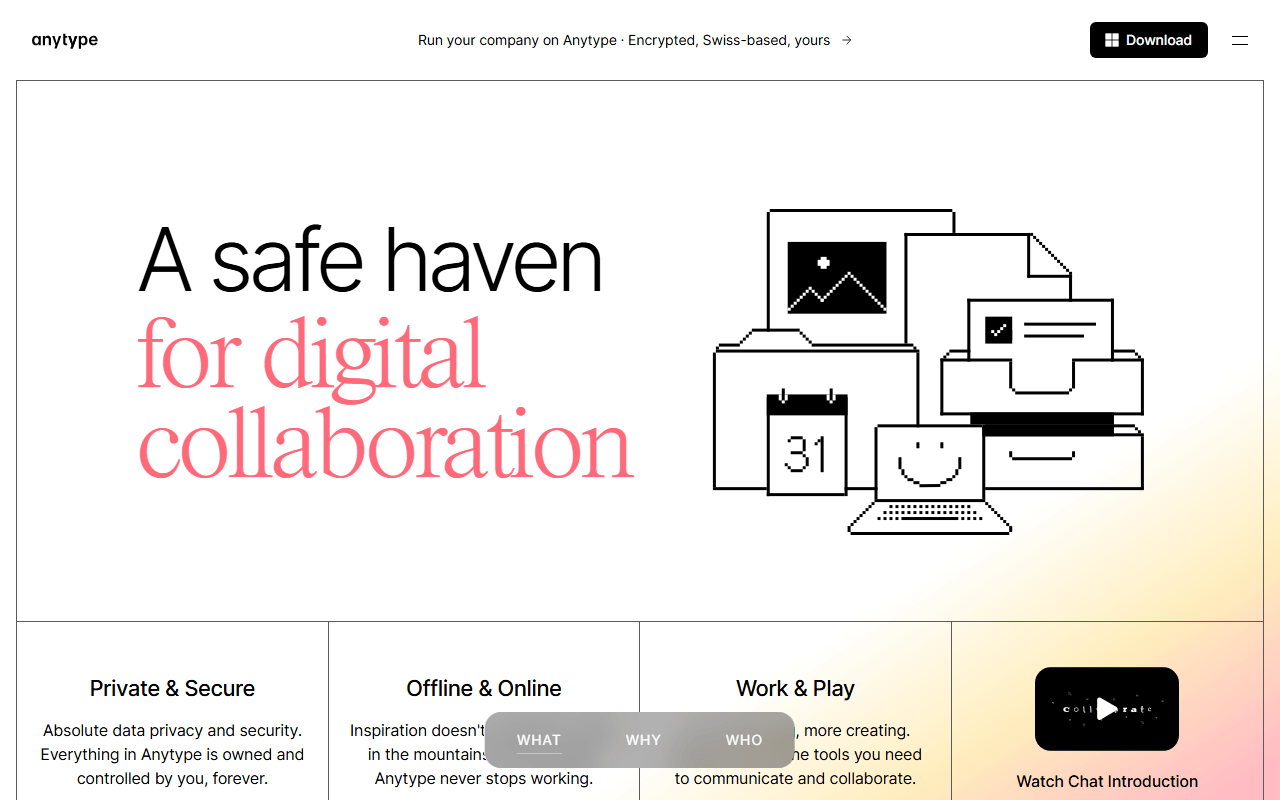
Anytype is the pick when privacy is the priority and SiYuan's plain-text storage worried you. Everything is encrypted on your device before it syncs peer-to-peer, local storage is unlimited, and structure comes from typed objects and relations rather than a document tree (as of July 2026). There is no sync purchase to unlock the app. The catches are that free gives only 100 MB of remote sync storage, the license is source-available rather than OSI open source, there is no web app, and it has no built-in flashcards or PDF annotation like SiYuan's.
- Free plan, paid from $4/month (as of July 2026)
- Switzerland
 Switzerland
- Best for:
- SiYuan users who want encryption by default and structure across their notes
- The catch:
- Only 100 MB of free sync storage, a source-available license, and no flashcards or PDF annotation.
Compared to SiYuan
- Advantage: End-to-end encrypted by default, which SiYuan is not
- Advantage: Typed objects and relations, a richer structure than SiYuan's notebooks
- Advantage: Unlimited local storage with no sync purchase to unlock the app
- Tradeoff: Only 100 MB of remote sync storage on free
- Tradeoff: Source-available, not OSI open source like SiYuan's AGPL-3.0
- Tradeoff: No web app, and no built-in flashcards or PDF annotation
How to choose
If the JSON storage was the sticking point, Obsidian keeps backlinks and a canvas but stores everything as plain Markdown files, and Logseq does the same with fully open source code. For a notebook workflow with free sync to storage you already own, Joplin is the pick. AppFlowy and AFFiNE add databases and collaboration SiYuan does not focus on, and Anytype is the choice when encryption by default outranks everything. All of these run offline, so trying one costs only time.