Free alternatives to Basecamp
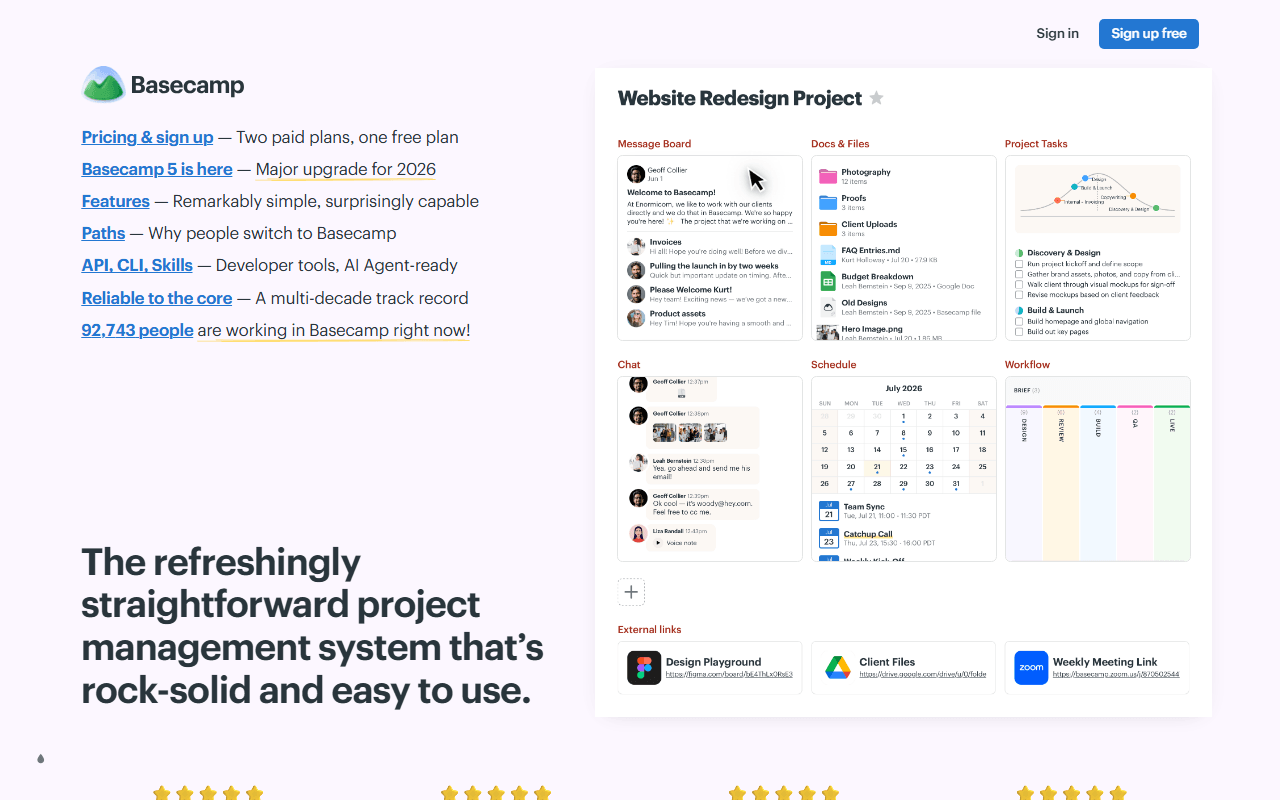
Basecamp's free plan is unusually honest about what it holds back, which is nothing: every tool paying customers get is on it. What it holds back is projects. You get one, up to 20 users, and 1 GB of storage, and 37signals states that starting a second project means deleting the first (as of July 2026). Past that it is $15 per user per month, or a flat $299 a month billed annually. These seven tools let you run more than one project without paying, and most of them let you run as many as you want.
Facts checked as of July 2026Read our Basecamp review
Jump to an alternative




ClickUp
Best Free Alternative ToBasecampUnlimited projects and unlimited members free, where Basecamp's free plan allows one project
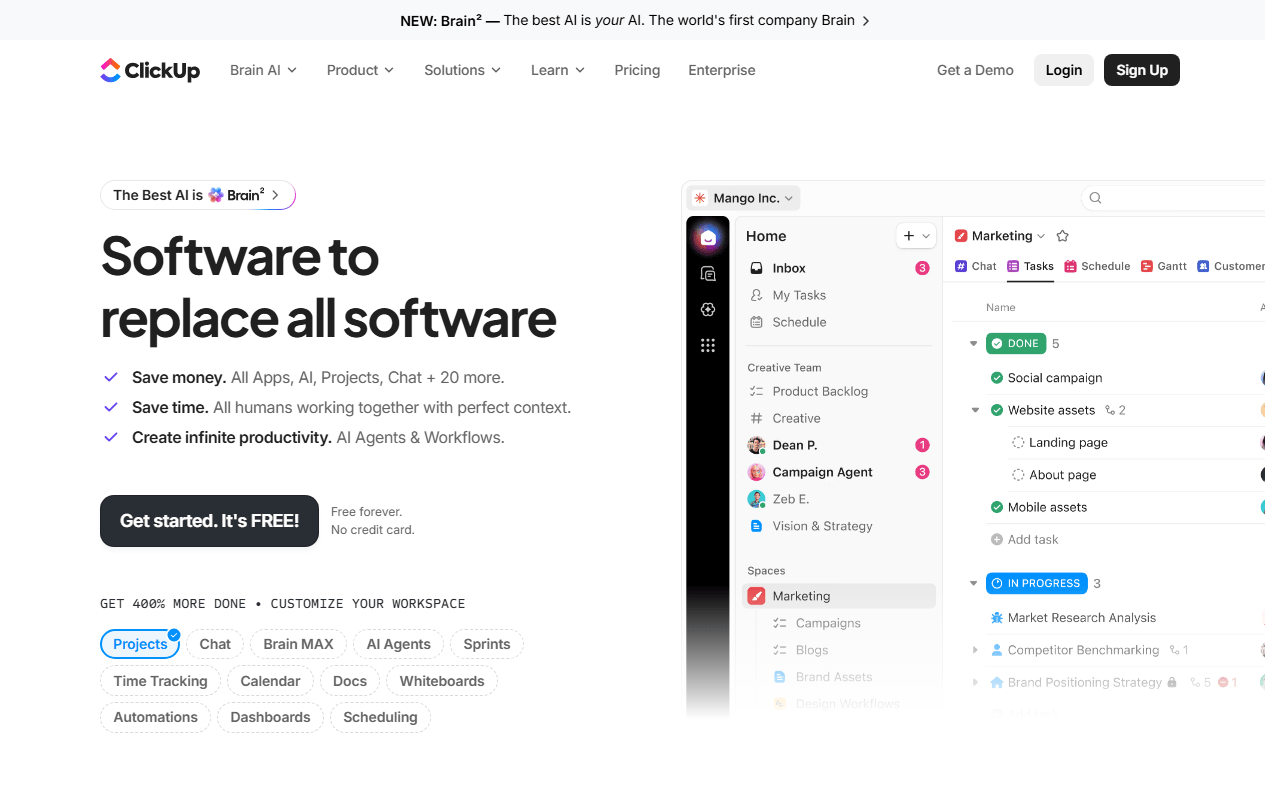
ClickUp is the closest free match for what Basecamp actually is, a single app holding tasks, boards, sprints, docs and a calendar. The Free Forever plan has no project cap and no member cap at all (as of July 2026), which is the exact wall people leave Basecamp's free tier over. It asks more of you than Basecamp does, because Basecamp gives every project the same shape and ClickUp lets you build your own.
- Free plan, paid from $7/month (as of July 2026)
- United States
 United States
- Best for:
- Teams that liked Basecamp's one-tool bundle but need more than one project
- The catch:
- 60MB of total free storage, and a busier interface that takes a week or two to settle
Compared to Basecamp
- Advantage: No project cap on the free plan; Basecamp free allows exactly 1 project
- Advantage: No member cap either, against Basecamp's 20 free users
- Advantage: Adds sprints and Gantt charts, neither of which Basecamp has at any price
- Advantage: First paid tier is $7 per user against Basecamp's $15
- Tradeoff: 60MB of total free storage against Basecamp's 1 GB
- Tradeoff: You configure your own views; Basecamp's fixed toolset is the point of Basecamp
Ten free boards instead of one project, with even less to learn
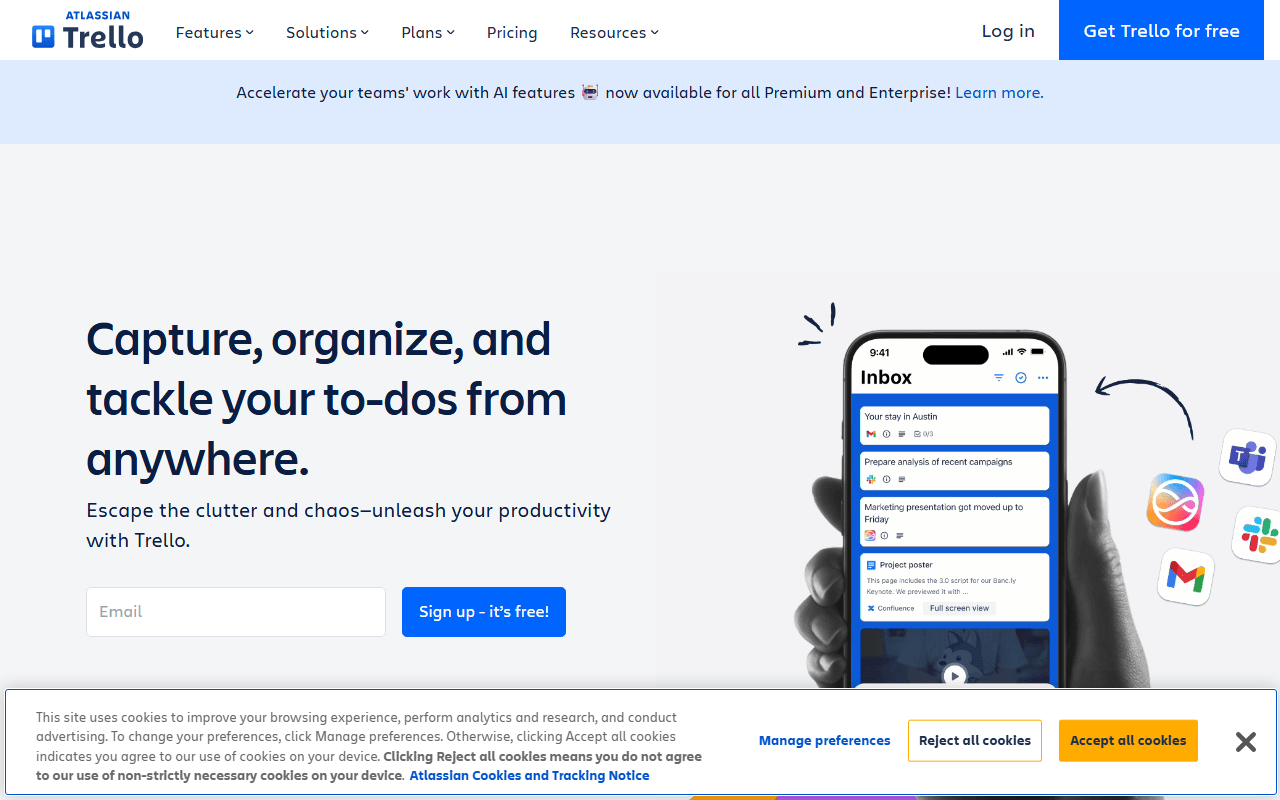
If what you liked about Basecamp was that nobody needed training, Trello is the shortest step sideways. The free plan gives you unlimited cards with 10 boards and 10 collaborators per workspace, plus 250 automation runs a month (as of July 2026). Ten boards is ten times Basecamp's free project allowance, though a Trello board is a board rather than Basecamp's bundle of seven tools.
- Free plan, paid from $5/month (as of July 2026)
- Australia
 Australia
- Best for:
- Small teams who want Basecamp's low friction and more than one thing on the go
- The catch:
- 10 collaborators per workspace against Basecamp's 20 free users, and no docs or chat
Compared to Basecamp
- Advantage: 10 free boards against 1 free Basecamp project, with no delete-to-continue rule
- Advantage: 250 automation runs a month; Basecamp has no rules engine at any tier
- Advantage: Standard is $5 per user against Basecamp Pro at $15
- Tradeoff: 10 collaborators per workspace; Basecamp's free plan takes 20 users
- Tradeoff: No message board, chat or docs; Basecamp bundles all three into every project
- Worth knowing: 10MB per attachment, and neither tool offers dependencies or workload views
Docs and tasks on the same page, with no project count to worry about
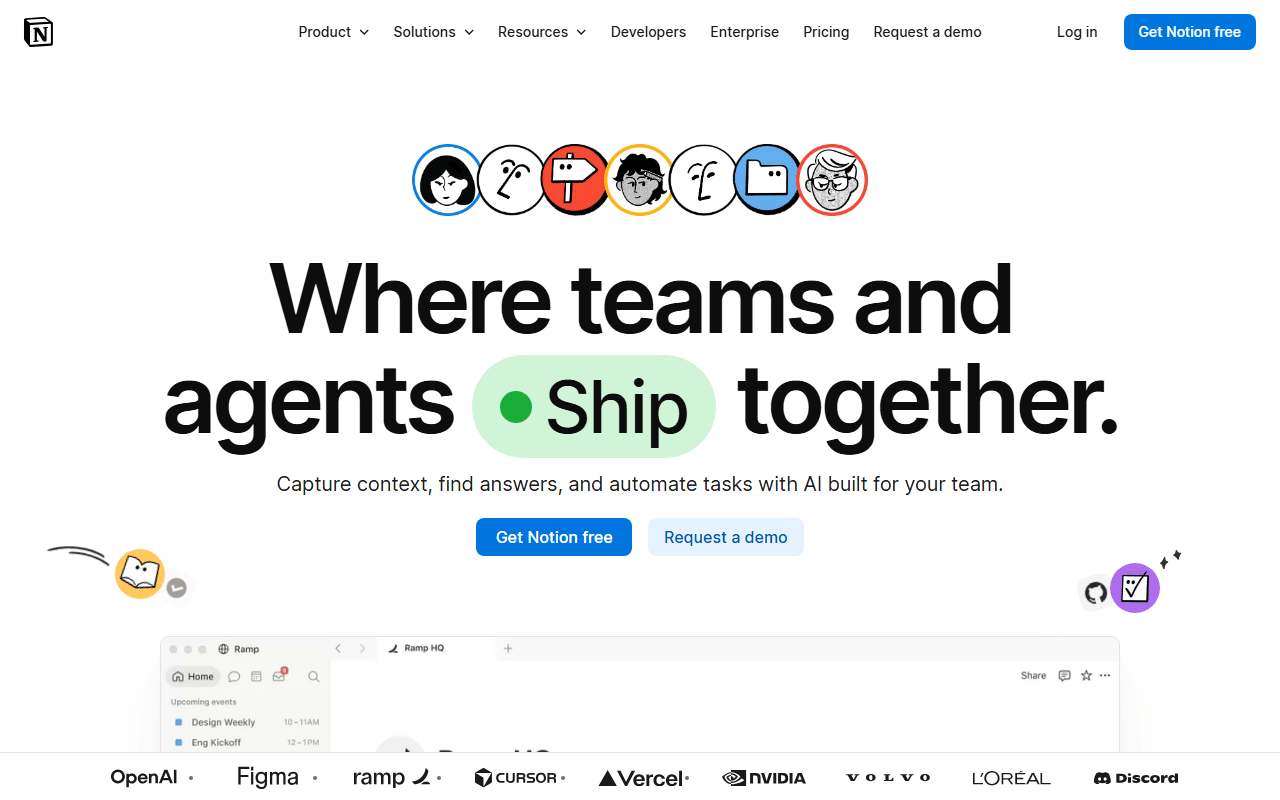
A lot of Basecamp work is really writing with a task list attached, and that is what Notion is built for: pages holding text, tables and databases you view as a board, calendar or timeline. The free plan is unlimited pages and blocks for one person with 10 guests (as of July 2026), so a solo consultant can run as many client projects as they like. Add a second full member and the workspace becomes block-limited.
- Free plan, paid from $10/month (as of July 2026)
- United States
- Best for:
- Solo founders and consultants whose Basecamp projects were mostly documents
- The catch:
- The free plan is effectively single-player; Basecamp free takes 20 people
Compared to Basecamp
- Advantage: No project cap for a single user, against Basecamp's one
- Advantage: Docs, wiki and tasks in one place, the part of Basecamp people miss most
- Advantage: Notion Plus is $10 per member against Basecamp Pro at $15 per user
- Tradeoff: Free workspaces with 2 or more members hit a block limit; Basecamp free takes 20 users
- Tradeoff: No built-in chat or automatic check-ins; you assemble the process yourself
- Worth knowing: 5MB uploads on free, against Basecamp's 1 GB across the account
Twelve free cloud members with unlimited projects, or self-host and cap nothing
Plane gives you two free routes and neither counts projects. The cloud free tier covers up to 12 members with work items, cycles, modules, pages and five layouts, and the AGPL-3.0 Community Edition self-hosts with no member cap at all (as of July 2026). It comes from the software-tracker world, so it is more structured than Basecamp and less conversational.
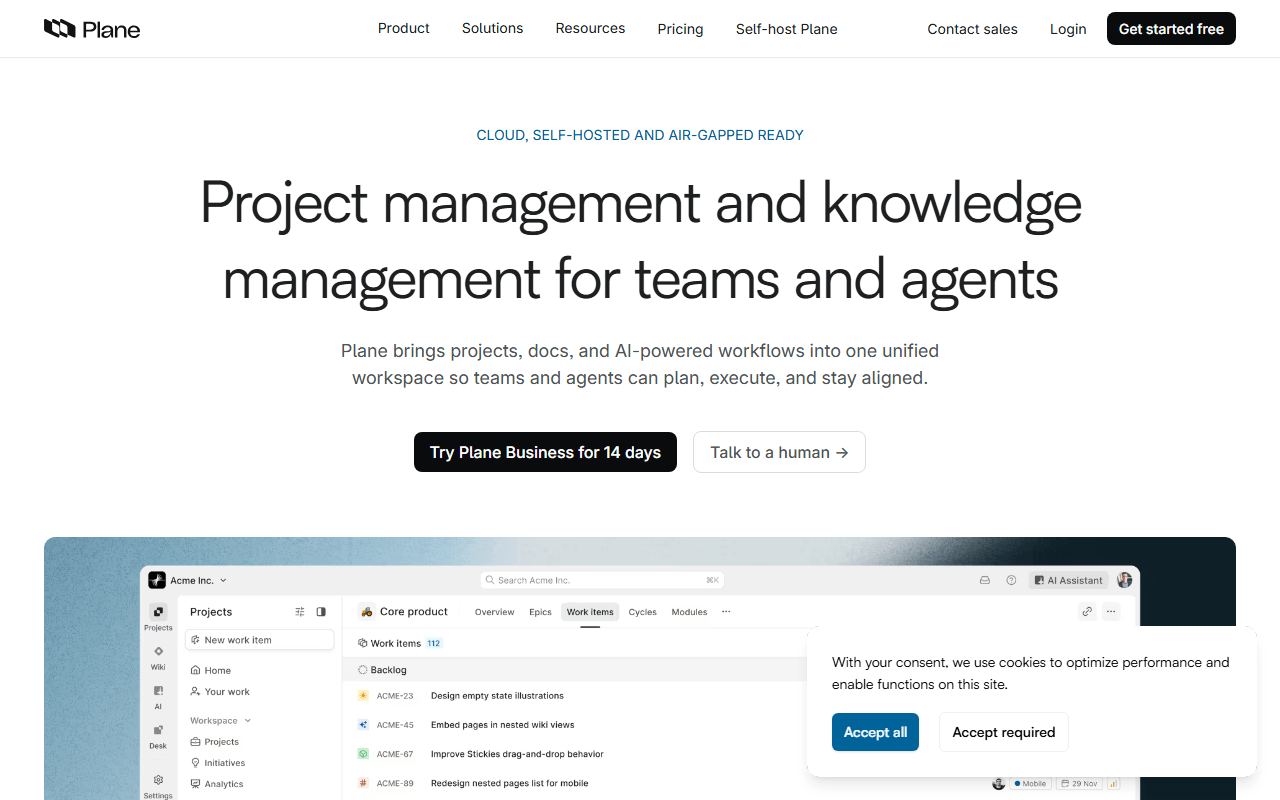
- Free plan, paid from $6/month (as of July 2026)
- Open source (AGPL-3.0)
- Best for:
- Product teams up to 12 who want structure plus a self-hosting escape hatch
- The catch:
- Time tracking, templates and dashboards sit behind Pro at $6 a seat even when you host it
Compared to Basecamp
- Advantage: Unlimited projects on the free cloud tier; Basecamp free allows one
- Advantage: Self-hostable under AGPL-3.0; Basecamp has no self-hosted edition at any price
- Advantage: Cycles and a Gantt-style layout, neither of which Basecamp offers
- Tradeoff: 12 free cloud members against Basecamp's 20
- Tradeoff: Built for software teams first; Basecamp suits client and agency work better
- Worth knowing: Both charge for time tracking, Plane inside Pro and Basecamp as a $50 flat add-on
No seat count and no project count when self-hosted, plus the Gantt charts Basecamp refuses to build
OpenProject is the answer for teams whose real complaint about Basecamp was the missing timeline. The GPL-3.0 Community Edition self-hosts free with no user limit and includes work packages, Gantt charts with dependencies, agile boards and time and cost tracking (as of July 2026). There is no free cloud tier, only a 14-day trial, so free here genuinely means running a server.
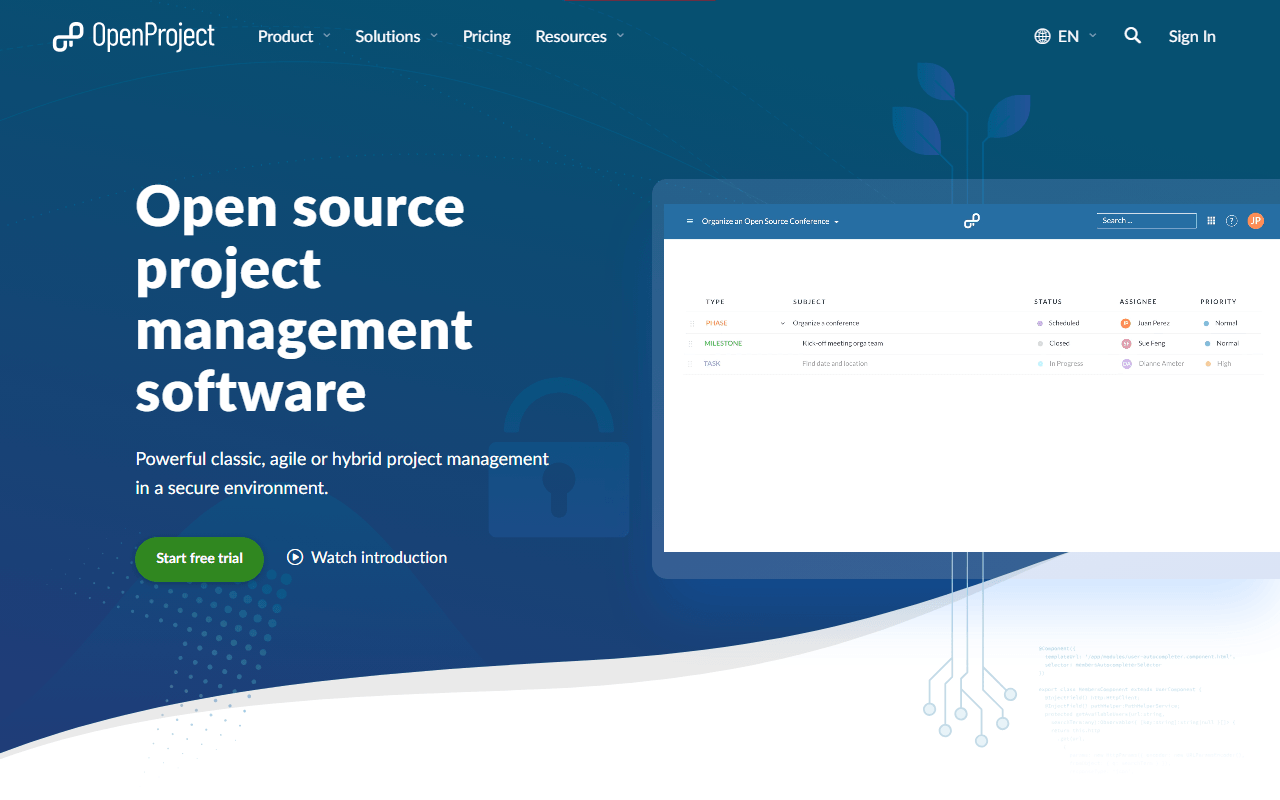
- Free plan, paid from €5.95/month (as of July 2026)
- Germany
- Open source (GPL-3.0)
 Germany
- Best for:
- Teams that need dependency planning and can put someone on server duty
- The catch:
- No free hosted option, and you own the install, the upgrades and the backups
Compared to Basecamp
- Advantage: No project or user limit on the self-hosted Community Edition
- Advantage: Gantt charts, dependencies and time tracking included; Basecamp has none of the three
- Advantage: Project data stays on your own infrastructure; Basecamp is hosted only
- Tradeoff: No free cloud tier at all, where Basecamp's free plan needs nothing but a browser
- Tradeoff: Much heavier to learn and to run than Basecamp's fixed seven tools
- Worth knowing: Paid hosting starts at 5.95 euros per user per month with a 25-user minimum
A small self-hosted tracker with no project cap and no per-seat bill, ever
Vikunja is the light option for someone who liked Basecamp's calm and would rather own the server than the subscription. It is AGPL-3.0, runs on a cheap VPS or a Raspberry Pi, and gives you list, kanban, table and Gantt views with labels, reminders and relations between tasks (as of July 2026). Nothing counts your projects or your people.
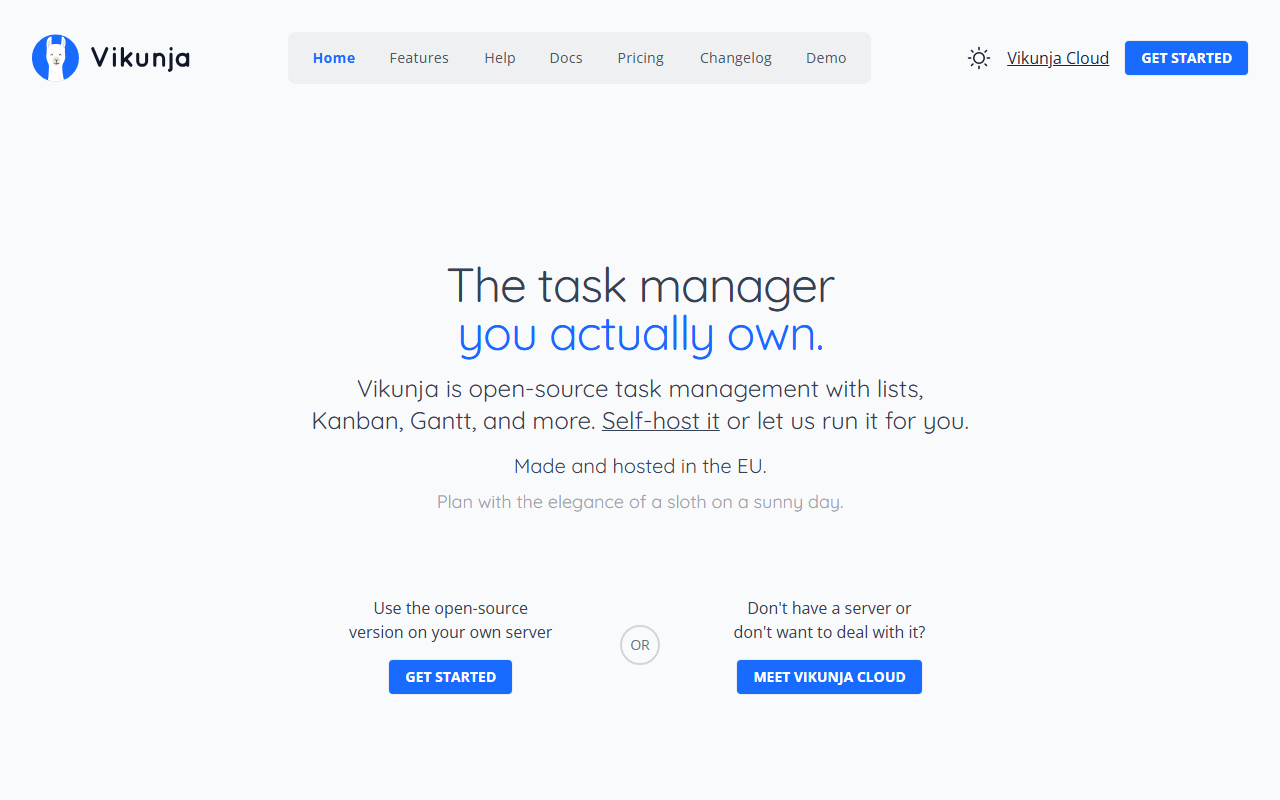
- Free plan, paid from €4/month (as of July 2026)
- Open source (AGPL-3.0)
- Best for:
- Individuals and small teams comfortable running a small server
- The catch:
- No free cloud tier at all, and no chat, docs or check-ins to replace Basecamp's bundle
Compared to Basecamp
- Advantage: No project limit and no seat count when self-hosted
- Advantage: Adds Gantt and table views, which Basecamp does not have
- Advantage: Your data on your hardware; Basecamp offers no self-hosted edition
- Tradeoff: Vikunja Cloud has no free tier, just a 14-day trial before 4 euros a month
- Tradeoff: Task management only; no message boards, chat or docs like Basecamp's
- Tradeoff: The mobile app is community-maintained and trails the web app
Unlimited free members and a fast, opinionated tracker, if your work is software
Linear is here for the specific team that adopted Basecamp because it was calm and then found it too loose for engineering. Cycles, triage and roadmaps come standard, and the free plan takes unlimited members but stops at 250 issues and 2 teams (as of July 2026). Read that as a long evaluation rather than a permanent home.
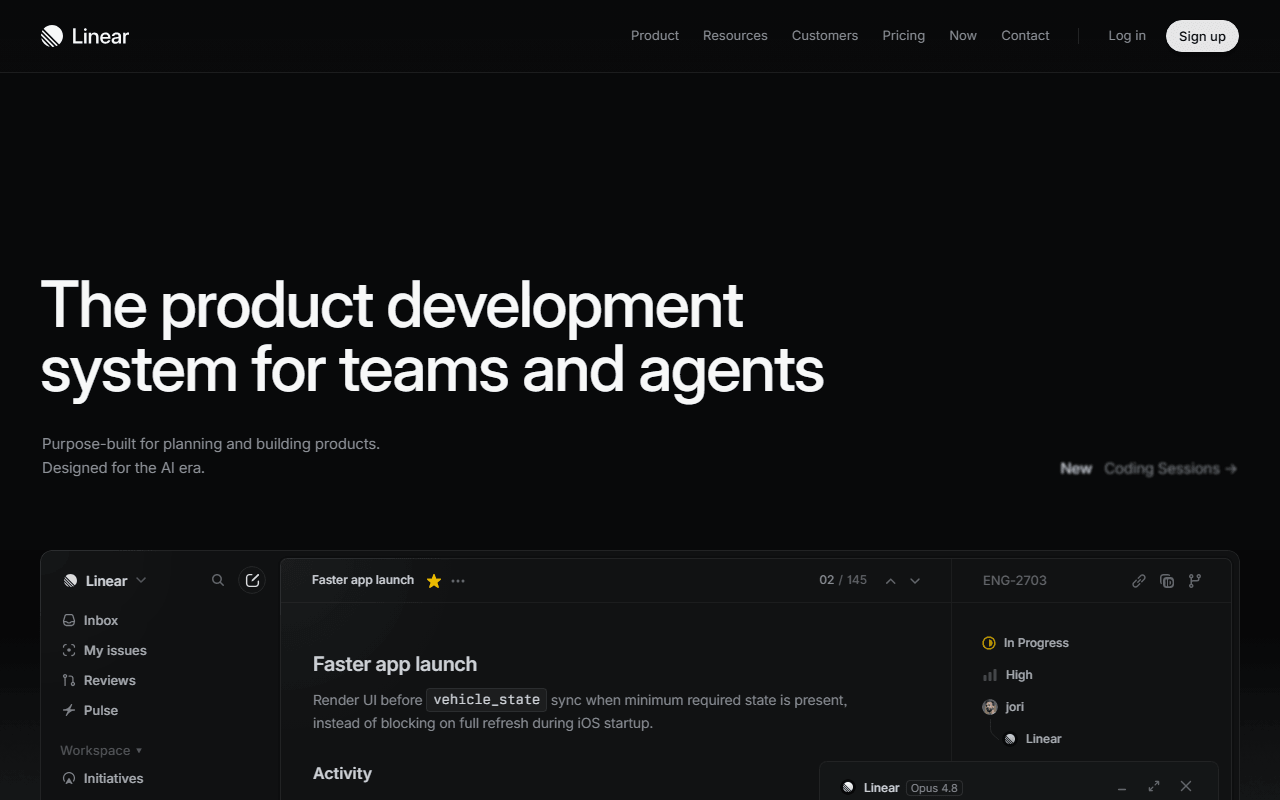
- Free plan, paid from $10/month (as of July 2026)
- United States
- Best for:
- Software teams who want opinionated defaults and care how a tool feels all day
- The catch:
- 250 issues is a lifetime cap, so free runs out on time rather than on seats
Compared to Basecamp
- Advantage: Unlimited free members against Basecamp's 20
- Advantage: No project cap; Basecamp free allows one project
- Advantage: Cycles, triage and roadmaps built in, which Basecamp has no equivalent for
- Tradeoff: 250 issues total on free; an active team fills that in a few months
- Tradeoff: Built for software work only; agencies and client teams will find it narrow
- Worth knowing: Basic is $10 per user against Basecamp Pro at $15, and neither self-hosts
How to choose
Work out what you are actually replacing. If it is Basecamp's bundle, tasks and docs and chat in one place, ClickUp is the closest free match and never counts projects or people. If it is the simplicity, Trello asks less of you than anything else here. If your Basecamp projects were mostly writing with a task list attached, Notion keeps both on one page. And if you liked that Basecamp charged flat rather than per seat, the self-hosted options are the only free plans that genuinely never count anyone: Plane and OpenProject if you can run Docker, Vikunja if you want something small.