Discover honest, community-driven software alternatives. Learn about our mission

Free CRM software that stays free, and the caps that decide it

A CRM keeps every contact, deal, and conversation in one place so nothing falls through the cracks. You log who you spoke to, what they need, and when to follow up, and the pipeline tells you what is about to close. Done well, it is the difference between chasing a spreadsheet and running a business.

Most people arrive here from Salesforce or Pipedrive. Salesforce is the industry standard and priced like it, with no free plan and a bill that climbs fast once you add the seats and add-ons a real sales team needs. Pipedrive is lighter and cheaper but still charges per seat from day one, with only a 14-day trial to soften the landing. When the renewal quote lands, a free CRM starts to look worth an afternoon of setup.

Our pick is Twenty. It is a modern open source CRM you can self-host for nothing, with no per-seat cost and no cap on how many contacts or users you add.

8 free tools, ranked and reviewed as of July 2026.

Who each of these is genuinely for

Best overall

Twenty logo

Twenty

Best FreeCRM

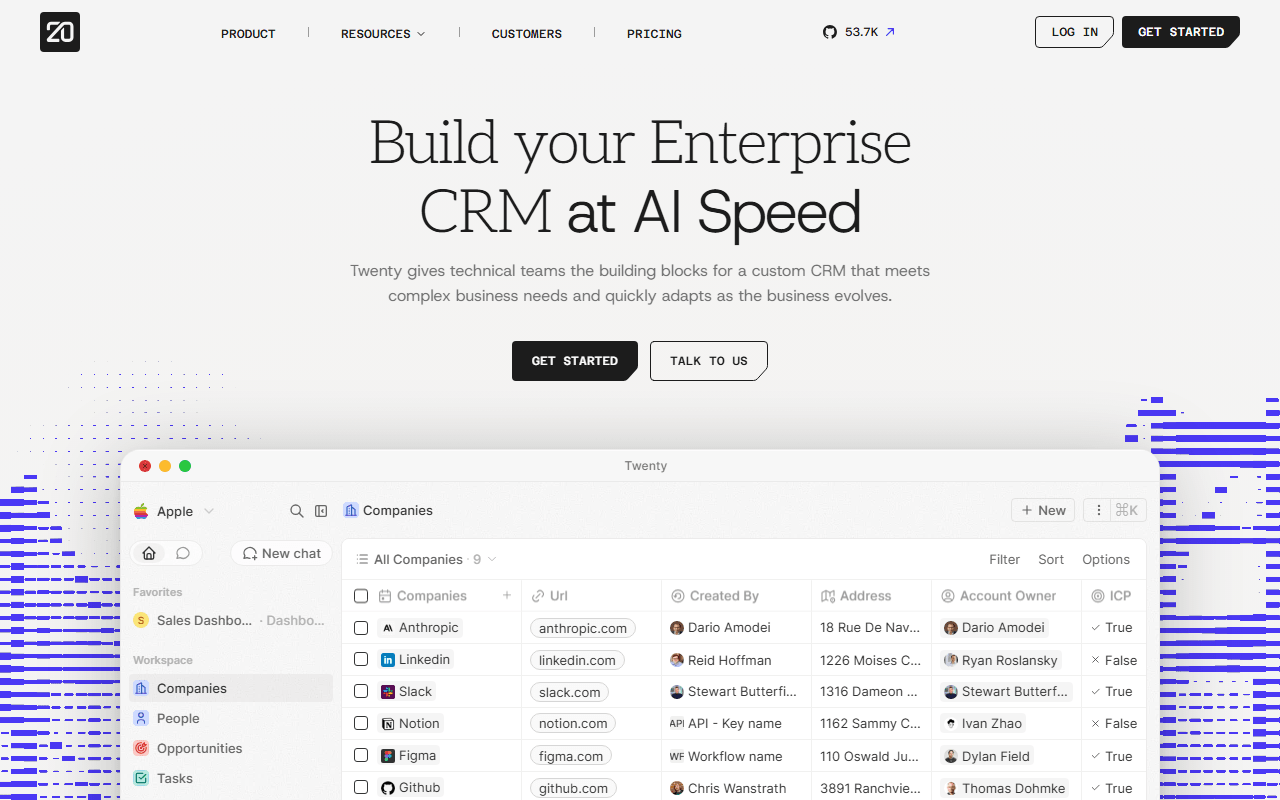
Twenty is a modern open source CRM that feels built this decade, and self-hosting it costs nothing under AGPL-3.0. You get contacts, companies, custom objects, a Kanban pipeline, workflows, and an API, with no per-seat fee and no cap on records or users (as of July 2026). It is the closest thing to owning your CRM outright.

Twenty wins because it is the rare free CRM with no asterisk on ownership: the core is AGPL-3.0, so you self-host it for nothing, add as many users and contacts as you like, and never pay a per-seat fee (as of July 2026). The catch is real and worth stating up front. Free means self-hosting, so you need Docker, a PostgreSQL database, and someone comfortable running updates and backups, because the hosted cloud has no free tier, only a 30-day trial before $9 per user per month. If nobody on your team can run a container, a hosted free plan like Zoho CRM is the more honest pick, but for a team that owns its own stack, Twenty gives you the most CRM for zero dollars.

Read our Twenty review

Best if you will not run a server

The free edition covers up to 3 users forever with leads, deals, tasks, standard reports, and mobile apps, and there is nothing to install (as of July 2026). That third seat is the ceiling.

Best for a team bigger than its budget

The free plan puts no cap on the number of users, so a whole small company can work in it for nothing, and the wall you hit is 5 GB of storage rather than a seat count (as of July 2026).

Best if you need quotes and case management

Quotes, invoices, contracts, and cases ship in the box under AGPL-3.0 with no per-user licence fee, as long as you can run PHP and MySQL yourself (as of July 2026).

What we counted as free, and what we did not

We rank by how far the free option actually gets you, not by feature checklists. A tool you can self-host for nothing, or a free-forever hosted plan, beats a trial every time, and we say plainly which kind of free each tool is. We are blunt about the caps too, so a hosted free plan that stops at 1,000 contacts is not filed next to an open source CRM with no limits at all, and a trial-only incumbent is never dressed up as a free alternative.

Users, contacts, and who hosts it, side by side

#ToolFree planStarting priceCountry
1
Twenty logo
Twenty
Yes$9/monthUnited States
2
Zoho CRM logo
Zoho CRM
Yes-India
3
HubSpot logo
HubSpot
Yes$20/monthUnited States
4
Bitrix24 logo
Bitrix24
Yes$49/monthUnited States
5
EspoCRM logo
EspoCRM
Yes$15/monthCzech Republic
6
SuiteCRM logo
SuiteCRM
Yes£50/monthUnited Kingdom
7
Salesforce logo
Salesforce
No-United States
8
Pipedrive logo
Pipedrive
No-United States

The full ranking, paid incumbents included

1.

Twenty

Best FreeCRM

Twenty is a modern open source CRM that feels built this decade, and self-hosting it costs nothing under AGPL-3.0. You get contacts, companies, custom objects, a Kanban pipeline, workflows, and an API, with no per-seat fee and no cap on records or users (as of July 2026). It is the closest thing to owning your CRM outright.

Twenty screenshot
  • Free plan, paid from $9/month (as of July 2026)
  • United States
  • Open source (AGPL-3.0 (core), commercial license for Enterprise-marked files)
Best for:
Startups and technical teams that want a clean, ownable CRM without a per-seat bill, and anyone who would rather run their own server than rent a hosted plan.
The catch:
Free means self-hosting: Docker, a PostgreSQL database, and your own updates and backups. The hosted cloud has no free tier, only a 30-day trial before $9 per user per month, so if you cannot run a container, this is not a free tool for you.
2.

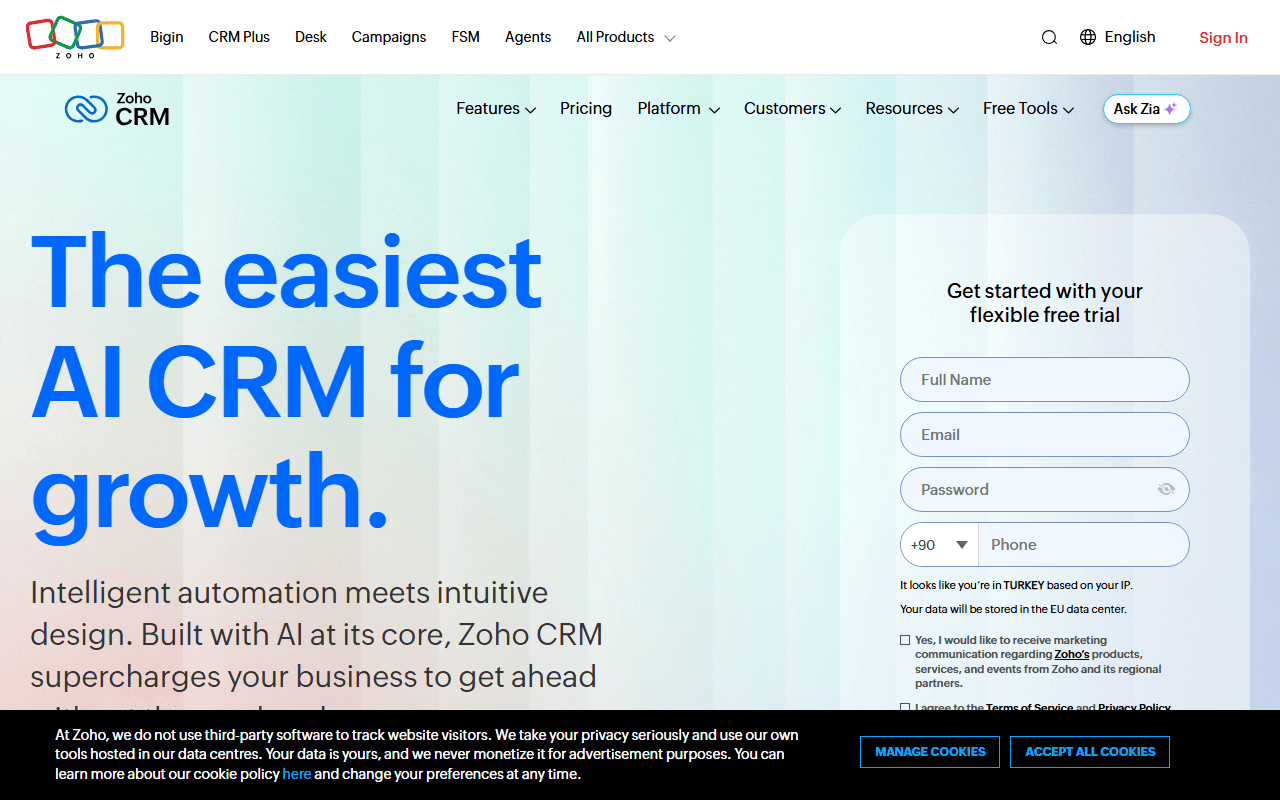
Zoho CRM is the strongest hosted free plan here for a small team. The free edition covers up to three users forever with contact and deal management, workflows, standard reports, and mobile apps, all in a browser with nothing to install (as of July 2026). If you want a real CRM without self-hosting, start here.

Zoho CRM screenshot
  • Free plan (as of July 2026)
  • India
Best for:
Small teams of up to three people who want a proper CRM for free without touching a server, especially anyone already using Zoho Mail, Books, or the wider Zoho suite.
The catch:
The free plan stops at three users and holds back the useful automation, so growth pushes you onto a paid tier. Zoho localises pricing by region and renders it in the browser, so we could not confirm a first-party US figure. The interface is dense, with a learning curve to match.
3.

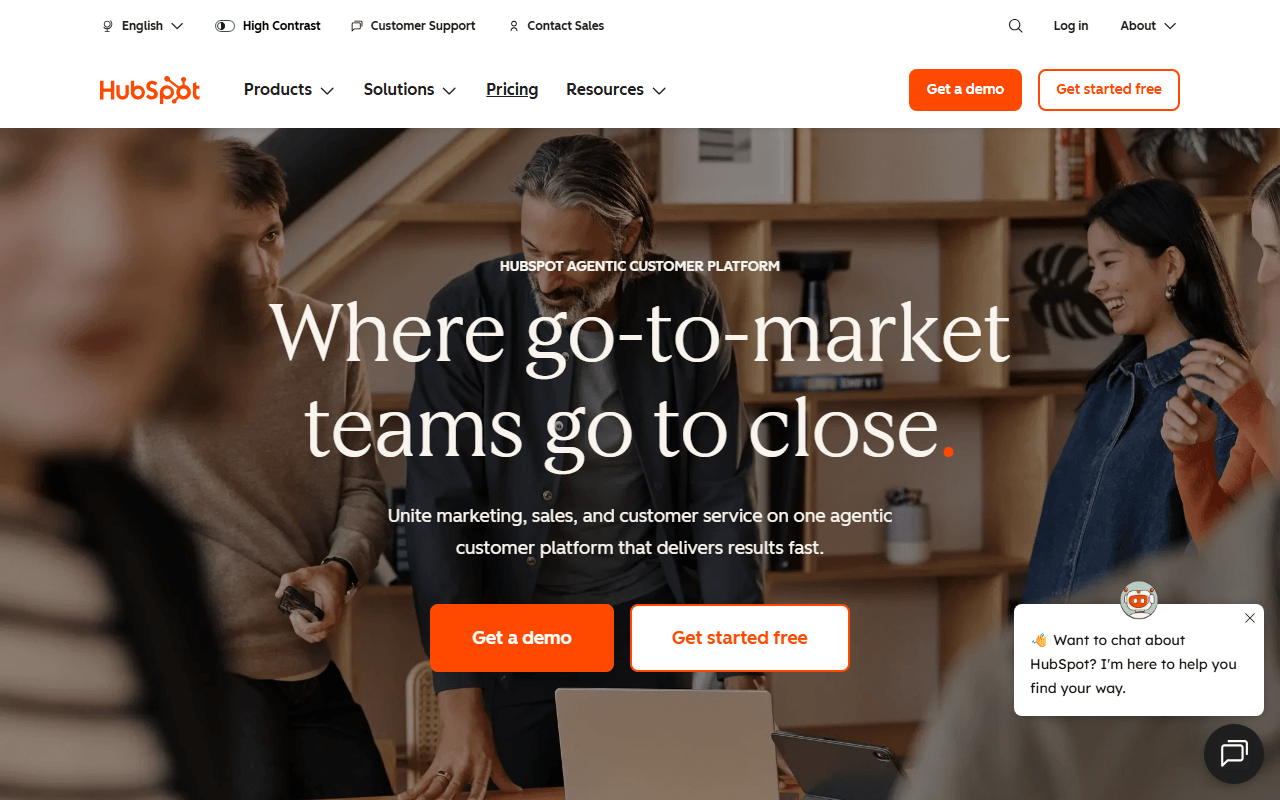
HubSpot has the friendliest free CRM to learn, and the free tools genuinely cost nothing. You get contact and deal management, forms, email tracking, meeting links, and a clean interface that new users pick up fast (as of July 2026). It is also a funnel, and honest use means knowing where the free line sits.

HubSpot screenshot
  • Free plan, paid from $20/month (as of July 2026)
  • United States
Best for:
Small teams and non-technical founders who value ease of use over raw limits, and marketing-led businesses that want a CRM wired to forms and email from day one.
The catch:
New free accounts are capped at 1,000 contacts, two users, and one deal pipeline, with HubSpot branding on everything (as of July 2026). The contact cap was cut from a million in 2024, and the jump to the paid Professional tiers runs into the hundreds of dollars a month.
4.

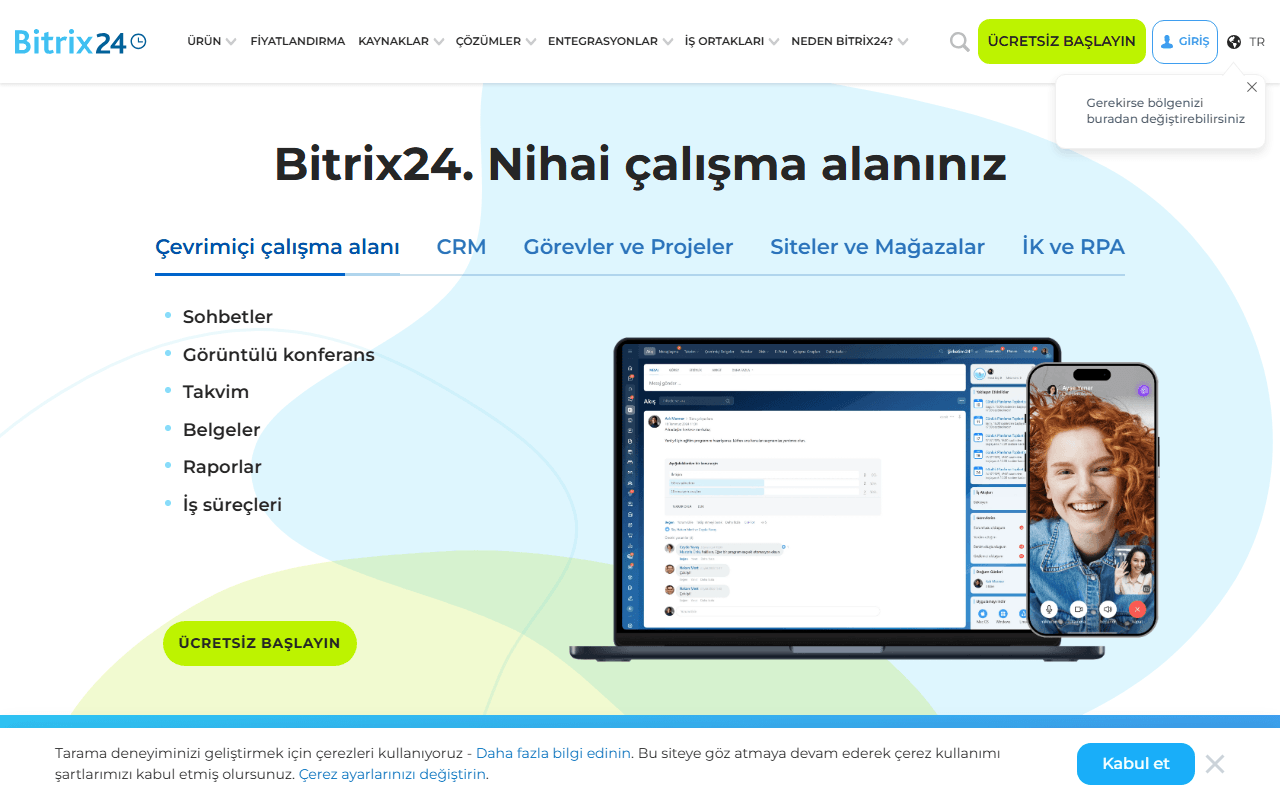
Bitrix24 is the free CRM to try when you have more people than budget, because its free plan puts no cap on the number of users (as of July 2026). It bundles CRM, tasks, chat, and a contact centre into one workspace, so a whole small team can work in it for nothing. The trade is 5 GB of storage and no advanced automation on free.

Bitrix24 screenshot
  • Free plan, paid from $49/month (as of July 2026)
  • United States
Best for:
Growing teams that need every seat filled without a per-user bill, and businesses that want CRM, project management, and team chat in a single free tool.
The catch:
The free plan caps storage at 5 GB and locks sales automation, multiple pipelines, and telephony behind paid plans. It is a lot of product at once, so it can feel busy, and the paid tiers jump to $49 a month and up billed annually.
5.

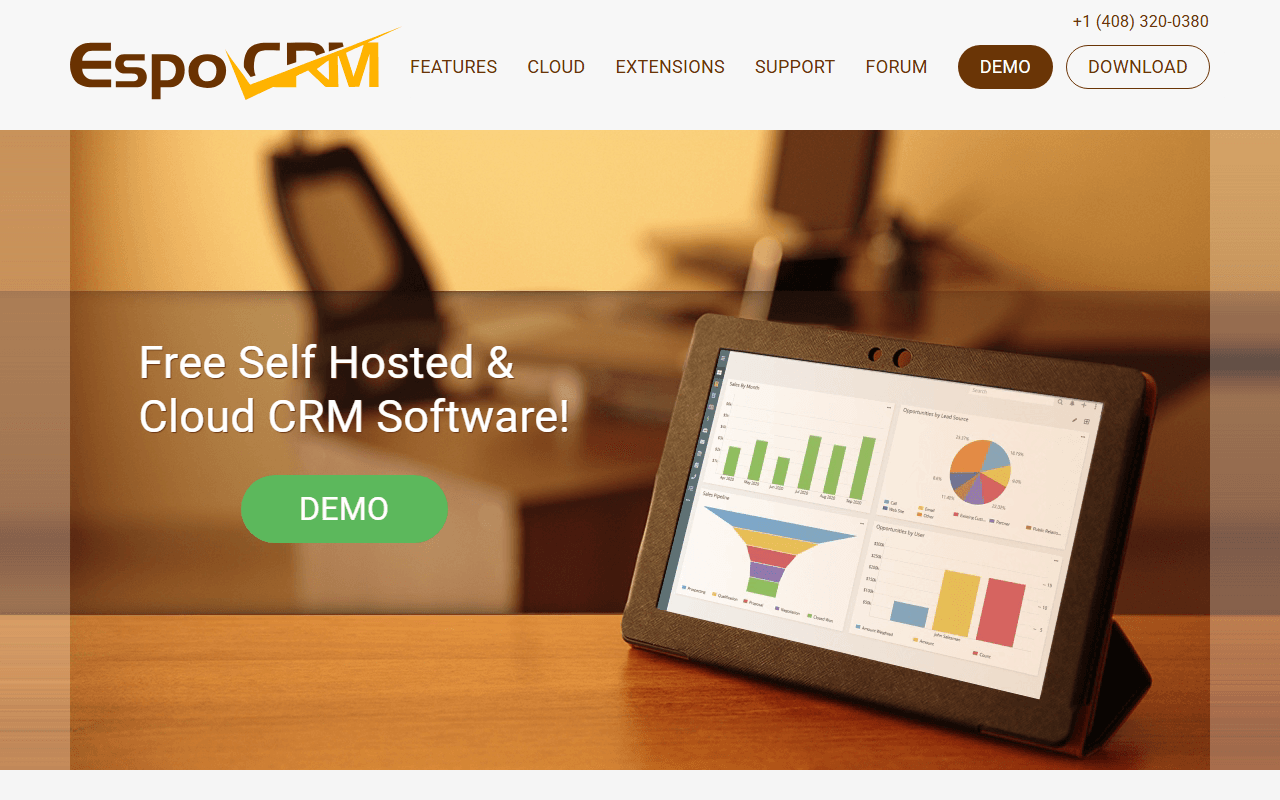
EspoCRM is a clean, fast open source CRM you install on your own PHP and MySQL hosting, free and unlimited under AGPL-3.0. It handles contacts, leads, opportunities, a full workflow engine, and custom entities without the weight of the older enterprise suites (as of July 2026). Think of it as the sensible middle ground between Twenty and SuiteCRM.

EspoCRM screenshot
  • Free plan, paid from $15/month (as of July 2026)
  • Czech Republic
  • Open source (AGPL-3.0)
Best for:
Small businesses with a bit of technical help who want a no-nonsense self-hosted CRM, and teams that need custom entities and automation without paying per seat.
The catch:
Free means running a LAMP stack: PHP, a database, and your own updates and backups. The paid cloud starts at $15 per user per month with a three-user minimum, so the hosted route is not the cheap one. The interface is functional rather than polished.
6.

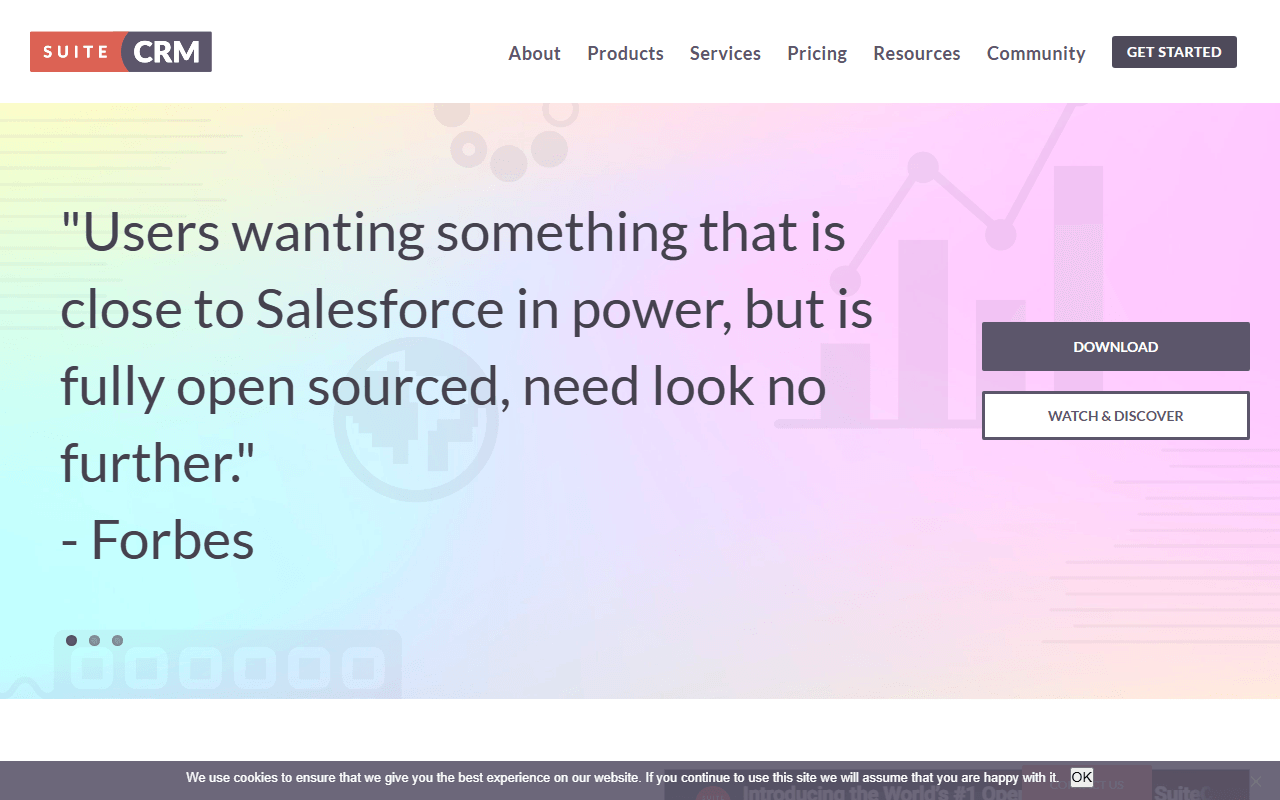
SuiteCRM is the most feature-complete free CRM here, an AGPL-3.0 fork of the old SugarCRM with sales, marketing, cases, quotes, and workflow built in. Self-hosting it costs nothing but your server, and there are no per-user licence fees ever (as of July 2026). It is the pick when you need enterprise breadth without an enterprise bill.

SuiteCRM screenshot
  • Free plan, paid from £50/month (as of July 2026)
  • United Kingdom
  • Open source (AGPL-3.0)
Best for:
Businesses that need deep CRM features like quotes, contracts, and case management on their own infrastructure, and teams replacing a legacy SugarCRM or Salesforce setup.
The catch:
All that breadth comes as weight: SuiteCRM is heavier to run and dated to look at next to Twenty, and it needs real server resources plus maintenance. The managed hosting option starts from £50 a month, so genuinely free means doing the hosting yourself.
7.

Salesforce is the CRM everyone else is measured against, and for large sales teams it earns the reputation: near-endless customisation, a huge app marketplace, and reporting that scales to thousands of reps. It is on this list as the incumbent people leave, not as a free option, because there is no free plan, only a 30-day trial.

Salesforce screenshot
  • Paid (as of July 2026)
  • United States
Best for:
Mid-market and enterprise sales teams with the budget and admin resource to configure it, and companies whose whole stack already runs on the Salesforce platform.
The catch:
There is no free tier, only a trial, so this is a paid incumbent rather than a free alternative. The real cost climbs quickly once you add the seats, editions, and add-ons a working team needs, and it is complex enough that many companies pay a consultant to run it.
8.

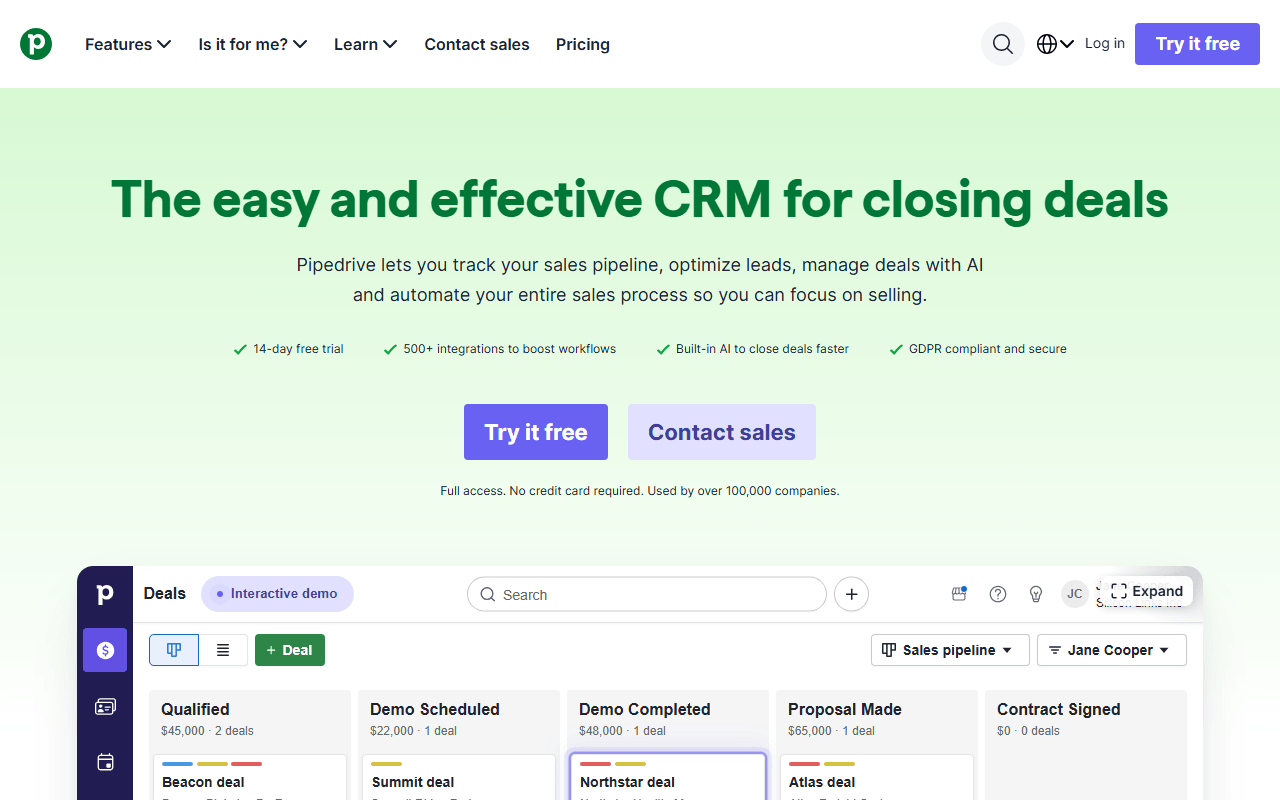
Pipedrive is a sales-first CRM built around a visual pipeline, and it is genuinely pleasant to use for a small sales team that lives in its deals. It is well designed and popular for good reason. It appears here only as an incumbent, because there is no free plan, just a 14-day trial before every seat is billed.

Pipedrive screenshot
  • Paid (as of July 2026)
  • United States
Best for:
Small sales teams that want a focused, easy pipeline tool and are willing to pay per seat for polish and simplicity over a broader feature set.
The catch:
There is no free plan, only a 14-day trial, so it does not belong in the same bucket as the free tools here. It charges per user from day one, and the add-ons for lead generation, documents, and campaigns push the real monthly cost well above the headline seat price.

Can anyone on your team run a server?

Start with who is going to run it. If you can host your own server, Twenty is the modern pick and EspoCRM or SuiteCRM are the heavier, more established open source options, all free with no per-seat cost. If you want something that just works in a browser with no setup, Zoho CRM gives three users a genuinely free-forever plan, HubSpot is the friendliest free CRM to learn (as long as you can live with 1,000 contacts and its upsell), and Bitrix24 is the one to try if you need unlimited users for free. Salesforce and Pipedrive are here as the paid incumbents people are usually leaving, not as free options.

Read this before you import your contact list

What is the best free CRM?

It depends on whether you can host your own server. If you can, Twenty is our pick: it is open source under AGPL-3.0, free to self-host with no per-seat cost, and modern to use (as of July 2026). If you want a hosted free plan with no setup, Zoho CRM is free forever for up to three users, and HubSpot has the easiest free CRM to learn, though it now caps free accounts at 1,000 contacts.

Which of these CRMs are actually free, not a trial?

Twenty, EspoCRM, and SuiteCRM are fully free and open source if you self-host them (as of July 2026). Zoho CRM, HubSpot, and Bitrix24 all have genuine free-forever hosted plans with limits. Salesforce and Pipedrive have no free plan at all, only trials of 30 and 14 days, so they sit here as incumbents rather than free alternatives.

Do I need to be technical to use a free CRM?

For the hosted free plans, no. Zoho CRM, HubSpot, and Bitrix24 all run in a browser with nothing to install. Self-hosting Twenty, EspoCRM, or SuiteCRM is a different matter and needs a server, a database, and someone comfortable running updates and backups. If that is not you, stay on a hosted free plan and treat the open source tools as a later option.

Is HubSpot's free CRM really free forever?

Yes, the free tools are free forever with no credit card, but the caps are tighter than they used to be. As of July 2026 a new free account is limited to 1,000 contacts, two users, and one deal pipeline, and everything carries HubSpot branding. It is a genuine free CRM and a funnel at the same time, and the jump to the paid Professional tiers is steep, so read the limits before you build your whole process on it.

Can I move my data off a free CRM later?

With the open source tools, your data lives in your own database, so there is nothing to move off. With the hosted free plans, check the export before you commit: Zoho, HubSpot, and Bitrix24 all let you export contacts and deals to CSV, but rebuilding automations and custom fields in a new tool is real work. The safest position is owning the database, which is one more reason the self-hosted options rank well here.

Keep exploring

Browse every category, or read our full reviews of the tools above.