Free alternatives to tldraw
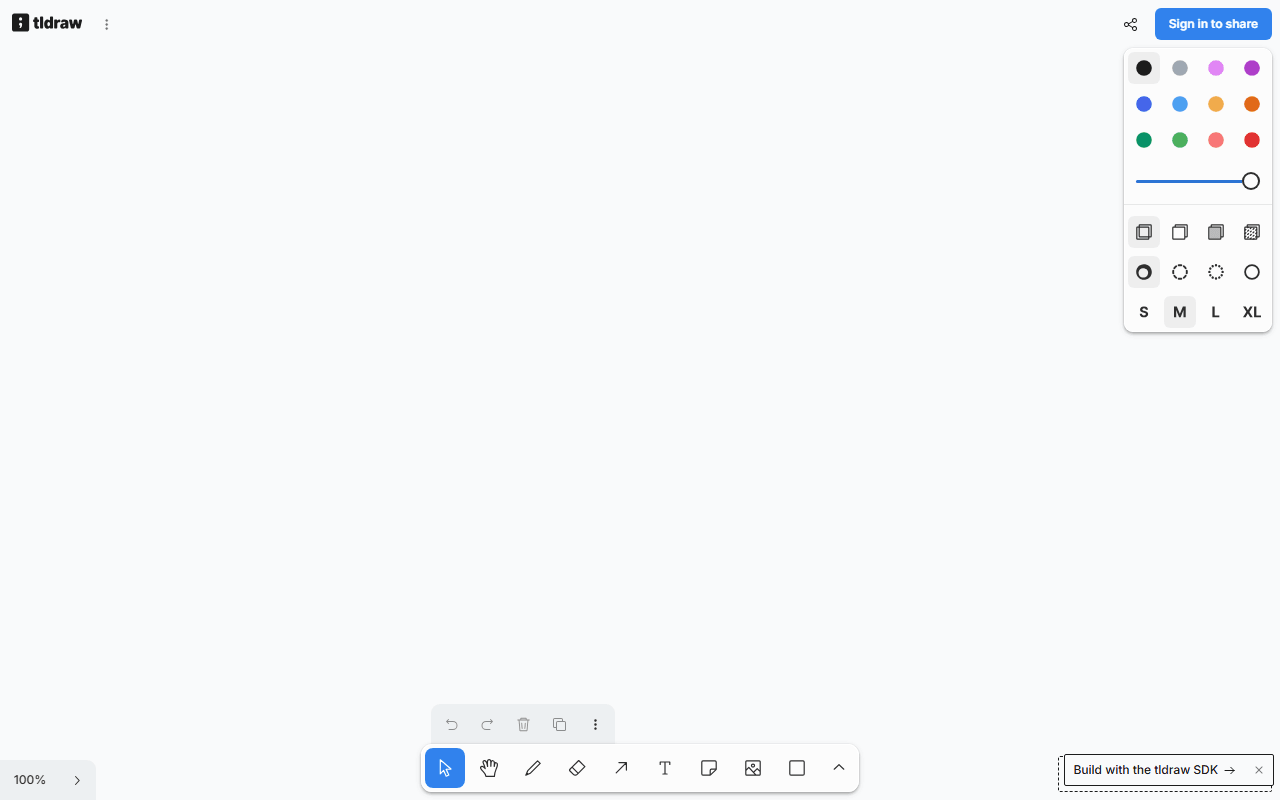
tldraw's whiteboard is free and fast, but its code is source-available under a custom license, so you cannot freely self-host or embed it the way a truly open source tool allows. There is also no offline or desktop app, and it has fewer workshop features than a full collaboration platform (as of July 2026). If you want genuine open source, offline access, or structured facilitation, here is where each free canvas lands.
Facts checked as of July 2026Read our tldraw review
Jump to an alternative



Excalidraw
Best Free Alternative TotldrawGenuinely open source and self-hostable under MIT, the freedom tldraw's custom license does not grant
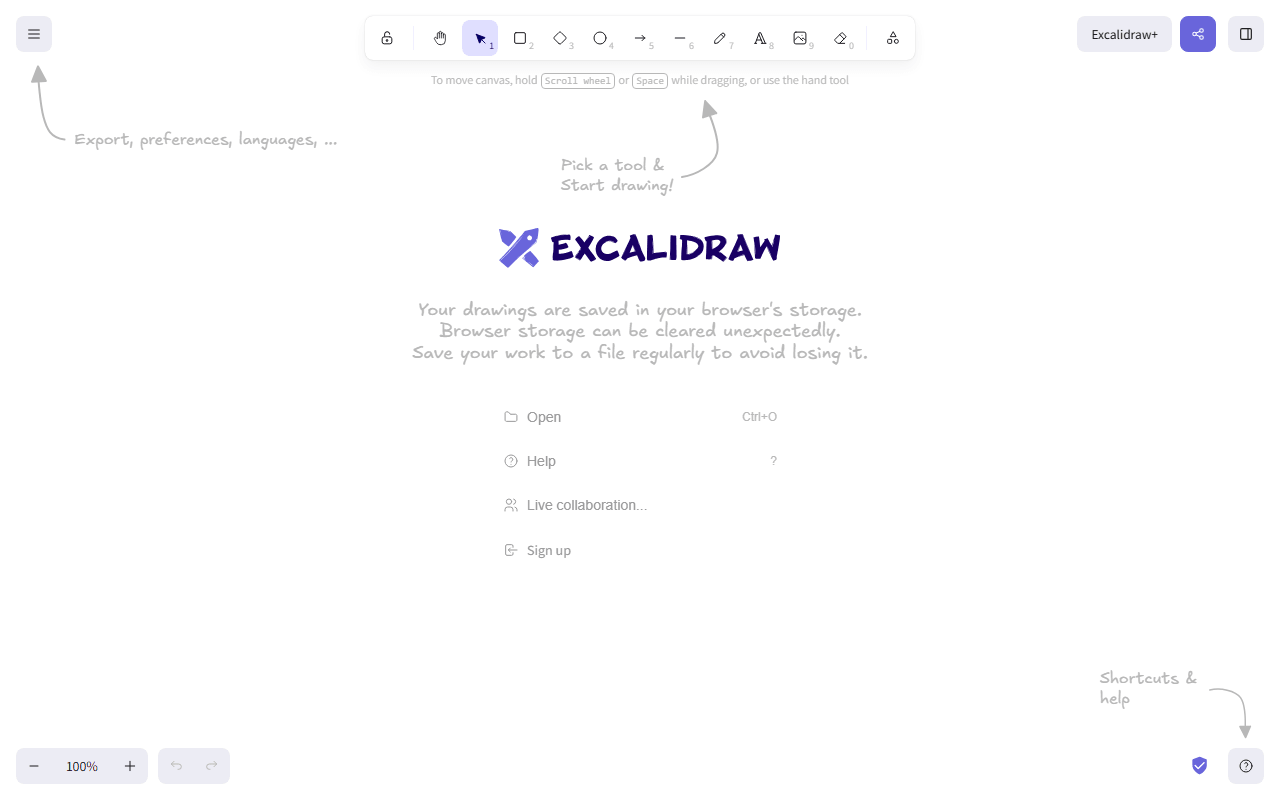
Excalidraw is the whiteboard tldraw's license stops it from being: MIT licensed, so you can self-host or embed it for free. It opens instantly with no account, supports unlimited collaborators, and its live sessions are end-to-end encrypted (as of July 2026). The look is deliberately hand-drawn rather than tldraw's clean straight lines, which is the main stylistic tradeoff.
- Free plan, paid from $6/month (as of July 2026)
- Czech Republic
- Open source (MIT)
 Czech Republic
- Best for:
- Anyone leaving tldraw over its source-available license who wants true open source
- The catch:
- The free app stores one scene in your browser, so export the file if you want to keep it.
Compared to tldraw
- Advantage: MIT licensed, so free to self-host or embed, unlike tldraw's custom license
- Advantage: End-to-end encrypted live sessions, which tldraw does not offer
- Advantage: No account needed and unlimited collaborators
- Worth knowing: Hand-drawn style instead of tldraw's clean straight lines
- Tradeoff: Free app stores one scene in browser storage
- Tradeoff: No offline desktop app either, the same gap as tldraw
Open source under Apache-2.0 with a real desktop app, so it works offline where tldraw cannot
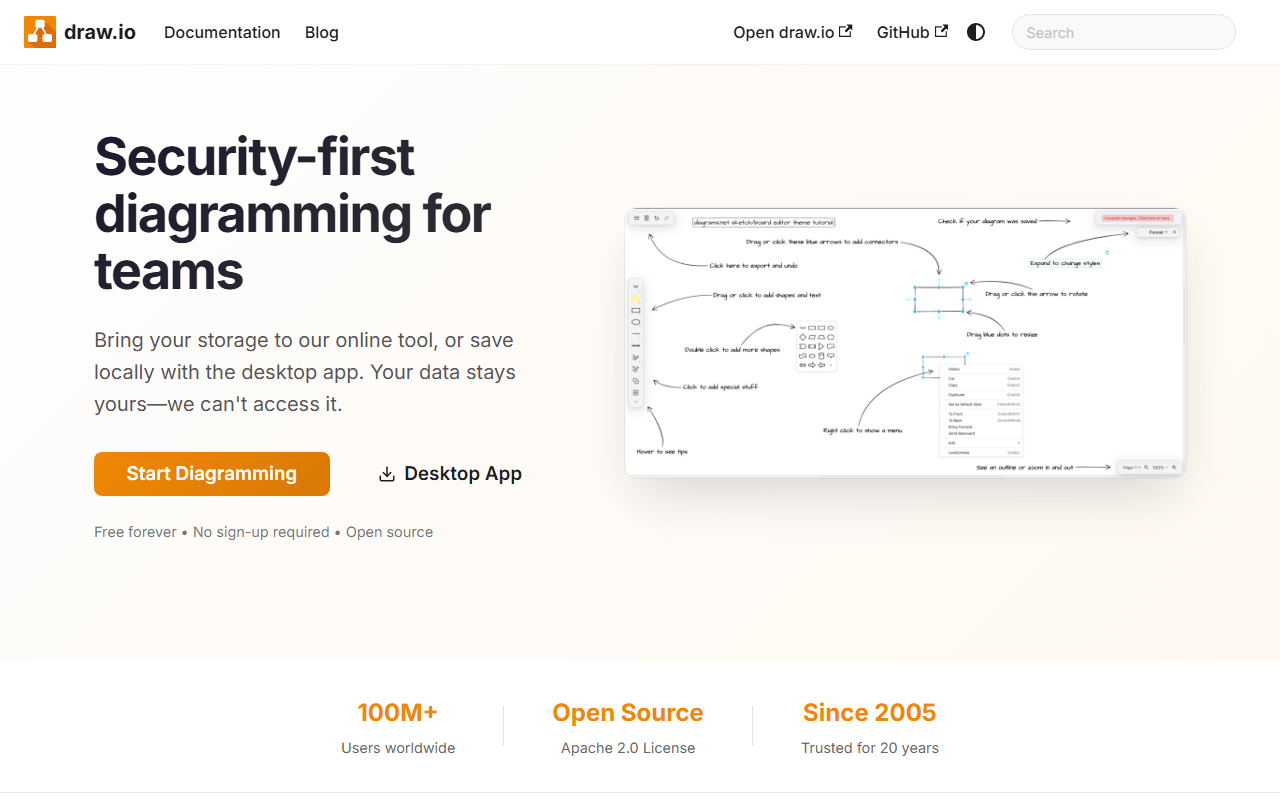
draw.io is the free, Apache-2.0 licensed choice when you want structured diagrams and offline access. It has web and desktop apps, no account, no file limits, and proper shape libraries for flowcharts, UML, and cloud architecture (as of July 2026). It is less about freeform canvas play and more about diagrams that need to be correct.
- Completely free (as of July 2026)
- United Kingdom
- Open source (Apache-2.0)
 United Kingdom
- Best for:
- Structured flowcharts and architecture diagrams that need real shape libraries, offline
- The catch:
- The interface is dense and dated next to tldraw, and real-time co-editing only works through a shared location like Google Drive.
Compared to tldraw
- Advantage: Apache-2.0 open source and freely self-hostable, unlike tldraw's custom license
- Advantage: Desktop apps that work fully offline, which tldraw lacks
- Advantage: Formal shape libraries for UML, network, and architecture diagrams
- Tradeoff: Dense, dated interface next to tldraw's clean modern canvas
- Tradeoff: Live co-editing needs a shared Drive file, unlike tldraw's built-in collaboration
A full workshop platform with voting, timers, and templates tldraw has none of
Miro is the step up when your board is really a workshop: it adds thousands of templates, voting, timers, and facilitation tools around the canvas, with real-time collaboration and unlimited members on the free plan. The catch is the free plan stops at 3 editable boards (as of July 2026), where tldraw has no published board limits. It is closed source, so it does not solve the ownership concern that pushes people off tldraw.

- Free plan, paid from $8/month (as of July 2026)
- United States
 United States
- Best for:
- Facilitators running structured workshops and retros, not just sketching
- The catch:
- The free plan caps you at 3 boards and it is closed source, so it trades tldraw's unlimited boards for structure.
Compared to tldraw
- Advantage: Workshop features like voting, timers, and templates tldraw has none of
- Advantage: Unlimited team members on the free plan
- Tradeoff: Only 3 editable boards free, where tldraw has no published board limit
- Tradeoff: Closed source, so it does not fix tldraw's self-hosting limitation
- Tradeoff: Heavier and slower to open than tldraw's instant canvas
Open source and self-hostable, with a full design toolkit if your canvas was becoming UI work
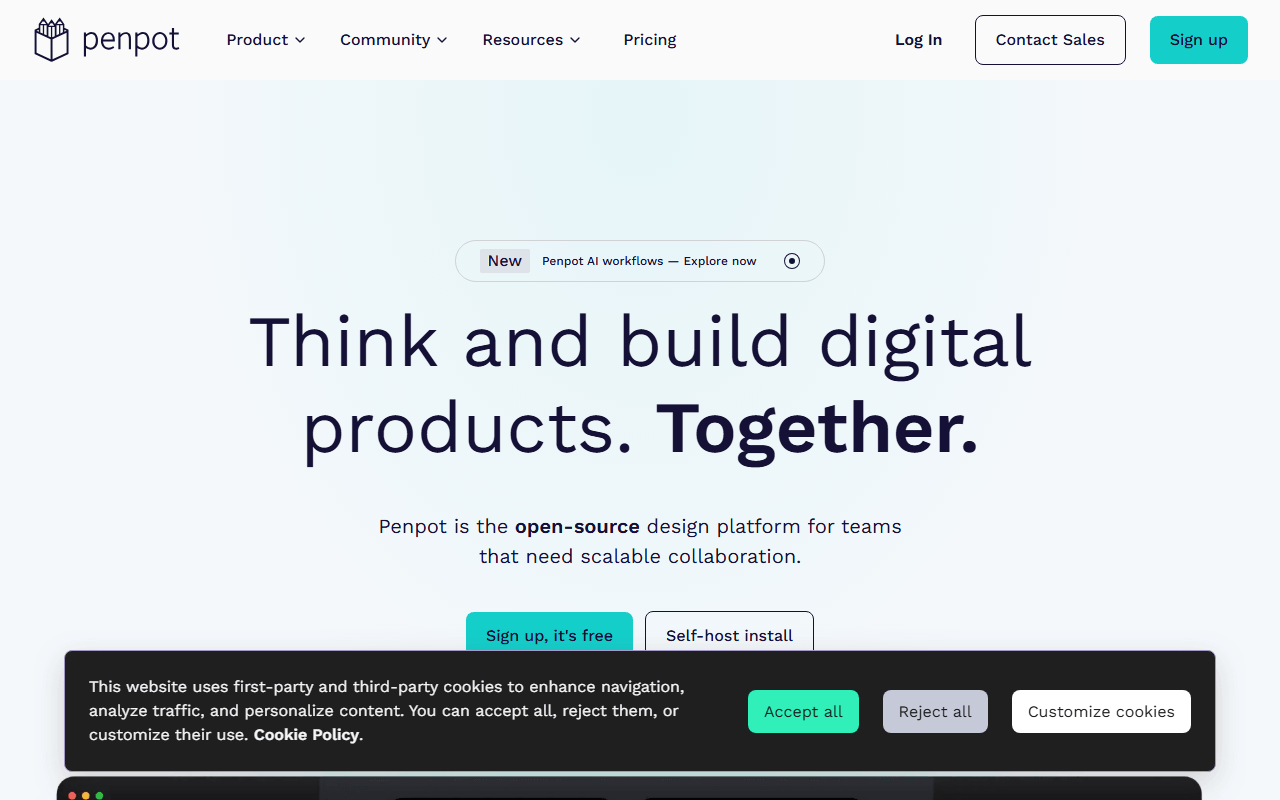
Penpot is the pick when your tldraw canvas was really the start of interface design. It is open source under MPL-2.0 and self-hostable, with real-time collaboration, components, and prototyping, and the free hosted plan covers unlimited files with up to 8 editors (as of July 2026). It is a design tool, not a quick whiteboard, so it is heavier for simple sketching.
- Free plan, paid from $7/month (as of July 2026)
- Spain
- Open source (MPL-2.0)
 Spain
Spain- Best for:
- Canvases that were turning into real UI design work
- The catch:
- It is a full design tool, so it is heavier and slower to open than tldraw for quick sketching.
Compared to tldraw
- Advantage: Open source and self-hostable, unlike tldraw's custom-licensed code
- Advantage: Full UI design toolkit with components and prototyping beyond a whiteboard
- Advantage: Unlimited files with up to 8 editors free (as of July 2026)
- Tradeoff: Heavier and slower to start than tldraw's instant canvas
- Tradeoff: No offline desktop app, the same gap as tldraw
FigJam whiteboarding plus full design in one account, the polished paid incumbent
Figma covers whiteboarding through FigJam and adds full UI design in the same account, with live multiplayer editing and a large template community. The free Starter plan caps FigJam at 3 files (as of July 2026), and full design seats are $16 per month billed annually. It is closed source, so it does not answer the license concern, but it is the most polished option if you want design and whiteboard in one place.
- Free plan, paid from $16/month (as of July 2026)
- United States
- Best for:
- Teams that want a whiteboard and full design tool in one polished product
- The catch:
- FigJam is capped at 3 files on the free plan, and it is closed source like tldraw.
Compared to tldraw
- Advantage: Live multiplayer editing and a modern interface
- Advantage: Pairs whiteboarding with a full UI design tool in one account
- Tradeoff: FigJam capped at 3 files on the free plan (as of July 2026)
- Tradeoff: Closed source, so it does not fix tldraw's self-hosting limit
- Tradeoff: No offline desktop whiteboard, the same gap as tldraw
A template-first whiteboard with real-time collaboration, easy for non-designers
Canva includes a whiteboard with sticky notes and templates inside its wider design tool, with real-time collaboration built in. The free tier gives you unlimited designs and a large template library (as of July 2026), which makes it approachable for non-designers who found tldraw too blank. It is closed source and template-driven rather than a precise diagramming canvas.
- Free plan, paid from $144/year (as of July 2026)
- Australia
 Australia
- Best for:
- Non-designers who want a guided, template-led whiteboard
- The catch:
- It is closed source with no editable export, and it is less precise than tldraw for clean diagrams.
Compared to tldraw
- Advantage: Template library and real-time collaboration built in
- Advantage: Easier starting point for non-designers than a blank tldraw canvas
- Advantage: Unlimited free designs with 5GB storage (as of July 2026)
- Tradeoff: Closed source with no editable export, unlike an open whiteboard
- Tradeoff: Less precise than tldraw for clean diagram output
- Tradeoff: Premium assets sit behind Pro at $144 per year
How to choose
If the license is your reason for leaving, Excalidraw is the closest swap: a genuinely open source, self-hostable whiteboard. For structured flowcharts and architecture that need real shape libraries, draw.io is free and works offline. If you run facilitated workshops with voting and timers, Miro leads, though its free plan stops at 3 boards. And if your canvas was really turning into UI work, Penpot and Figma go further into design.